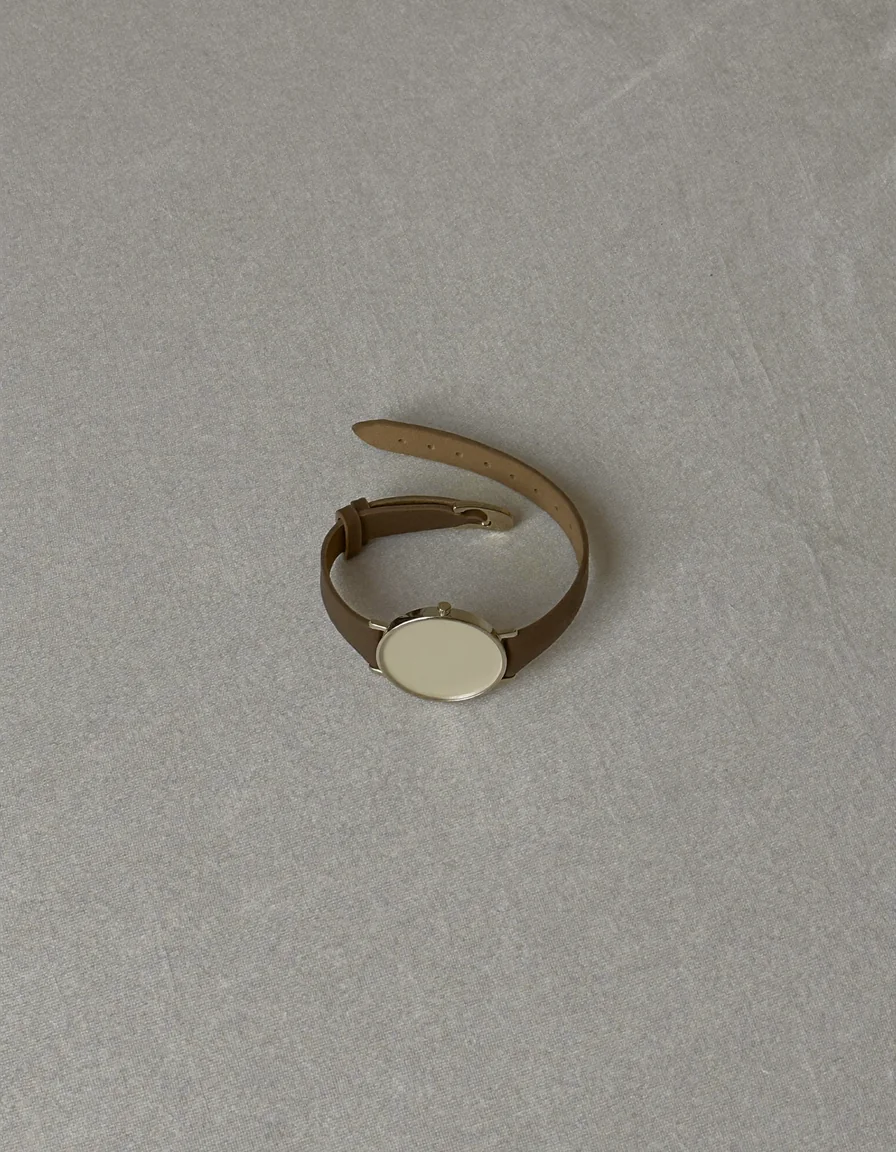
Automatic or quartz: what you are actually paying for in a watch
Quartz keeps better time for a fraction of the cost. What an automatic gives you instead, what it asks of you, and which to buy as a gift.

The short answer
Quartz is more accurate — about ±15 seconds a month — cheaper and nearly maintenance-free.
- Quartz is more accurate — about ±15 seconds a month — cheaper and nearly maintenance-free.
- An automatic runs on your wrist's motion, stops after about two days unworn, and needs a service every several years.
- 30 m water resistance means splash-proof only; 100 m is the practical minimum for swimming.
- For a gift, match the movement to how they live: a daily wearer who loves craft gets an automatic, a watch-rotator gets quartz.
Put an automatic watch beside a quartz one and the quartz will usually keep better time, ask less of you, and cost a fraction of the price. People still pay more for automatics, and not because they have been fooled. They are buying something different. Knowing what that is makes the choice simple — whether the watch is for you or for someone you are buying for.
What is inside each one
A quartz watch runs on a battery that makes a tiny quartz crystal vibrate at an exact frequency — 32,768 times a second. A circuit counts the vibrations and moves the hands. The result is extremely accurate, inexpensive to make and almost maintenance-free.
An automatic is a mechanical watch. A coiled mainspring stores energy and releases it through a train of gears, regulated by a balance wheel swinging back and forth. A weighted rotor inside spins as your wrist moves, winding the spring again. There is no battery at all: it runs on you.
| Quartz | Automatic | |
|---|---|---|
| Typical accuracy | About ±15 seconds a month | Often several seconds a day, fast or slow |
| Power | A battery every 2–5 years | Your movement; stops after about two days unworn |
| Servicing | Battery changes, little else | A full service every several years |
| Second hand | Ticks once a second | Sweeps smoothly |
| Thickness and weight | Usually slimmer and lighter | Usually thicker and heavier |
| What you are paying for | Precision and convenience | Craft, mechanism and ritual |
Accuracy varies by movement; these figures are typical of everyday watches rather than the best of either.
What an automatic asks of you
Wear it, or it stops. Many automatics hold around forty hours of reserve, so one left in a drawer over a weekend needs setting on Monday. For someone who wears one watch every day that never comes up. For someone who rotates several, it becomes a small chore — or a reason for a watch winder.
Service it. Oils age, and a mechanical movement needs cleaning and lubricating every several years. It costs real money, and it is also why a good automatic can outlive its owner.
Keep it away from strong magnets. Phone and tablet cases, bag clasps and laptop speakers can magnetize a mechanical movement and make it run fast. A watchmaker can demagnetize it in minutes, but it helps to know why a watch has suddenly started gaining time.
The water resistance number, decoded
This catches people with both types. The depth on the dial is not a depth you can dive to; it is a pressure-test rating. 30 meters (3 ATM) means splash-resistant — rain and hand-washing, not swimming. 50 meters tolerates a brief swim. 100 meters is the sensible minimum for regular swimming and snorkeling, and 200 meters for diving. And never press the buttons or pull the crown under water.
Which to buy, and for whom
Choose quartz if you want a watch that is always right and always running, if you rotate between several, or if slim and light matters. There is nothing second-best about it; for most practical purposes it is the better instrument.
Choose an automatic if the mechanism itself is part of the pleasure: the sweeping hand, the movement visible through a glass caseback, an object that runs without a battery and can be serviced for decades. That is a real thing to want, and it is what the extra money buys.
Buying for someone else? Look at how they live, not at what looks impressive. Someone who wears one watch every day and loves things built to last will treasure an automatic. Someone who leaves theirs on the nightstand for three days at a time will be quietly better served by quartz. And check their wrist before the watch — the measurement that matters is in what watch size suits a wrist, and it applies to any wrist, not only small ones.
Questions people ask about this
Is an automatic watch better than quartz?
Not better, different. Quartz is more accurate, cheaper and nearly maintenance-free. An automatic is a mechanical movement powered by the motion of your wrist; what you pay extra for is the craft, the sweeping second hand and a watch that can be serviced for decades.
How accurate is an automatic watch?
Everyday automatics typically gain or lose several seconds a day, while a typical quartz watch is within about 15 seconds a month.
What happens if you don't wear an automatic watch?
It stops once its power reserve runs out, often after around forty hours. Wind or wear it to restart it and reset the time — or keep it on a watch winder.
Can I swim with a 30m water resistant watch?
No. 30 meters (3 ATM) means splash-resistant only. 100 meters is the sensible minimum for regular swimming, and you should never operate the crown or buttons under water.
Should I buy an automatic or quartz watch as a gift?
An automatic suits someone who wears one watch daily and values things built to last; quartz suits someone who rotates watches or forgets to wear one. Check their wrist size before choosing a case.