Custom bachelorette and group shirts: which print survives the trip
Screen print, DTF or embroidery decides the price, the feel and whether it cracks by the second wash. Plus the sizing trap and how early to order.
The short answer
Screen print for bold, few-color designs at volume; DTF for full color and photos; embroidery for small monograms.
- Screen print for bold, few-color designs at volume; DTF for full color and photos; embroidery for small monograms.
- Unisex and women's cuts differ — choose one, share the chart, collect sizes in writing, and order spares.
- Order three to four weeks ahead and ship to the organizer, not the destination.
- Wash inside out, cold, and hang to dry — heat is what cracks prints.
Matching shirts are how a bachelorette weekend, a girls' trip or a milestone birthday turns twelve people into one group in every photo. They are also where plenty of those trips find their one regret: the print that cracked in the first wash, the shirts that arrived the day after the flight, the bride in a boxy unisex large she never asked for. All three are avoidable, and all three are decided before you upload a design.
The three ways to put a design on a shirt
Screen printing pushes ink through a fine mesh stencil, one screen for each color. It is the classic method — bold, vivid and extremely durable, because the ink bonds into the fabric. It is at its best with simple designs in one to three colors, and the price per shirt falls sharply as the quantity rises.
DTF (direct-to-film) prints the design onto a special film that is then heat-pressed onto the shirt. It handles full color, gradients and photos easily, and suits small runs where making screens would not make sense. It sits on the surface as a thin, flexible layer you can feel slightly.
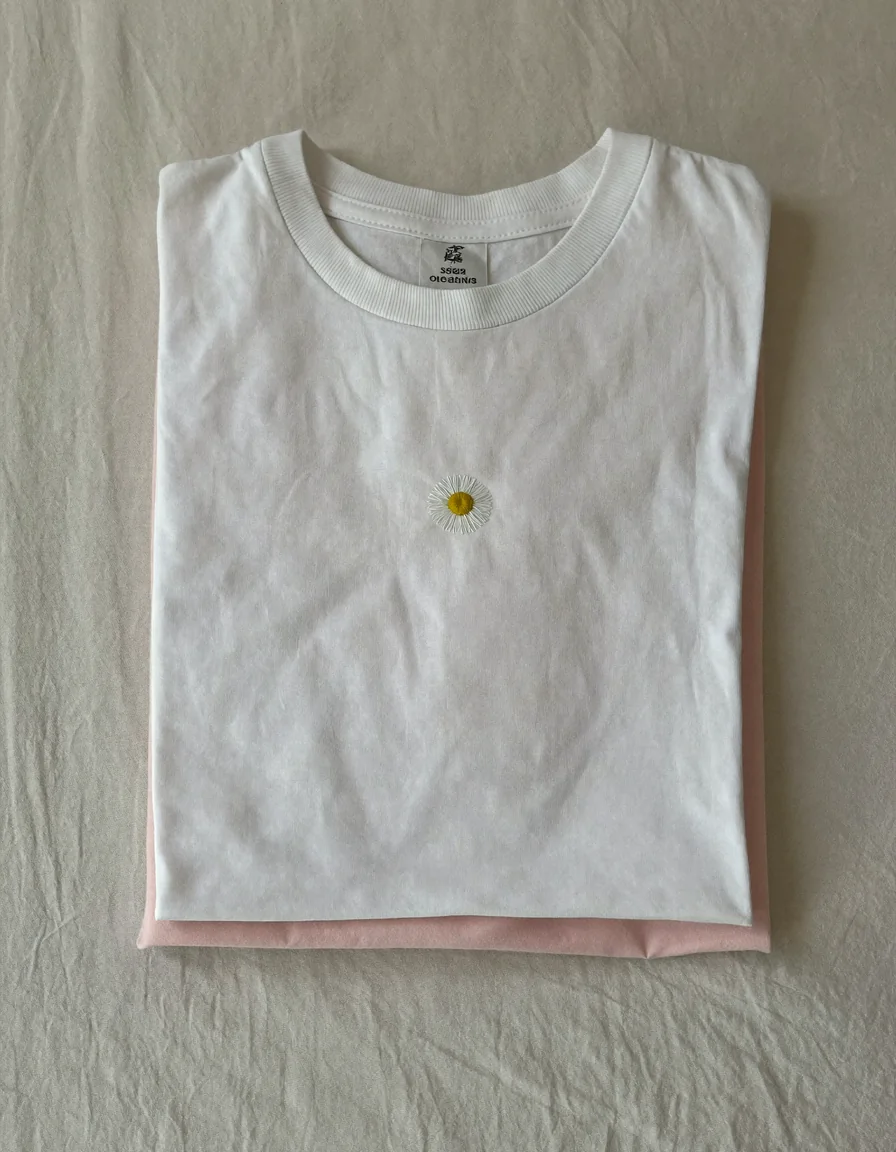
Embroidery stitches the design in thread. It looks the most premium and lasts the longest, and it is best for small designs — a monogram, a date, a tiny motif — on sweatshirts, caps and polos rather than large graphics on a thin tee.
| Screen print | DTF | Embroidery | |
|---|---|---|---|
| Best for | Bold designs, few colors | Full color, photos, small runs | Small monograms and motifs |
| Feel | Soft, part of the fabric | A thin layer on the surface | Raised stitching |
| Durability | Excellent | Good, if cared for | Excellent |
| Cost pattern | Cheaper per shirt at volume | Steady per shirt | Priced by stitch count |
| Avoid | Many colors in tiny quantities | Very hot washing and drying | Fine detail and small text |
For ten people and a one-color design, screen printing usually wins. For a photo of the bride, DTF does. For a sweatshirt she keeps for years, embroidery.
The sizing trap
Unisex and women's cuts are different shirts. Unisex is boxy and longer; a women's cut is shorter and more fitted, and it usually runs about a size small. Mixing them without saying so is how half the group ends up swimming in theirs. Choose one cut, share the size chart with everyone, and collect sizes in writing rather than guessing. Then order one or two spares: someone always has a last-minute plus-one or a spilled glass of wine.
The fabric matters too. Ringspun cotton is softer than standard cotton; a tri-blend drapes better and feels lighter in the heat. For a beach weekend, lighter is kinder.
How early to order
Work backward from the date. Production commonly takes around a week once you approve the proof, and shipping adds more. A design that needs a round of changes, a size someone forgot to send, or a late delivery eats the rest. Order three to four weeks before the event, and have the shirts delivered to the organizer rather than straight to the destination.
Design details that print well
Keep lines thick and text legible at the size it will actually print; hairline script and tiny dates are what blur or break. Send the highest-resolution artwork you have, ideally a vector file. Check the ink against the shirt color on the proof: light ink on a dark shirt needs a white base underneath, which the printer handles, but it is worth seeing before you approve.
And when the shirts arrive, tell the group: wash inside out, in cold water, and hang to dry. Heat is what cracks a print and fades a shirt. The same care rules sit behind the laundry care symbols on the label, and they are why the shirts are still around for the anniversary photo.
Questions people ask about this
Is screen printing or DTF better for custom shirts?
Screen printing is best for bold designs in a few colors and larger quantities, and is extremely durable. DTF suits full-color designs, photos and small runs. Both last well when washed cold and dried gently.
How early should I order bachelorette shirts?
Three to four weeks before the event. Production often takes around a week after proof approval, and shipping, changes and missing sizes use up the rest.
Do women's cut shirts run small?
Usually. Women's cuts are shorter and more fitted than unisex and often run about a size small. Choose one cut for the group, share the size chart, and collect sizes in writing.
Can you embroider a t-shirt?
You can, but embroidery suits small designs on heavier fabrics best — monograms and motifs on sweatshirts, caps and polos. Large graphics on thin tees are better printed.
How do I stop a printed shirt from cracking?
Wash it inside out in cold water, avoid fabric softener and high heat, and hang it to dry. Never iron directly over the print.