Self tanner: how to choose one and apply it for a streak-free glow
Self tanner explained: how it works, mousse vs drops vs lotion, how to apply it evenly, fixing streaks and orange palms, tanning your face, and SPF.
The short answer
Self tanner uses DHA to color the top layer of skin; it fades in five to seven days. Exfoliate, dry your skin, apply in sections with a mitt, and dilute over joints. Choose a shade one step lighter than you think and build up.
- A self tan is not sun protection; wear SPF 30 or higher daily.
Self tanner gives your skin a golden color without sun exposure, and with good prep and a mitt it can look completely natural. The secret is less about the product and more about the method: exfoliate, apply to dry skin in sections, go light on dry areas like knees and ankles, and give it time to develop. Here is how self tanner works, how to choose a formula, how to apply it without streaks, and how to fix mistakes.
A self tan is not sun protection. You still need daily sunscreen.
How does self tanner work?
Most self tanners use dihydroxyacetone, or DHA, a sugar that reacts with proteins in the top layer of the skin to create a brown color over a few hours. Because that top layer constantly sheds, the color fades evenly over about five to seven days. It does not stain deeper skin, and it does not change your natural pigment.
Which type of self tanner should you choose?
| Type | Good for | Worth knowing |
|---|---|---|
| Mousse or foam | Fast, even body coverage with a mitt | Usually has a guide color so you can see where it went |
| Lotion or cream | Dry skin and beginners | Slower to apply; often more hydrating |
| Gradual tanning lotion | A subtle build over several days | The most forgiving; easy to fit into your routine |
| Tanning drops | The face, mixed into moisturizer | You control the depth by the number of drops |
| Mist or spray | Hard-to-reach areas like the back | Needs a well-ventilated room; avoid breathing it in |
If you are new to self tanning, a gradual lotion or a light mousse is the easiest place to start.
How to apply self tanner, step by step
The American Academy of Dermatology lays out the method dermatologists recommend:
- Exfoliate with a washcloth or an exfoliating product, spending extra time on thicker skin at the elbows, knees and ankles. Shave or wax a day ahead if you can, so pores have time to close.
- Dry your skin completely, so the tanner goes on evenly.
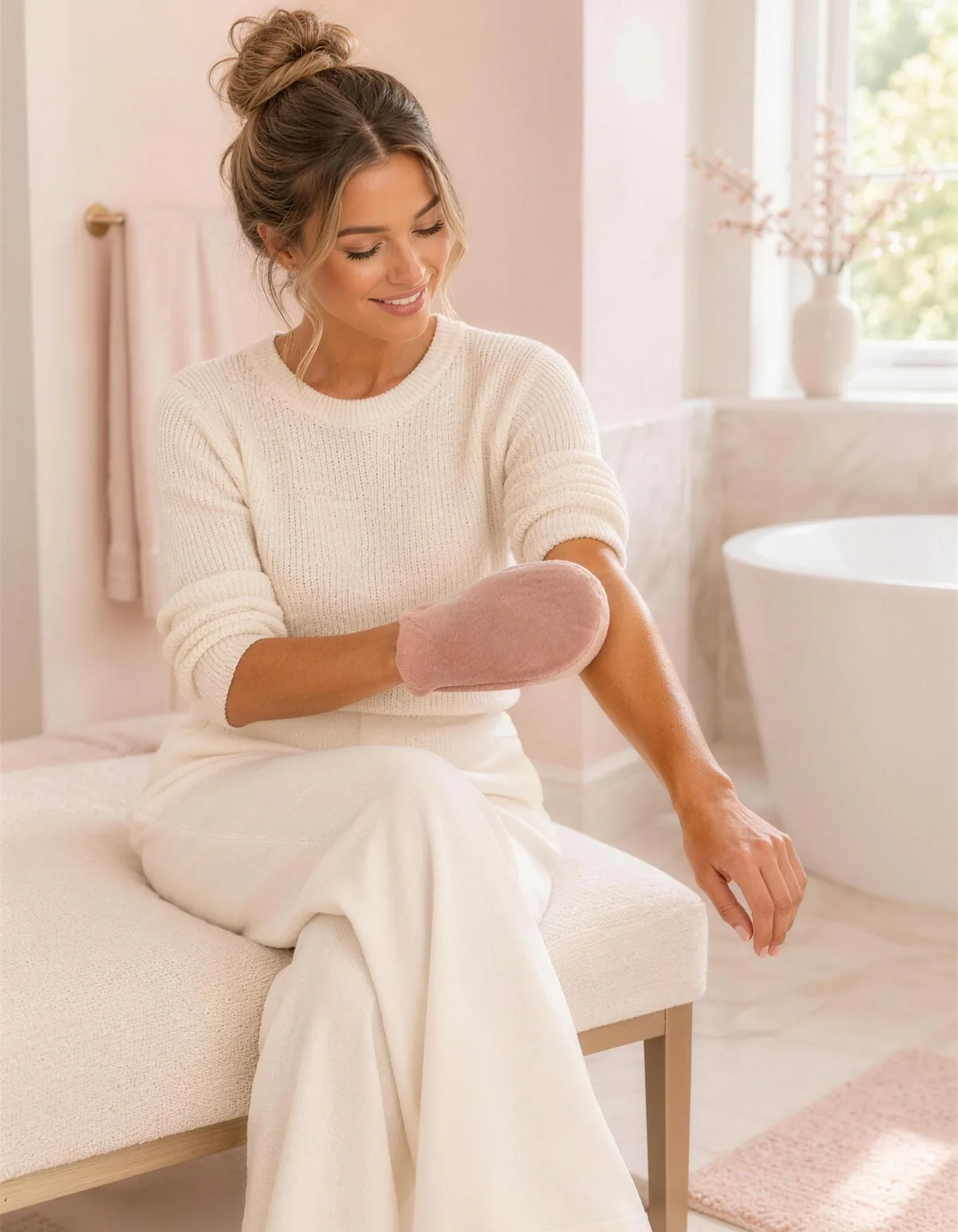
- Apply in sections, such as arms, then legs, then torso, massaging the product in with circular motions. A tanning mitt makes this smoother and keeps your palms clean.
- Wash your hands with soap and water after each section if you are not using a mitt.
- Blend at the wrists and ankles, extending a light layer onto the hands and feet so there is no line.
- Dilute over the joints: knees, ankles and elbows absorb more, so lightly rub them with a damp towel or a thin layer of lotion.
- Let it dry for at least 10 minutes before dressing, then wear loose clothing and avoid sweating for about three hours.
How to self tan your face
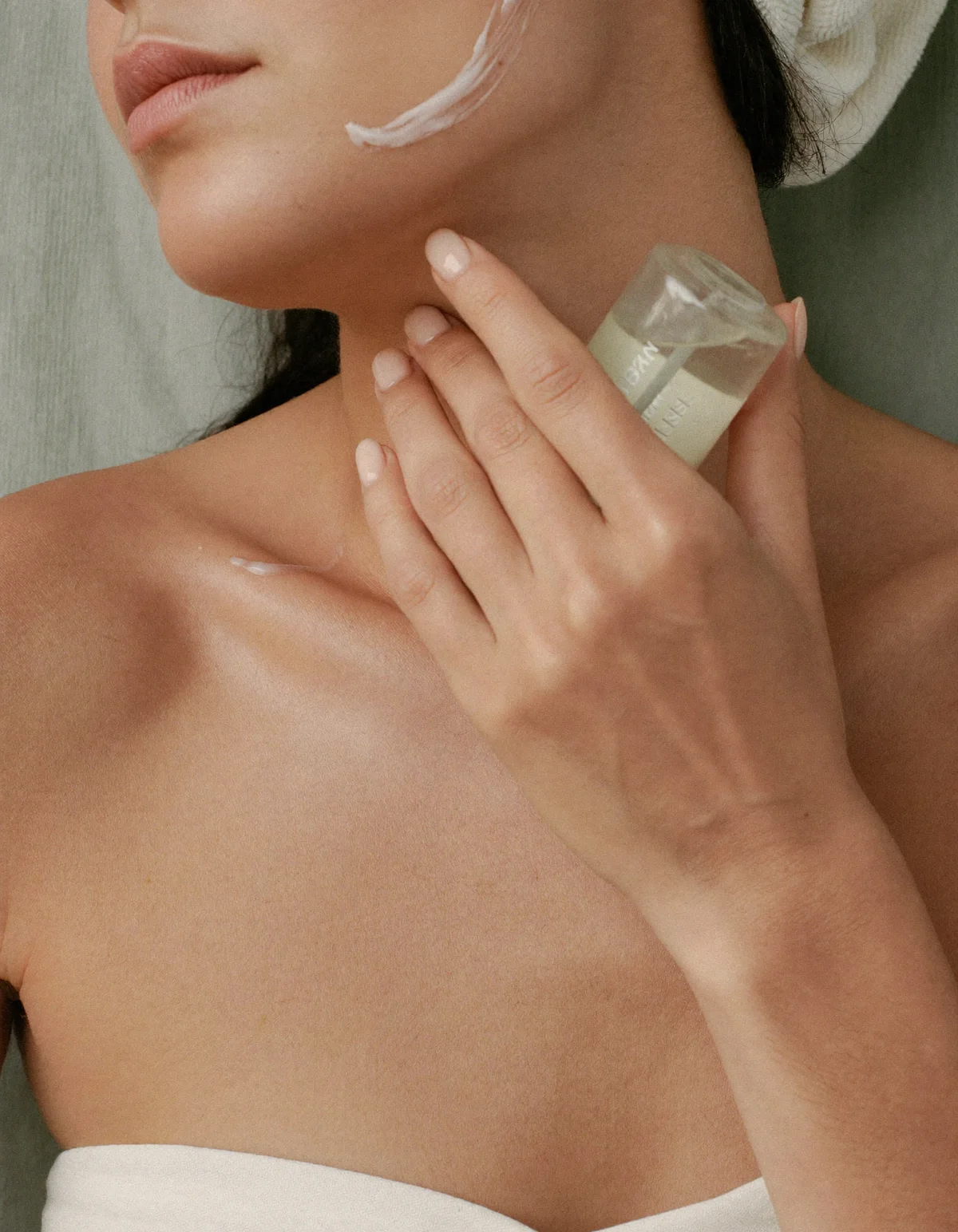
- Use a face-specific tanner or drops mixed into your night moisturizer, since body formulas can be heavier.
- Apply to clean, dry skin and blend past the jaw onto the neck and ears.
- Go light around the hairline and brows, and wipe them with a damp cotton pad afterward so they do not stain.
- Pause actives such as strong exfoliating acids right before tanning, as they can make the color patchy; see retinal vs retinol for how retinoids affect skin turnover.
How to fix streaks, patches and orange palms
- Streaks: buff the edges with an exfoliating mitt in the shower, or blend more tanner lightly over the pale gaps.
- Dark knees, ankles or elbows: gently exfoliate those areas with a mitt, or use a dedicated tan eraser, which is gentler on skin.
- Orange palms: scrub with a nail brush and soap, or rub with an exfoliating glove; next time use a mitt.
- Too dark overall: a long warm bath followed by an all-over exfoliation lifts the top layer of color.
Choosing a shade that looks natural
- Fair skin: a light or gradual formula with a slightly cool or neutral base avoids orange tones.
- Medium skin: a medium shade with a golden base.
- Olive and deeper skin: a dark or ultra-dark formula with a violet or green base gives a rich bronze, not an orange cast.
- When unsure, go lighter. You can layer a second coat the next day.
How to make your self tan last longer
- Moisturize every day, since dry skin flakes and takes the color with it.
- Pat dry after showering instead of rubbing with a towel.
- Avoid long hot baths and chlorine, which speed up fading.
- Top up with a gradual tanner every few days instead of reapplying a full coat.
Self tanner and sunscreen
A self tan does not protect against UV rays, even if your skin looks darker. The AAD recommends daily sunscreen that is SPF 30 or higher, broad spectrum and water resistant. A few tanners contain SPF, but it only lasts a few hours after application, not all the days your tan lasts. Our guide to the best sunscreen for your face covers how to choose one you will wear every day.
Read next: Beef Tallow for Skin: Benefits, Risks, Who It Suits · Peptides for Skin: What They Do and Which Work
Questions people ask about this
How does self tanner work?
Most use DHA, a sugar that reacts with proteins in the top layer of the skin to create a brown color over a few hours. The color fades as that layer sheds, usually in five to seven days.
How do you apply self tanner without streaks?
Exfoliate, dry your skin, apply in sections with a mitt using circular motions, dilute over the knees, ankles and elbows, and let it dry for at least 10 minutes before dressing.
How long does self tanner last?
Usually five to seven days. Daily moisturizer, patting dry and avoiding long hot baths help it last.
Can you use body self tanner on your face?
You can, but a face-specific tanner or drops mixed into moisturizer is usually lighter and less likely to clog pores. Blend onto the neck and ears.
How do you get self tanner off your hands?
Scrub with soap and a nail brush or an exfoliating glove. Using a tanning mitt prevents it.
Does self tanner protect you from the sun?
No. A self tan does not protect against UV rays. You still need a broad-spectrum sunscreen of SPF 30 or higher every day.