Business casual for women: what to wear, and what the code leaves out
Business casual has no standard definition. What to wear as a woman, whether jeans and sneakers pass, and how to read your own office.
The short answer
Business casual is a workplace code with no standard definition: smarter than casual, less formal than a suit. A safe base for women is tailored trousers or a skirt, a blouse or fine knit, a blazer or cardigan and polished closed shoes. Read your own office by matching the most senior people, and move one step up when clients or visitors are in.
- Fit and condition matter more than the item: hem length, shoulder seams, pressed shirts and cared-for shoes.
Business casual is the dress code that most workplaces use and almost none define. It means smart enough for colleagues and clients, but without the formality of a suit. The simple version for women is tailored trousers or a skirt, a blouse or fine knit, and polished shoes, with a blazer or cardigan to decide how formal the day is. The harder part is the grey area: denim, sneakers, sleeveless tops and Fridays.
What does business casual mean for women?
Business casual sits between formal business wear and casual clothing. It is smarter than a weekend outfit and less formal than a full suit, and it changes from one office to the next. A creative studio, a bank and a school will all use the same two words and expect different things. The reliable way to read it is to look at what the most senior people in your workplace wear, and to dress at or a notch above that level.
What can you wear for business casual?
Most of what suits the code is a small set of repeatable items. Tailored trousers, a pencil or A-line skirt at a sensible length, a shirt dress, blouses, fine knits, blazers and cardigans, and closed or neat shoes are accepted nearly everywhere.
| Item | Safe almost everywhere | Check your office first | Usually too casual |
|---|---|---|---|
| Trousers | Tailored trousers, chinos, wide-leg in a structured fabric | Dark straight denim, cropped trousers | Leggings, joggers, ripped jeans |
| Skirt or dress | Knee-length or midi skirt, shirt dress, knit dress | Mini length, very fitted styles | Beach dress, cut-off hem |
| Top | Blouse, fine knit, polo, shell under a blazer | Sleeveless tops, plain tees | Logo tees, crop tops, camisoles alone |
| Layer | Blazer, cardigan, structured jacket | Denim jacket, light fleece | Hoodie, oversized sweatshirt |
| Shoes | Loafers, flats, low heels, ankle boots | Clean leather sneakers, open-toe sandals | Flip-flops, running shoes |
Offices differ. When in doubt, match the most senior people and add a layer.
Can you wear jeans for business casual?
It depends on the office, so ask or watch. Many workplaces accept dark, plain, well-fitting jeans, often on a Friday or when no clients are visiting. Others do not. If you wear them, choose a dark wash, a clean hem and no rips, and pair them with a tailored layer and polished shoes, the same approach as in our guide to smart casual for women.
What shoes are right for business casual?
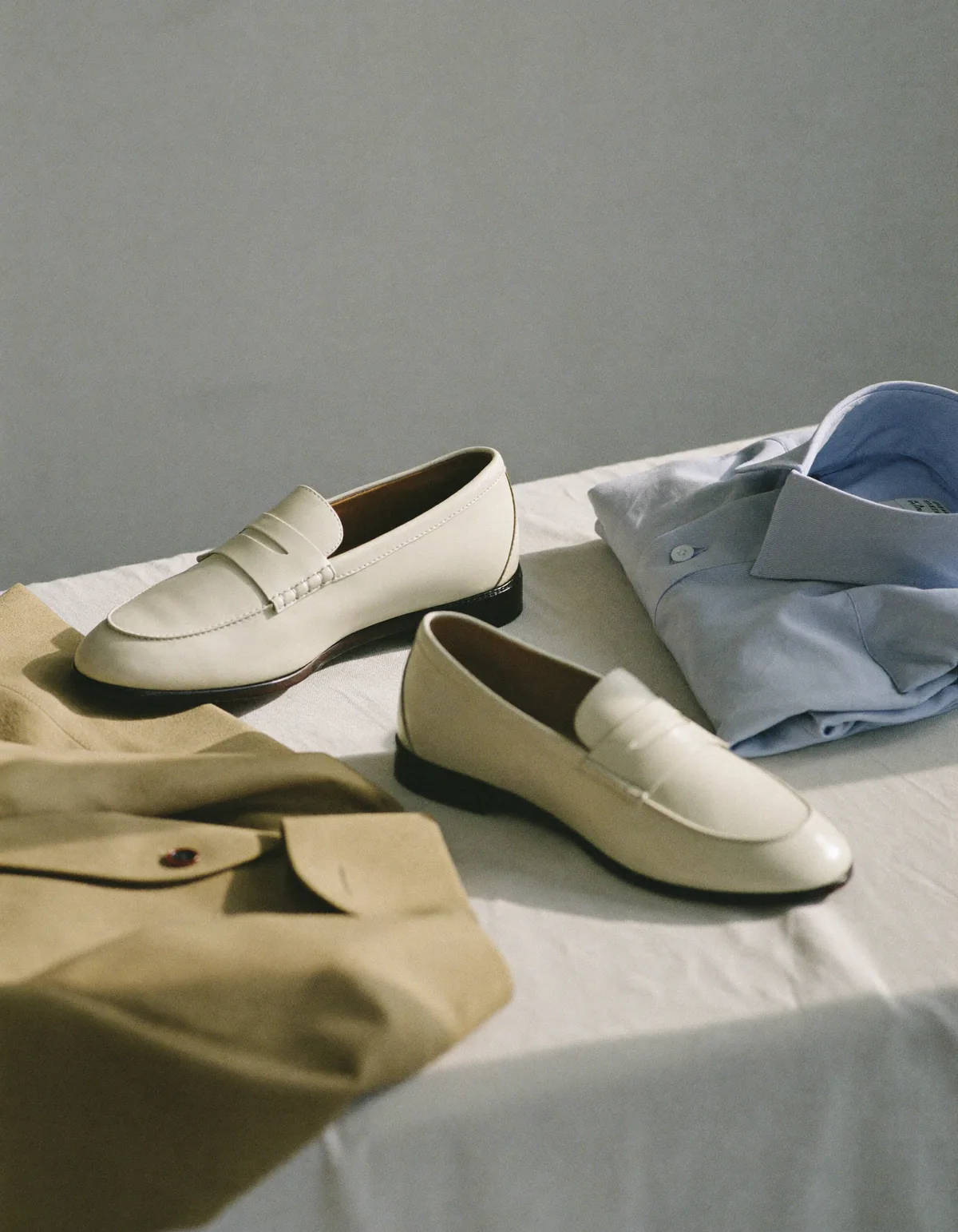
Closed, polished shoes are the safest answer: loafers, leather flats, ankle boots and low block heels. Clean, minimal leather sneakers are accepted in some offices and refused in others. Open-toe sandals are common in warm weather but vary by workplace. What does not pass anywhere is anything that looks like sports equipment or beachwear. If you walk a lot, comfort is a legitimate reason to choose a flatter shoe; for foot problems, see our guides on shoes for bunions.
What is the difference between business casual and smart casual?
They overlap heavily. Business casual assumes an office and the expectations of colleagues. Smart casual is the social version of the same idea, so it allows slightly more relaxed pieces such as dark denim and can be dressed up for dinner. If you build a wardrobe that works for one, it will cover most of the other.
How do you build a business casual wardrobe?
A small set of repeatable pieces covers a working week. Start with two pairs of tailored trousers in neutral colours, one skirt or dress, three to four tops in plain colours, a blazer, a cardigan and two pairs of comfortable, polished shoes. Choose fabrics that hold their shape and do not crease badly, and favour colours that mix with each other. The approach in our capsule wardrobe guide applies directly, and planning each week from your calendar, as described in how to plan outfits for the week, stops Monday mornings from becoming guesswork.
What are the common business casual mistakes?
- Fit. Trousers too long, blouses too tight across the chest and blazers with shoulder seams that have slid down the arm all look careless, whatever the item.
- Condition. Pilled knits, creased shirts and scuffed shoes undo a good outfit.
- Misreading the office. Dressing for your own idea of the code instead of what colleagues wear.
- Underdressing for visitors. If clients or senior people are visiting, move one step up, even if the usual day is relaxed.
Fabric care helps too: wool and silk blends need gentler washing, which we cover in wool, cashmere and merino compared.
Read next: Cocktail Attire for Women: What to Wear · What to Wear to a Funeral: A Quiet Guide
Questions people ask about this
What is business casual for women?
Business casual is a workplace dress code smarter than casual and less formal than a suit. For women it usually means tailored trousers or a knee-length skirt, a blouse or fine knit, a blazer or cardigan and polished closed shoes. Details vary by office.
Can I wear jeans in a business casual office?
In many offices yes, if they are dark, plain, well-fitted and without rips, and worn with a tailored layer and polished shoes. Some offices do not allow denim, so check or watch what colleagues wear.
Are sneakers business casual?
Clean, minimal leather sneakers are accepted in some offices and not in others. Loafers, flats, low heels and ankle boots are the safer choices.
Can I wear a sleeveless top for business casual?
Often yes, if the top is structured and the straps are wide, with a blazer or cardigan nearby. Some offices prefer sleeves, so match your workplace.
What is the difference between business casual and business professional?
Business professional is the formal code, usually a suit. Business casual drops the matching suit and allows separate pieces, knits and a wider range of shoes.