Fiber supplements and fibermaxxing: how much fiber you need, and how to get it
How much fiber you need, why most people fall short, what the fibermaxxing trend gets right and wrong, and how to choose and start a fiber supplement.
The short answer
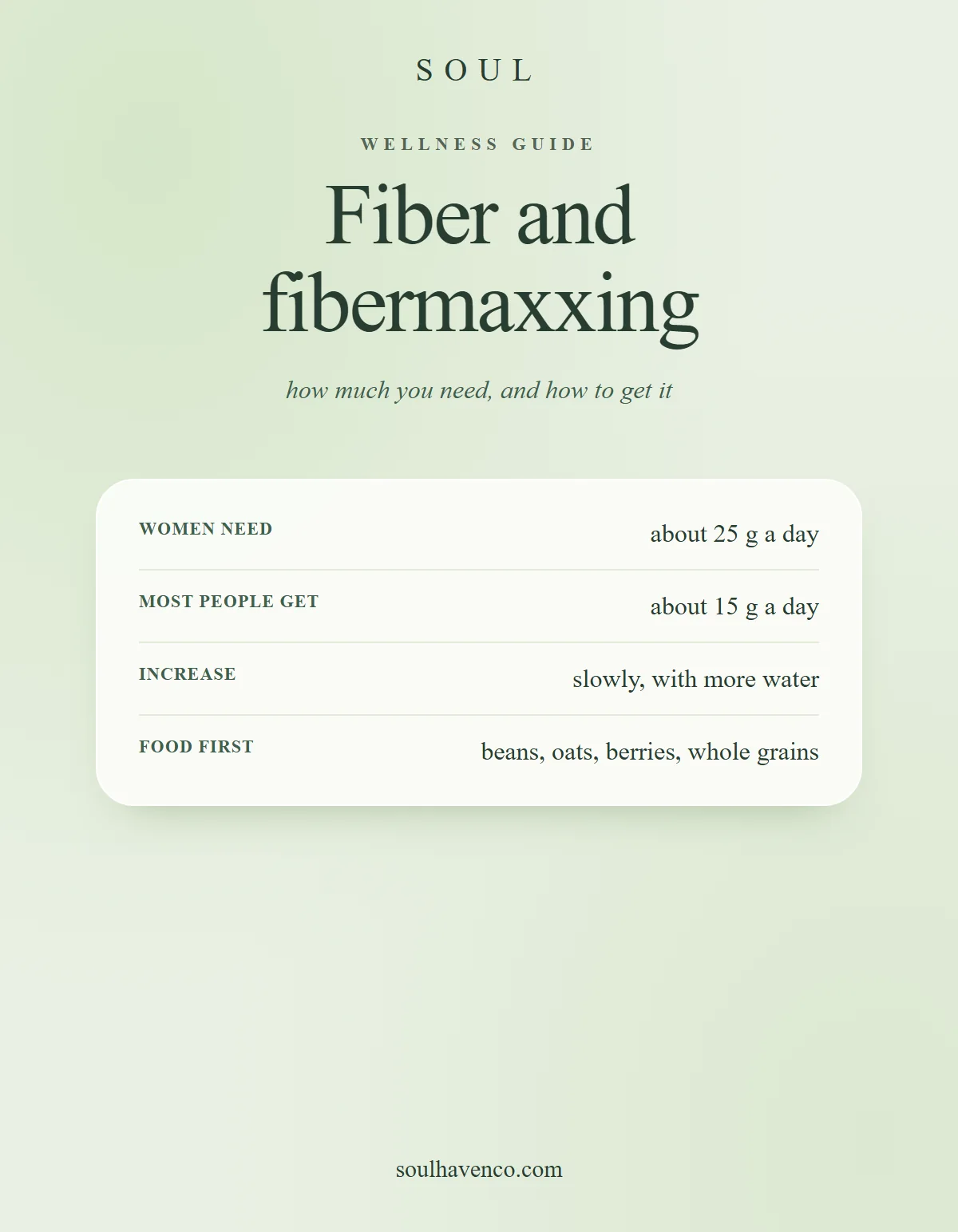
Women need about 25 grams of fiber a day; most people get about 15. Fibermaxxing gets the goal right but the extreme wrong: no proven benefit from doubling the target. Increase slowly and drink more water to avoid gas and bloating.
- Food first; psyllium and other supplements can fill the gap. Check with a doctor if you have bowel disease.
Most adults need about 25 to 38 grams of fiber a day, and most get only about 15. That gap is what the "fibermaxxing" trend is trying to close, and dietitians mostly agree with the goal. The catch is speed: jumping to a huge amount too fast causes gas, bloating and cramps, and doubling the target has no proven extra benefit. Food comes first, and a fiber supplement can help fill the gap. Here is how much you need, how to increase it, and how to choose a supplement.
General information, not medical advice. If you have IBS, Crohn's disease, ulcerative colitis, have had bowel surgery, or take medicines, talk to a doctor or dietitian before increasing fiber.
How much fiber do you need?
UCLA Health, citing the US Department of Health and Human Services, gives 25 grams a day for women and 38 for men. The Harvard Nutrition Source says adults need at least 25 to 35 grams. A CU Anschutz article lists targets that change with age:
| Age | Women | Men |
|---|---|---|
| 19 to 30 | 28 g | 34 g |
| 31 to 50 | 25 g | 31 g |
| 51 and over | 22 g | 28 g |
As listed by CU Anschutz, citing the NIH. Other sources round these to 25 g for women and 38 g for men.
Most people fall well short. UCLA Health reports that more than 90% of women and 97% of men miss the target, and Harvard puts the average intake at about 15 grams a day.
What is fibermaxxing?
Fibermaxxing is a social media trend that encourages people to eat much more fiber, with some influencers promoting 50 to 70 grams a day or more. UCLA dietitian Yasi Ansari points out that the name is a misnomer: there is no upper limit for dietary fiber, so the useful goal is reaching the recommended amount steadily, not maxing out. CU Anschutz dietitian Bonnie Jortberg says there is no evidence that doubling or tripling the target adds benefit, and very high amounts can cause bloating, gas and diarrhea.
So the trend is right about the problem and wrong about the extreme. Getting from 15 grams to 25 or 30 is the win.
Why fiber matters
The sources describe these benefits:
- Regularity: fiber softens and bulks stool and helps food move through the gut.
- Cholesterol: soluble fiber modestly lowers LDL cholesterol, according to a meta-analysis cited by Harvard.
- Blood sugar: soluble fiber helps regulate it, and diets low in fiber are linked to higher type 2 diabetes risk.
- Fullness: fiber increases satiety, which helps with weight management at recommended intakes.
- Long-term risk: higher fiber intake is linked with lower risk of heart disease, diverticular disease and colorectal cancer. These are associations from population studies, not guarantees.
Soluble vs insoluble fiber
Soluble fiber dissolves in water to form a gel; it is the type linked to cholesterol and blood sugar. Sources include oats, barley, chia seeds, beans, lentils, apples and blueberries. Insoluble fiber does not dissolve and adds bulk that keeps things moving; sources include whole wheat and bran, brown rice, quinoa, leafy greens, nuts and fruit skins. Most plant foods contain both.
High-fiber foods to start with
- Breakfast: oats with berries and chia or ground flax.
- Beans and lentils: some of the most fiber-dense foods there are; add them to soups, salads and pasta.
- Whole grains in place of white: brown rice, quinoa, whole-wheat bread and pasta.
- Whole fruit instead of juice, and vegetables at every meal.
- Nuts and seeds as snacks or toppings.
UCLA Health notes a label tip: a food that provides 20% or more of the Daily Value for fiber counts as high in fiber.
Should you take a fiber supplement?
Food comes first, because high-fiber foods also bring vitamins, minerals and other nutrients. But intake is so low that Jortberg, who generally dislikes supplements, makes an exception for fiber. Harvard also notes that supplements such as psyllium can help, without replacing high-fiber foods.
| Supplement | Type | Often used for |
|---|---|---|
| Psyllium husk | Soluble, gel-forming | Regularity; it also has a cholesterol-lowering effect |
| Methylcellulose | Soluble, non-fermenting | Regularity, often with less gas |
| Wheat dextrin | Soluble | Easy to dissolve in drinks; blood sugar and cholesterol support |
| Inulin | Soluble, fermentable | Feeding gut bacteria; more likely to cause gas |
Finding the right one can take some trial and error, as CU Anschutz notes. Ask a pharmacist which suits you.
How to increase fiber without the bloating
- Go slowly. Add a few grams a week rather than doubling overnight. UCLA Health and Harvard both warn that a sudden jump causes gas, bloating and cramping.
- Drink more water as you add fiber, especially with supplements; too little water can make constipation worse.
- Expect an adjustment period. Jortberg notes that discomfort can last a week or two as your body adjusts.
- Spread it across the day rather than one huge fiber meal.
- Keep eating protein. Fiber should add to meals, not crowd out everything else.
Who should be careful
People with IBS, Crohn's disease or ulcerative colitis, and anyone who has had bowel surgery, should get advice before increasing fiber, according to UCLA Health and CU Anschutz. Fiber supplements can also change how some medicines are absorbed, so ask a pharmacist about spacing them apart.
For more on daily habits that support how you feel, see our guides to magnesium for sleep and lowering cortisol.
Read next: Gut Health: What Helps, According to the Evidence · How to Fall Asleep Fast: What Actually Works · Magnesium Glycinate vs Citrate: Which Form
Questions people ask about this
How much fiber should I eat a day?
About 25 grams for women and 38 for men, according to US health guidance cited by UCLA Health. Targets change slightly with age; for women aged 31 to 50 the NIH figure is 25 grams.
What is fibermaxxing?
A social media trend encouraging people to eat much more fiber. Dietitians support reaching the recommended amount but say there is no evidence that doubling or tripling it adds benefit.
Is it safe to eat a lot of fiber?
There is no set upper limit, but increasing too fast causes gas, bloating and cramps, and very high amounts can cause diarrhea. Increase slowly and drink more water.
What is the best fiber supplement?
It depends on your goal. Psyllium is a soluble, gel-forming fiber often used for regularity and cholesterol; methylcellulose may cause less gas. Ask a pharmacist.
What foods are highest in fiber?
Beans and lentils, oats, chia and flax seeds, whole grains, berries, apples, vegetables, and nuts.
Can fiber supplements interact with medicines?
They can change how some medicines are absorbed, so ask a pharmacist how far apart to take them.