Gut health: what actually helps, and what the evidence says
How to improve gut health: what fiber and fermented foods do, what research says about probiotics, habits that help, and when gut symptoms need a doctor.
The short answer
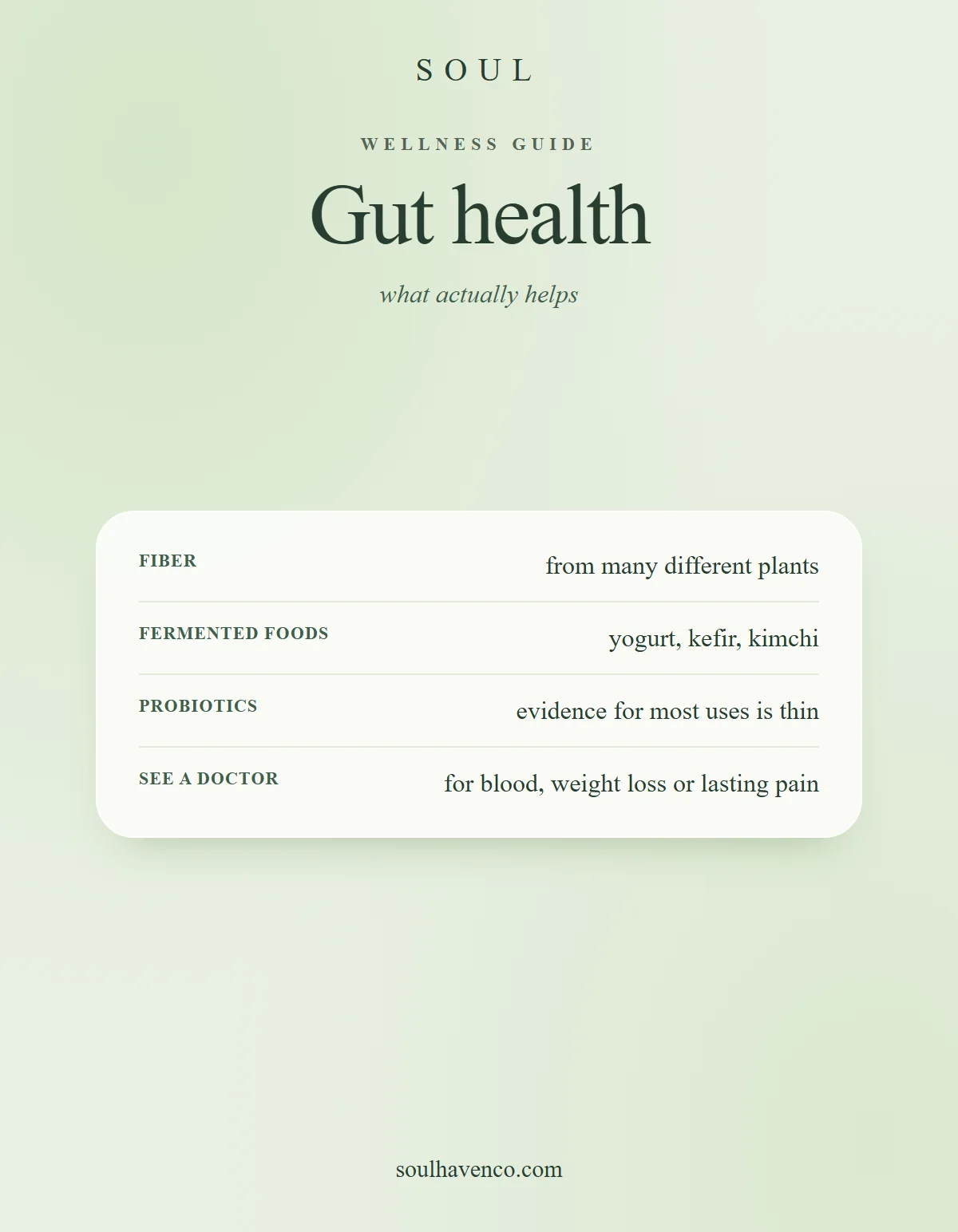
Gut health habits with the best support: more fiber from varied plants, fermented foods, movement and sleep. A 2021 Stanford trial found fermented foods raised microbiome diversity and lowered inflammatory markers. A 2020 gastroenterology guideline found too little evidence for probiotics in most digestive conditions.
- Blood in stool, weight loss or ongoing pain need a doctor, not a supplement.
Gut health usually means the health of your digestive system and the trillions of microbes living in it, often called the gut microbiome. The habits with the best support are unglamorous: eat more fiber from a variety of plants, include fermented foods, move regularly and sleep well. Probiotic supplements are less proven than their marketing suggests: a 2020 US gastroenterology guideline found too little evidence to recommend them for most digestive conditions. Here is what helps, what the research says, and when gut symptoms need a doctor.
General information, not medical advice. Ongoing gut symptoms deserve a doctor's assessment.
What is gut health?
Your large intestine is home to a dense community of bacteria and other microbes. They help break down fiber your body cannot digest, and researchers are studying how they relate to immunity, metabolism and inflammation. A diverse microbiome is generally considered a sign of a healthy one, though scientists are still working out what "healthy" means for each person.
How to improve gut health
- Eat more fiber, from many plants. Fiber feeds gut bacteria. Most adults get about 15 grams a day against a target of 25 or more, according to the Harvard Nutrition Source. Our guide to fiber and fibermaxxing explains how to raise it without bloating.
- Add fermented foods. Yogurt, kefir, kimchi, sauerkraut and kombucha (see the study below).
- Aim for variety. Different plants feed different microbes: vegetables, fruits, whole grains, beans, nuts and seeds.
- Cut back on ultra-processed foods, which are usually low in fiber.
- Move, sleep and manage stress. All three affect digestion and how your gut feels.
- Use antibiotics only when you need them, since they also affect gut bacteria.
What the fermented food study found
In a 2021 Stanford trial, 36 healthy adults ate either a high-fermented-food or a high-fiber diet for 10 weeks. The fermented-food group, eating foods such as yogurt, kefir, kimchi and kombucha, saw their gut microbial diversity rise, with larger servings giving stronger effects, and 19 inflammatory proteins in the blood fell. In the high-fiber group, diversity stayed stable on average over the short trial. The researchers called it a proof of concept: it was small, and they suggested a longer trial might show more effect from fiber.
| Fermented-food diet | High-fiber diet | |
|---|---|---|
| Foods | Yogurt, kefir, fermented cottage cheese, kimchi and fermented vegetables, brine drinks, kombucha | Legumes, seeds, whole grains, nuts, vegetables, fruit |
| Microbiome diversity | Increased, more with larger servings | Stable on average |
| Inflammatory proteins | 19 decreased | None of the 19 decreased |
36 healthy adults, 10 weeks. Source: Stanford Medicine news on the study published in Cell.
Do probiotics help gut health?
Probiotic supplements contain specific strains of live bacteria. In 2020, the American Gastroenterological Association reviewed the evidence for digestive conditions including irritable bowel syndrome, Crohn's disease and ulcerative colitis, and found too little evidence to recommend probiotics for most of them, outside a few specific uses such as certain strains to help prevent C. difficile infection in people taking antibiotics. The guideline covered digestive diseases, not everyday wellness, and other expert groups have reached somewhat different conclusions. The practical takeaway: probiotics are not a general gut-health fix, and if you try one for a specific problem, ask a doctor which strain has evidence for it.
Foods for gut health
- Fermented: plain yogurt, kefir, kimchi, sauerkraut, miso, kombucha.
- High fiber: beans, lentils, oats, barley, berries, apples, pears, leafy greens.
- Prebiotic-rich: onions, garlic, leeks, asparagus, bananas and whole grains, which feed gut bacteria.
- Varied: nuts, seeds and different colored vegetables across the week.
Signs of an unhappy gut, and when to see a doctor
Occasional gas, bloating and changes in bowel habits are normal, especially when you change your diet. See a doctor if you have symptoms that last or get worse, or any of these: blood in your stool, unexplained weight loss, persistent diarrhea or constipation, severe or ongoing abdominal pain, difficulty swallowing, vomiting, or a change in bowel habits after age 45. These need a proper assessment, not a supplement.
Gut health trends, briefly
- "Fibermaxxing": right goal, but increase gradually; see our fiber guide.
- Gut health tests sold online: they report on your microbes, but science cannot yet tell most people what to do with the results.
- Detoxes and cleanses: your liver and kidneys already do this; they are not needed for gut health.
Related reading: magnesium for sleep and how to lower cortisol.
Read next: Berberine: Benefits, Evidence and Side Effects · How to Fall Asleep Fast: What Actually Works · Deodorant Not Working? Why You Still Smell
Questions people ask about this
How can I improve my gut health?
Eat more fiber from a variety of plants, include fermented foods such as yogurt, kefir and kimchi, cut back on ultra-processed food, move regularly, sleep well and use antibiotics only when needed.
What foods are good for gut health?
Fermented foods (yogurt, kefir, kimchi, sauerkraut, miso), high-fiber foods (beans, lentils, oats, berries, greens) and prebiotic foods (onions, garlic, leeks, asparagus, bananas).
Do probiotics work?
For most digestive conditions, a 2020 American Gastroenterological Association guideline found too little evidence to recommend them, with a few specific exceptions. Ask a doctor which strain, if any, suits a specific problem.
Are fermented foods good for you?
A 2021 Stanford trial found a fermented-food diet increased gut microbial diversity and lowered inflammatory markers in 36 healthy adults over 10 weeks. It was small, but promising.
What are signs of poor gut health?
Ongoing bloating, gas, diarrhea or constipation can be signs, but they have many causes. Blood in stool, weight loss or persistent pain need a doctor.
Are gut health tests worth it?
They describe your microbes, but science cannot yet tell most people what to change based on the results.