Women’s hunting clothes: why a men’s small leaves you cold
Fit is part of warmth. The three-layer system, the fabric that fails when wet, the bathroom-break detail, and what blaze orange rules ask of you.
The short answer
Fit is warmth: too loose pumps warm air out, too tight crushes the insulation.
- Fit is warmth: too loose pumps warm air out, too tight crushes the insulation.
- Base layer merino or synthetic, never cotton; a mid layer for warmth; a quiet, windproof outer.
- Look for drop seats or side zips on bibs, and a rise that does not dig in when you sit.
- Match camo to terrain, and check your state's blaze orange rules before every season.
For years, women's hunting clothing meant men's clothing in a small size, sometimes in pink. The outdoor industry even has a phrase for it — “shrink it and pink it” — and anyone who has worn it knows the result: sleeves past the fingertips, shoulders slipping, a jacket that fits the chest and strains at the hips, trousers that gape at the waist when you sit. It is uncomfortable. It is also, and this is the part that surprises people, colder.
Why fit is part of warmth
Insulation does not make heat. It traps still air your body has warmed. Clothes that are too loose leave pockets of air that pump out with every movement — the bellows effect — and let cold in at the gaps. Clothes that are too tight compress the insulation, so there is less air to trap. A cut made for your proportions keeps insulation close to you without squashing it, which is why a well-fitted mid-weight layer can outperform a bulky ill-fitting one.
Many women also run colder at the extremities — hands and feet cool faster — so the cuff that seals at your wrist and the hem that covers your lower back do real work.
The three-layer system
Base layer, against the skin, moves sweat away. Merino wool or a synthetic both work; merino resists odor better and stays warmer when damp. Cotton is the one to avoid: it soaks up sweat and holds it, and wet cotton stops insulating and starts drawing heat from you — the reason outdoor people say “cotton kills.”
Mid layer provides warmth: fleece or a light insulated jacket, chosen for how cold it is and how still you will be.
Outer layer stops wind and water. For hunting specifically, it also has to be quiet — a soft, brushed face rather than a crinkly nylon that announces every movement.
| Mostly walking | Mostly sitting still | |
|---|---|---|
| Base | Light merino or synthetic | Mid-weight merino |
| Mid | A thin fleece, or none | An insulated jacket, plus a vest |
| Outer | A breathable shell, vents open | Windproof and quiet |
| Hands and feet | Light gloves, wool socks | Warmer gloves, spare dry socks |
| The rule | Dress to feel slightly cool walking in | Add layers the moment you stop, before you chill |
Sweat is the enemy. Walking in over-dressed and then sitting still in damp layers is how a mild morning turns into a miserable one.
The details made for women, or missing
The bathroom break. Hours outdoors, in bibs and layers, with nowhere to go — this is the practical problem men's designs ignore entirely. Look for bibs or trousers with a drop seat or long side zips, and check the rise so the waistband does not dig in when you sit.
Proportions. A genuine women's cut has narrower shoulders, shorter sleeves and torso, and more room through the hips. Try jackets on over your mid layer, and sit down in them before you decide.
Scent. Odor-control treatments, and merino's natural resistance, reduce the smell a day of effort builds up — and the washing advice in why synthetics hold on to odor applies to technical layers too.
Camouflage, and the orange that matters more
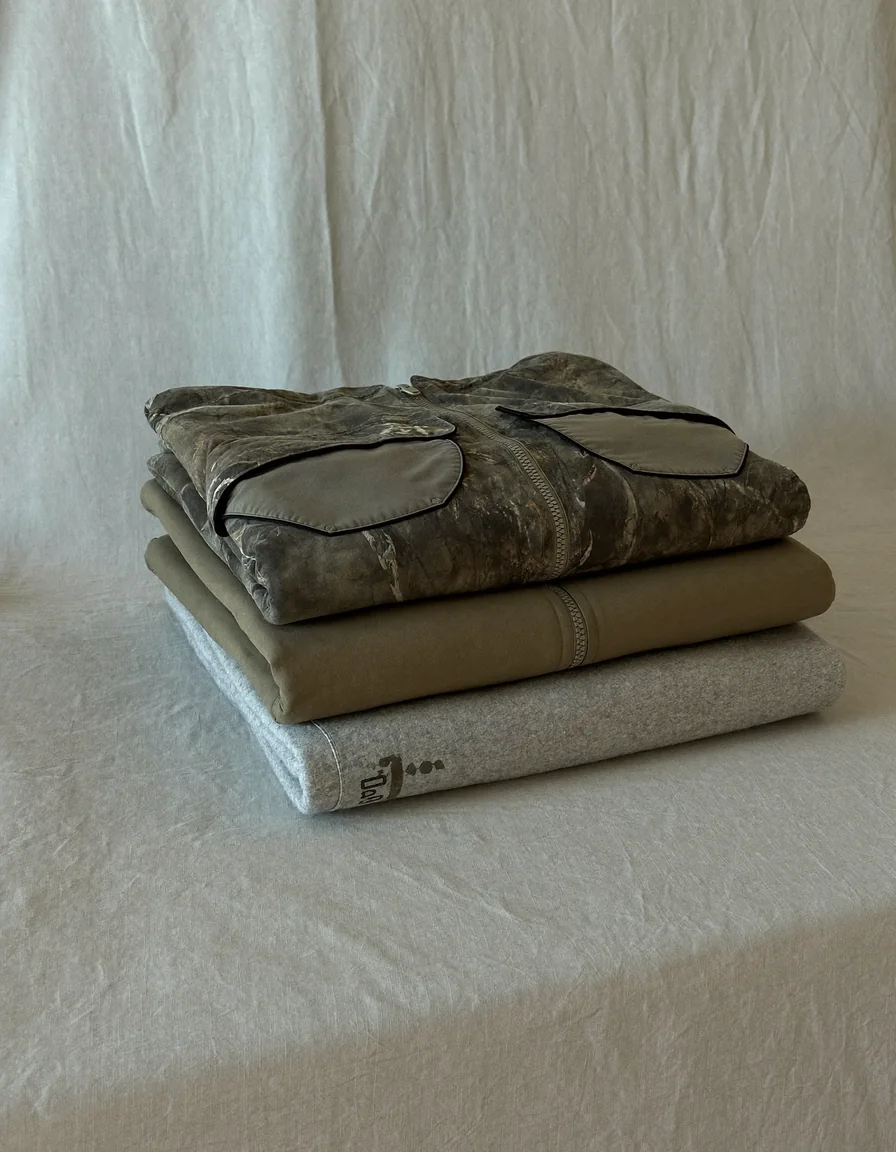
Match the pattern to the terrain rather than the catalogue: timber, open country, desert and snow each have their own patterns, and the wrong one stands out in a way the right one does not.
More important than any pattern is blaze orange. Many US states require hunters to wear a minimum amount of it during firearm seasons, often measured in square inches and sometimes including a hat. The rules vary by state and by season, so check your state wildlife agency before you go. Deer see orange poorly; other hunters see it clearly, which is the whole point.
Plenty of women wear this clothing without ever hunting — birdwatching, hiking in the cold, farm work, or simply because it is warm and well made. The same fit rules apply to all of it.
Questions people ask about this
Why are men's hunting clothes colder on women?
Fit affects warmth: loose clothing pumps warm air out and lets cold in, while tight clothing compresses insulation. Men's cuts in small sizes are usually loose in the shoulders and sleeves and tight at the hips.
What should women wear as a base layer for hunting?
Merino wool or a synthetic that moves sweat away from the skin. Avoid cotton, which holds moisture and stops insulating when wet.
How do women go to the bathroom in hunting bibs?
Look for bibs or trousers with a drop seat or long side zips designed for it, and check the rise so the waistband does not dig in when you sit.
Do women need to wear blaze orange when hunting?
Many US states require a minimum amount of blaze orange for all hunters during firearm seasons, sometimes including a hat. The rules vary, so check your state wildlife agency.
Which camo pattern should I choose?
Match it to the terrain you hunt: timber, open country, desert and snow each have patterns that blend in there and stand out elsewhere.