Hair color ideas for fall 2026, and how to pick the shade that suits you
Hair color ideas for fall 2026: espresso, burnished brunette, copper, auburn and honey blonde, how to match a shade to your skin tone, and how to dye safely.
The short answer
Fall 2026's hair colors are warm and glossy: espresso, burnished brunette, mulled wine, auburn, copper bronde and honey blonde. Choose by undertone: warm skin suits golden and copper shades, cool skin suits ash and blue-based reds. For low maintenance, stay near your natural color or keep a deeper root.
- Patch test before every dye job, and never use hair dye on brows or lashes.
The hair color ideas getting the most attention for fall 2026 are warm and glossy: deep espresso brown, brunette with copper and cinnamon warmth, red and auburn, copper bronde, and golden honey blonde. The trick is less about the trend and more about your coloring. A shade that echoes your skin's undertone looks expensive; one that fights it looks flat. Here are the shades, how to choose one, and how to dye safely.
Fall 2026 hair color trends
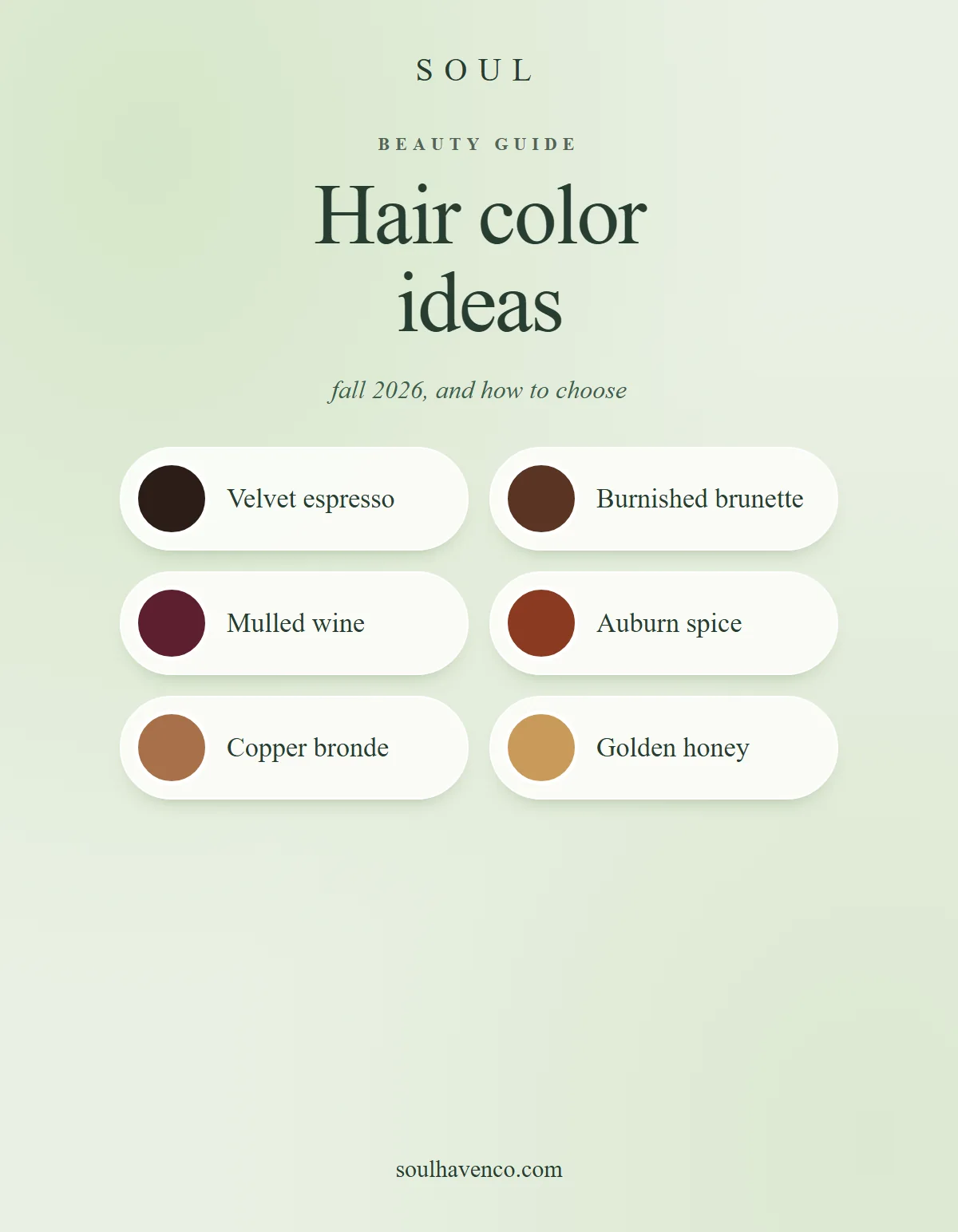
In The Zoe Report's fall 2026 roundup, colorists Sierra Adam, Cass Kaeding and Matt Rez name these shades. The swatches are approximate screen colors to give you an idea, not dye formulas.
- Velvet espresso
- Burnished brunette
- Mulled wine
- Auburn spice
- Copper bronde
- Golden honey blonde
| Shade | What it is | Easiest on |
|---|---|---|
| Velvet espresso | A glossy deep brown with a glass-like shine | Dark hair already; low commitment if you are a natural brunette |
| Burnished brunette | Rich brown with copper, cinnamon and amber warmth | Warm and neutral undertones |
| Mulled wine | A deep red with a purple tinge | Cool and neutral undertones, deeper skin tones |
| Auburn spice | A mix of red, copper, cherry and warm auburn | Warm undertones and freckled, golden skin |
| Copper bronde | Dark blonde with soft copper and caramel | Light brown and dark blonde hair, warm undertones |
| Golden honey blonde | Warm honey and gold, with a slightly deeper root | Warm undertones; a deeper root makes grow-out softer |
Shade names and descriptions from The Zoe Report, fall 2026. The 'easiest on' column is general color-theory guidance, not from the source.
How to choose a hair color that suits your skin tone
Hair sits right next to your face, so it works like a giant color swatch. The same rules that decide which clothes flatter you decide which hair colors do:
- Warm undertones (gold jewelry looks best, skin tans golden): golden, copper, caramel, honey and warm brown shades. Burnished brunette, auburn spice, copper bronde and golden honey all sit here.
- Cool undertones (silver looks best, skin burns pink): ash, beige, cool brown and blue-based red shades. Of the fall list, mulled wine and a cool-leaning espresso are the closest fits.
- Neutral undertones: most shades work; avoid the extremes of very ashy or very brassy.
- Contrast: if your features are soft and blended, stay within two shades of your natural color. If you have high contrast, such as dark hair with light skin, deeper and richer shades look natural.
Not sure of your undertone? Our free color analysis quiz finds your season, and each season page has a hair color section, for example Soft Autumn or True Winter. Our guide to finding your skin undertone covers the quick tests.
Hair color ideas by your starting color
- Dark brown or black hair: the easiest fall shades are velvet espresso, a glossy deep brown, or burnished brunette with copper warmth added through gloss or fine highlights. Going much lighter means bleaching, which costs more time, money and hair condition.
- Medium brown hair: auburn spice, copper bronde or a warmer brunette are all within reach in one appointment.
- Blonde hair: golden honey blonde warms up a cool blonde for fall; copper bronde is the move if you want a change without going dark all at once.
- Red hair: deepen toward auburn or mulled wine, or brighten the copper with a gloss.
- Gray coming through: warm, multi-tonal shades such as honey or bronde blend gray better than one flat dark color, which shows regrowth faster.
At home or at the salon?
Going one or two shades darker or adding a gloss is realistic at home. Going lighter, adding red over dark hair, or anything involving bleach is worth a colorist: lifting color unevenly is the most common at-home mistake, and fixing it costs more than doing it once. Whichever you choose, the safety steps below apply.
Low-maintenance hair color ideas
- Stay close to your natural color. A gloss or a shade one level warmer grows out without a hard line.
- Ask for a deeper root. Golden honey blonde with a slightly deeper root, as described in the trend report, buys weeks between appointments.
- Choose dimension over all-over color. A few lighter pieces around the face brighten without committing your whole head.
- Book a gloss between colors. Shine is the common thread of every fall shade above, and a gloss refreshes it.
Keeping warm and red shades from fading
Reds and coppers fade fastest. Wash in cool water, use a color-safe, sulfate-free shampoo, and keep heat low: our guide to heat damage and styling tools explains why temperature matters more than the tool.
How to dye your hair safely
The US FDA's hair dye guidance is worth following whether you color at home or in a salon:
- Do a patch test before every use, even if you have used the dye before without a problem. Reactions can happen after a passing test.
- Know about PPD. Paraphenylenediamine is the dye ingredient most linked to allergic reactions, and a temporary "black henna" tattoo can sensitize you to it.
- Never dye eyebrows or eyelashes with hair dye. Hair dyes have caused eye injuries, including blindness.
- Follow the timing exactly, wear gloves and rinse your scalp well.
- Do not dye an irritated, sunburned or damaged scalp, and wait at least 14 days after bleaching, relaxing or perming.
If you have a reaction, contact a doctor first.
Read next: Curling Wand: How to Use One, and Wand vs Iron · Nail Designs for Fall 2026: Simple, Cute and Chic
Questions people ask about this
What hair color is trending for fall 2026?
Warm, glossy shades: velvet espresso, burnished brunette with copper and cinnamon, mulled wine, auburn spice, copper bronde and golden honey blonde, according to colorists quoted by The Zoe Report.
How do I choose a hair color for my skin tone?
Match the undertone. Warm undertones suit golden, copper and caramel shades; cool undertones suit ash, beige and blue-based reds; neutral undertones suit most shades except the extremes.
What is the most low-maintenance hair color?
One close to your natural shade, or a color with a slightly deeper root, so it grows out softly. A gloss between appointments keeps shine.
Do I need a patch test every time I dye my hair?
Yes. The FDA advises a patch test before every use, even with a dye you have used before, because reactions can still happen.
Can I dye my eyebrows with hair dye?
No. The FDA warns that hair dyes have caused eye injuries, including blindness, and are not approved for eyebrows or eyelashes.
How do I stop red hair dye from fading?
Wash with cool water, use a color-safe sulfate-free shampoo, and keep heat styling low. Reds and coppers fade faster than browns.