Curling wand vs curling iron, and why your curls drop by lunchtime
The clamp is the whole difference, and it decides the shape you get. Barrel size, the cooling step everyone skips, and why hair type matters more than the tool.
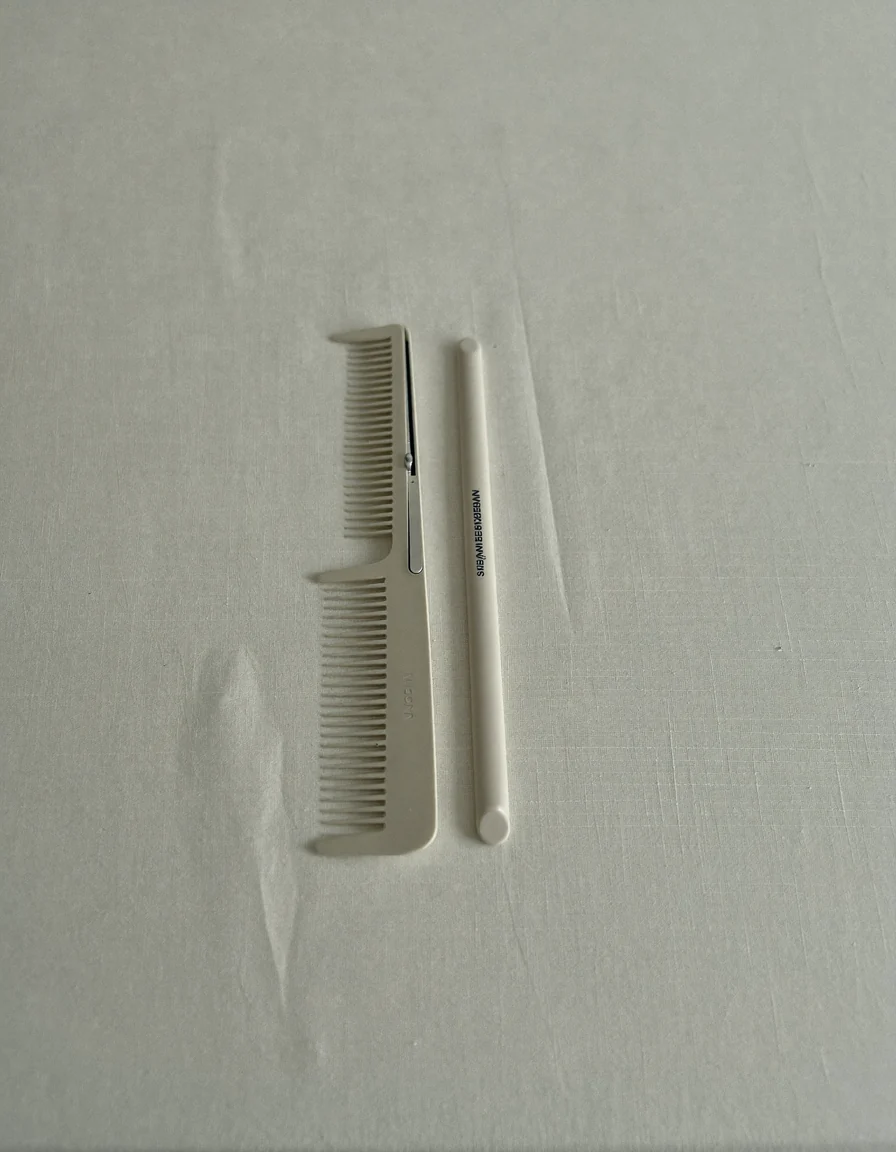
The difference between the two tools is one component: the clamp. Everything else — the shape you get, how you have to hold it, whether the ends stay straight — follows from whether the hair is held against the barrel or wrapped around it.
What the clamp changes
A curling iron has a spring-loaded clamp. It holds the hair for you, which makes it easier to control and considerably easier to use on your own back sections. It also presses a crease into the hair where it grips, and it produces a more uniform, defined, traditional curl.
A wand has no clamp. You wrap the hair around the barrel and hold the end. The result is looser, more natural and more varied — and the ends stay straighter, which is the look most people are actually after when they say they want beachy waves. The cost is that it is harder to use, harder to reach the back, and you are holding hot hair, so a heat glove stops being optional.
A wand is also usually tapered rather than straight, which means the curl tightens toward the end of the barrel — that variation within a single curl is precisely what reads as natural.
| Curling iron | Wand | |
|---|---|---|
| Result | Defined, uniform curls | Looser, more natural waves |
| The ends | Curled, can crease | Left straighter |
| Ease of use | Easier, especially at the back | Steeper learning curve |
| Crease risk | Real, where the clamp grips | None |
| Burn risk | Lower | Higher — use a heat glove |
| Best for | Ringlets, vintage sets, volume | Beachy waves, undone looks |
If you want one tool: an iron is more forgiving, a wand gives the more current look. Interchangeable-barrel sets sidestep the choice.
Barrel size decides the shape more than the tool does
Larger barrel, looser curl. Roughly: 13–19mm gives tight, springy curls; 25mm is the versatile middle and the one to buy if you are buying one; 32mm and above gives loose waves and volume rather than curl.
The important caveat: curls drop. Whatever you create will loosen within the hour, so the shape you want at the end of the evening is tighter than the shape you set. On fine or straight hair, size down from what you think you want.
Why your curls fall out by lunchtime
Almost always one of four things, in this order.
You did not let it cool. This is the big one. Hair sets as it cools, not while it is hot. Dropping a hot curl straight out of the barrel lets gravity pull it out before it has set. Catch each curl in your palm as it leaves the barrel, or pin it to your head with a clip, and leave it until it is completely cool. Then release. This single change does more than any product.
The hair was not properly dry. Any residual moisture becomes steam and the curl cannot hold. It also causes real internal damage — the mechanism is in what heat actually does to hair, and “just drying off the last bit” with a hot tool is the single worst habit in this category.
Sections too big. Hair beyond about 2.5cm wide does not heat through evenly, so the outside is styled and the inside is not, and the inside pulls the outside straight.
Too much conditioner or too little grip. Very slippery, very clean or heavily conditioned hair does not hold a shape. A light texturising spray beforehand helps more than a heavy hairspray afterwards.
Temperature: lower than the dial goes
Most tools ship hotter than anyone needs. Fine or colour-treated hair: around 150–170°C. Normal hair: 170–190°C. Coarse or very resistant hair: 190–200°C, and not above it.
One slow pass at a moderate temperature does less damage than three quick passes at a high one, even though the high pass feels briefer — cumulative exposure is what counts. Which is why an adjustable dial with real numbers on it is the specification worth paying for, and plate materials and ionic claims are a much smaller effect than the number you set.
Direction, which is the whole trick
Alternate the direction of each curl — one toward your face, the next away. Curling everything the same way produces uniform ringlets that read as done. Alternating produces the irregularity that reads as natural.
And leave the last 2–3cm out of the barrel for a modern finish. Curling all the way to the tip is what makes an otherwise good set look dated.
When it is all cool, rake it apart with your fingers rather than a brush. A brush turns separate curls into one uniform wave, which is occasionally what you want and usually not.
Questions people ask about this
What is the difference between a curling wand and a curling iron?
The clamp. An iron holds the hair against the barrel, which is easier to control and gives defined, uniform curls but can crease where it grips. A wand has no clamp — you wrap the hair around it — which gives looser, more natural waves and leaves the ends straighter, at the cost of a steeper learning curve and a real burn risk.
Why do my curls fall out so quickly?
Most often because the curl was not allowed to cool. Hair sets as it cools, not while hot, so dropping a hot curl straight out of the barrel lets gravity pull it out before it sets. Catch each curl in your palm or pin it up until completely cool. Damp hair, oversized sections and over-conditioned hair are the other three causes.
What barrel size should I buy?
25mm if you are buying one tool — it is the versatile middle. Around 13 to 19mm gives tight springy curls, and 32mm and above gives loose waves and volume rather than curl. Remember curls drop within the hour, so set them tighter than the finish you want.
What temperature should I curl my hair at?
Lower than most tools default to. Around 150–170°C for fine or colour-treated hair, 170–190°C for normal hair, and 190–200°C at most for coarse hair. One slow pass at a moderate temperature does less damage than three fast passes at a high one.
Should I curl all my hair in the same direction?
No — alternate, one curl toward your face and the next away. Curling everything the same way produces uniform ringlets that read as styled. Alternating creates the irregularity that reads as natural, and leaving the last few centimetres out of the barrel keeps it modern.