Heat damage: the temperature dial matters more than the tool
Keratin starts changing well below the setting most irons ship on. What heat protectant really does, why one slow pass beats three fast ones, and the one habit that causes the worst damage.
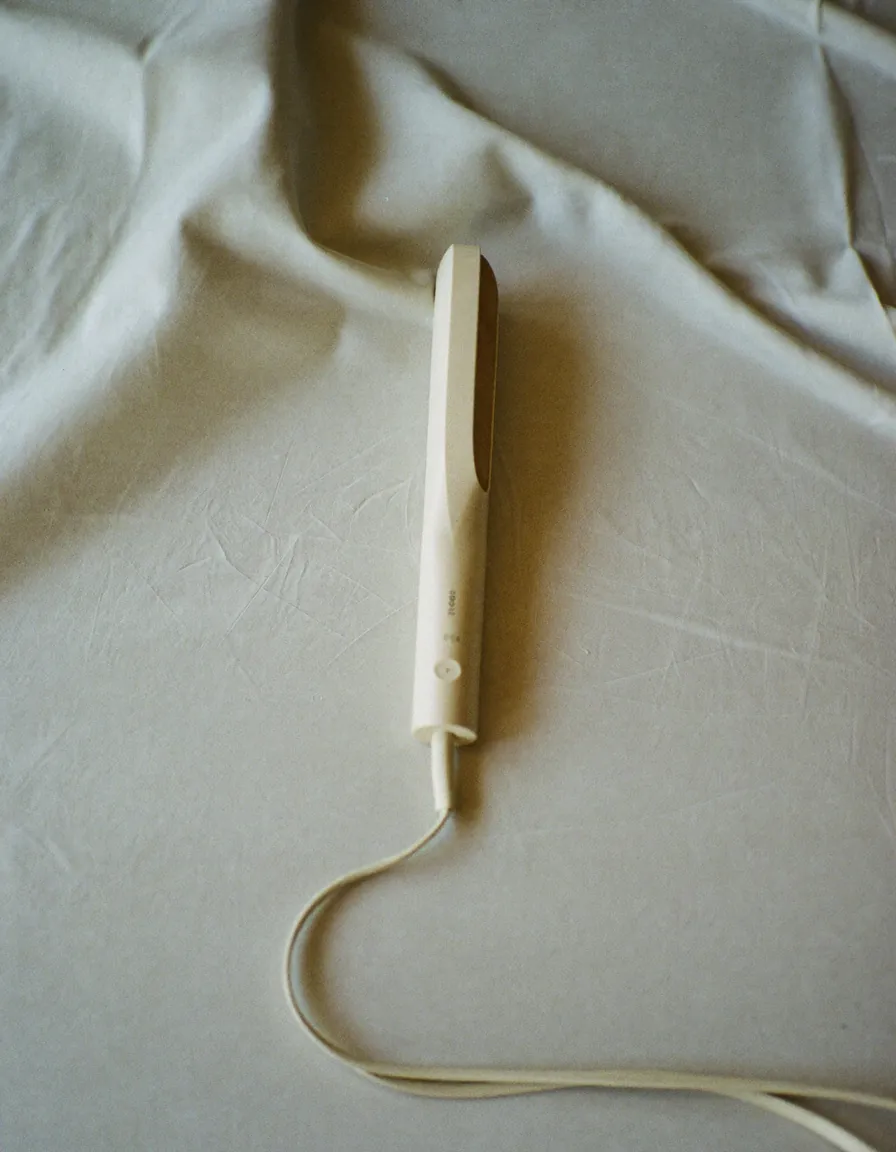
Almost all the argument about heat damage is about which tool to buy, and almost all the damage is decided by a number on the dial that most people never change.
What heat is actually doing
Hair is keratin, a structural protein, and proteins change shape when heated. The changes begin well below the temperature most tools ship set to: keratin starts to denature somewhere around 150 °C, and a great many straighteners run to 230 °C because a higher maximum sells better. The gap between those two numbers is where damage lives.
There is a second, more violent mechanism worth knowing about. If the hair is damp when high heat is applied, water inside the shaft flashes to steam and expands, leaving cavities in the cortex. The result is brittle, and it is permanent — the strand has holes in it. This is why “just a quick pass to dry off the last bit” with a flat iron is the single worst habit in this category.
And as with a nail plate, none of this repairs. Hair is not living tissue above the follicle. A product can smooth a damaged cuticle so it behaves and shines temporarily, but the protein is not put back. It grows out or it gets cut off — the same logic as gel and the nail plate.
The dial
Use the lowest setting that actually achieves the style, which for most people is far lower than what the tool arrives on. As a starting point: fine, fair or chemically treated hair wants roughly 150–170 °C; medium hair 170–190; coarse or very thick hair 190–210. Only go above that if the style genuinely will not hold, and notice that if you need 230 every time, the problem is usually the technique or the prep.
The counterintuitive part: one slow, deliberate pass at a moderate temperature does less damage than three quick passes at a high one, even though the high pass feels briefer. Cumulative exposure is what counts, and repetition is exposure. Sectioning properly is therefore a damage-reduction technique, not a neatness one — thin, well-separated sections need one pass each.
What heat protectant does and does not do
It works, and it is not a force field. Protectants form a film — typically silicones, or polymers like PVP — that slows heat transfer into the shaft and distributes it more evenly, so the surface temperature the cuticle experiences is lower and less uneven. Studies of these products consistently show reduced damage, not eliminated damage.
Two rules make the difference between it helping and not. Apply it to hair that is either fully dry or properly towel-dried and blow-dried through — not soaking, because that returns you to the steam problem. And apply it evenly and let it dry before the iron touches the hair, since wet product plus high heat is its own problem.
The habits that matter more than the tool
Air-dry to at least eighty per cent before any hot tool touches your hair. Do not iron the same section repeatedly to fix a bit that did not take — move on and revisit it next wash. Keep tools off the scalp-adjacent inch where new growth is finest. Use the cool shot at the end of a blow-dry, which sets the cuticle rather than being a marketing button. And clean the plates: product build-up on a plate creates hot spots and drags, and dragging is mechanical damage stacked on top of thermal.
Hair on a wig cap has no blood supply and no way to recover at all, so everything above applies to one with far less margin — which is part of how wig brands differ in practice.
On tools themselves, the specification that matters is a genuinely adjustable temperature range with real numbers on it, not one heat setting or a vague low-medium-high. Everything else — plate material, ionic claims, barrel coatings — is a much smaller effect than the number you set.
Questions people ask about this
What temperature should I straighten my hair at?
The lowest that achieves the style. As a starting point: roughly 150–170 °C for fine, fair or chemically treated hair, 170–190 °C for medium, and 190–210 °C for coarse or very thick hair. Keratin begins denaturing around 150 °C and many tools run to 230 °C, so the default setting is usually far hotter than necessary.
Does heat protectant actually work?
Yes, but it reduces damage rather than preventing it. It forms a film that slows heat transfer into the shaft and spreads it more evenly, so the cuticle sees a lower and less uneven temperature. Apply it to dry or properly blow-dried hair and let it dry before the iron touches, since wet product under high heat causes its own problems.
Is it bad to straighten damp hair?
It is the worst thing in this category. Water inside the shaft flashes to steam under high heat and expands, leaving permanent cavities in the cortex. The strand ends up brittle and cannot be repaired. Air-dry or blow-dry to at least eighty per cent first.
Is one slow pass better than several quick ones?
Yes. Cumulative exposure is what causes damage, and repeated passes are repeated exposure even though each feels brief. One deliberate pass at a moderate temperature beats three fast passes at a high one — which makes proper sectioning a damage-reduction technique rather than a tidiness one.
Can heat damage be repaired?
No. Hair above the follicle is not living tissue, so the protein structure is not rebuilt. Bond builders and conditioning products can smooth the cuticle so hair behaves and shines temporarily, which is worth doing, but the damage grows out or is cut off.