Pearl earrings: types of pearls, styles, and how to tell good quality
Pearl earrings explained: freshwater, Akoya, South Sea and Tahitian pearls, studs vs drops, how to judge luster and size, and how to care for pearls.
The short answer
Freshwater pearls are the most affordable; Akoya are round and bright; South Sea and Tahitian are larger and pricier. Judge quality by luster first, then surface, shape and size. 6 to 8 mm studs are the most versatile; drops and pearl hoops are the modern options.
- Put pearls on last, keep them out of water, and store them separately.
Pearl earrings suit almost everyone and almost every outfit, from jeans to a wedding. The choice comes down to the type of pearl, which decides the look and price, the style, from studs to drops, and the quality, judged mostly by luster. Here is how to tell the types apart, choose a style, spot good quality, and care for pearls so they last.
Types of pearls
| Type | Look | Price |
|---|---|---|
| Freshwater | Soft luster, often slightly off-round; white, pink and lavender | The most affordable |
| Akoya | Very round with a sharp, mirror-like luster; classic white | Mid-range |
| South Sea | Large, satiny luster; white or golden | High |
| Tahitian | Naturally dark: gray, green, peacock and black tones | High |
Almost all pearls sold today are cultured, which means a farmer started them; they are still real pearls. Imitation pearls are glass or plastic.
Pearl earring styles
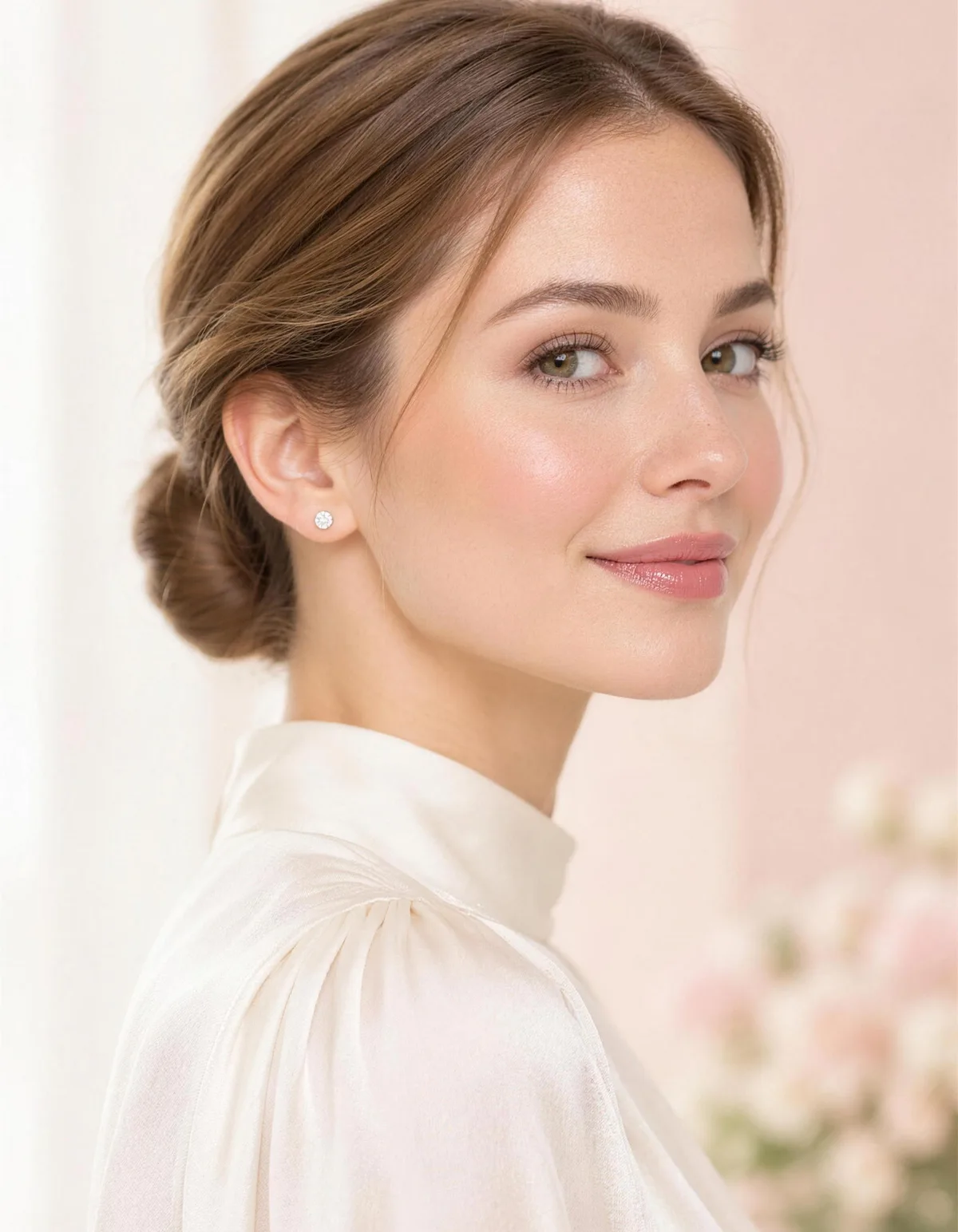
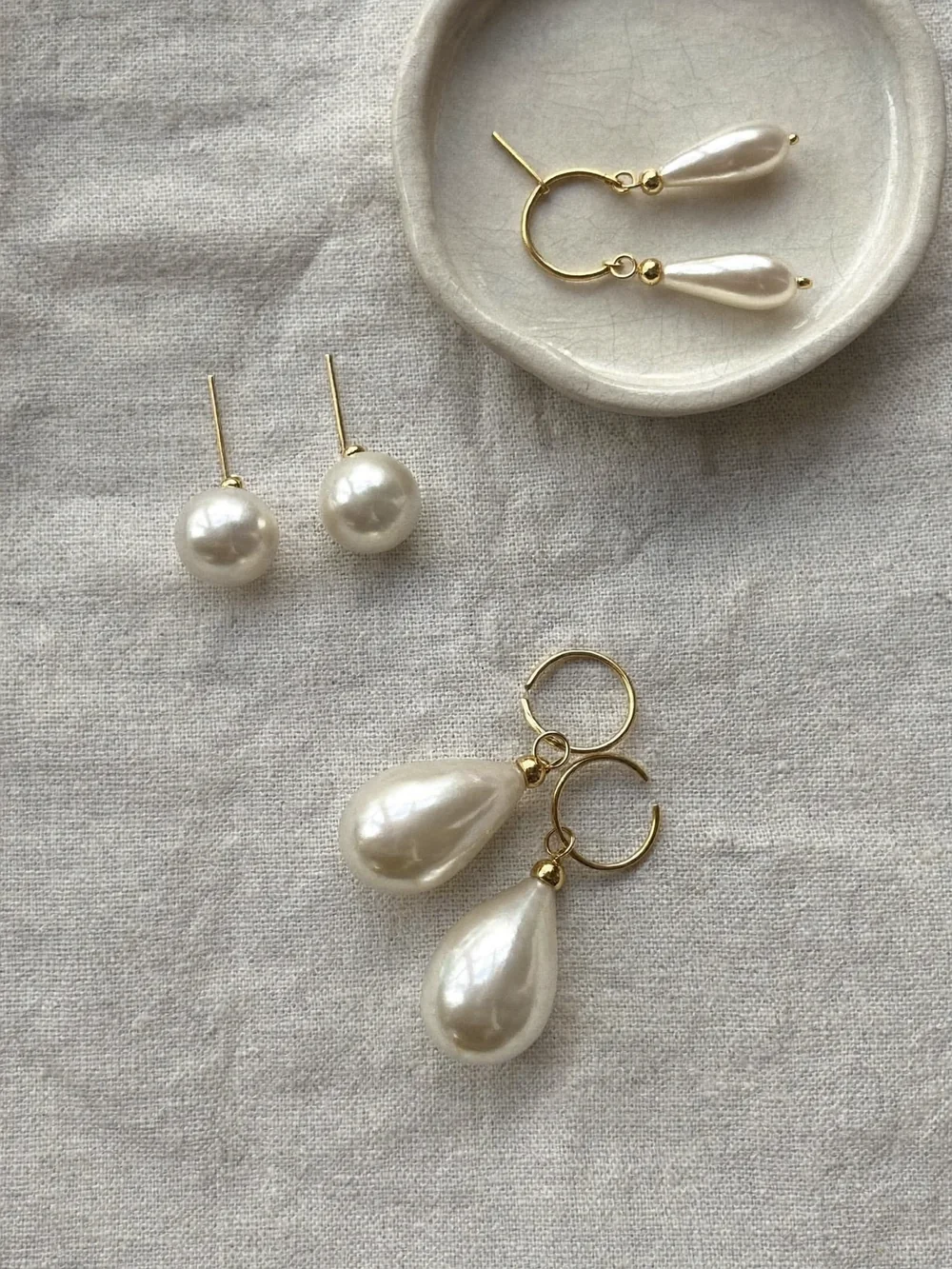
- Studs: the everyday classic. 6 to 8 mm is the most versatile size.
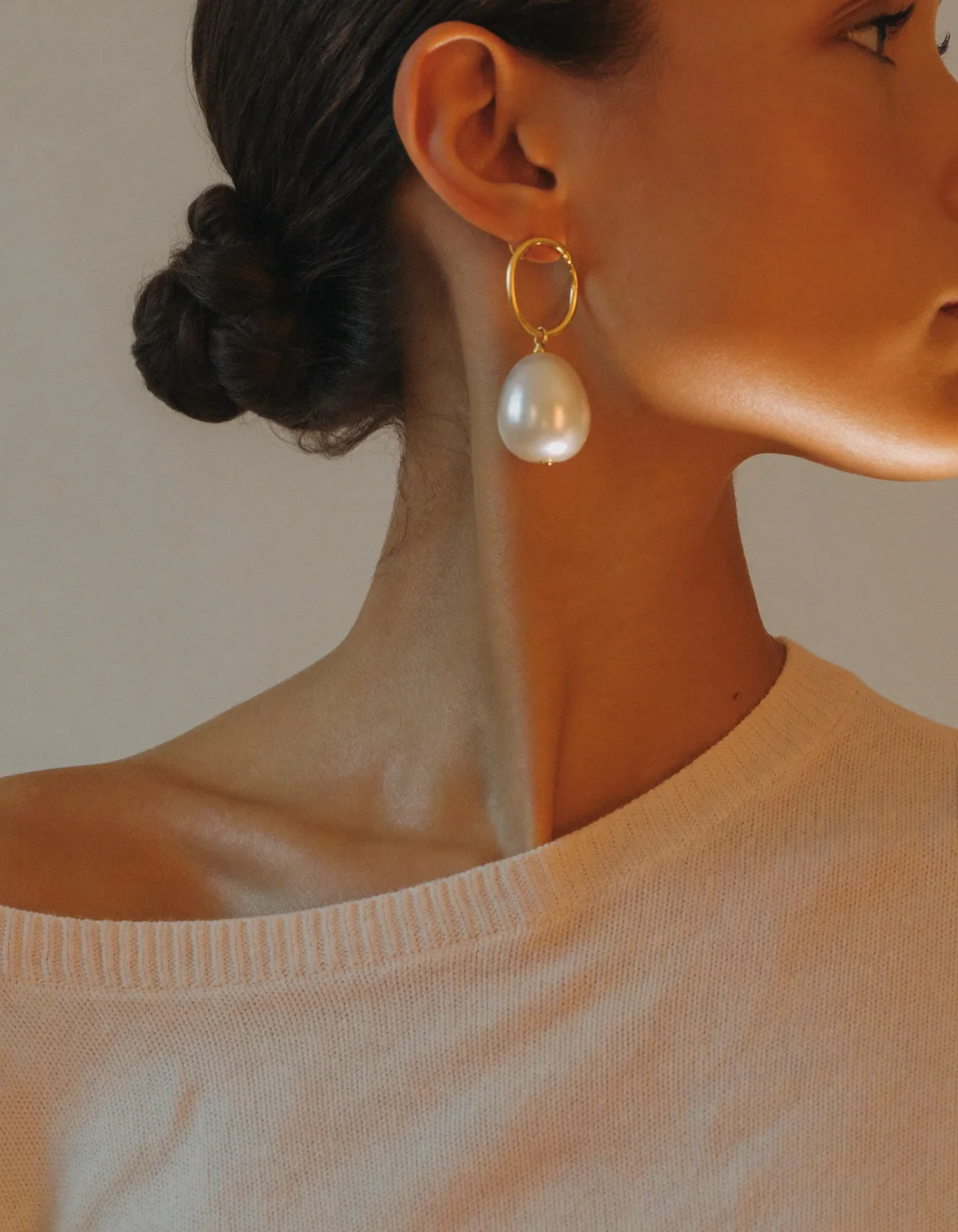
- Drops: a pearl hanging from a hook or chain; more movement, more evening.
- Pearl hoops: a small pearl hanging from a gold hoop or huggie, the modern version.
- Baroque pearls: irregular, organic shapes that look artistic and are often more affordable.
- Climbers and clusters: several small pearls following the ear.
How to judge pearl quality
- Luster matters most: good pearls reflect light sharply, so you can almost see your reflection. Dull, chalky pearls look flat.
- Surface: fewer spots, bumps and pits look cleaner, especially on studs seen up close.
- Shape: round is the classic and costs most; near-round and baroque cost less.
- Size: measured in millimeters across; bigger pearls of the same quality cost much more.
- Matching: a pair should match in size, color and luster.
How to tell if pearls are real
Rub a pearl gently against the edge of your front tooth: real pearls usually feel slightly gritty, while imitation pearls feel smooth and glassy. Real pearls also feel cool and a little heavy, and they show tiny variations; perfectly identical, perfectly smooth pearls are often fake. A reputable jeweler can confirm.
Which pearl earrings suit you?
- Warm undertones: creamy, golden or pink pearls in yellow gold settings.
- Cool undertones: bright white or silvery pearls, or Tahitian gray, in white gold or silver.
- Short hair or hair up: drops show off the neck; studs suit everything.
Our free color analysis quiz tells you which way you lean.
The setting: gold, and sensitive ears
Choose solid 14k or 18k gold posts and hooks if your ears are sensitive, since nickel in cheap posts causes most reactions. Our guides to hypoallergenic earrings and nickel allergy explain why.
Pearl earrings for weddings, work and every day
- Weddings: drops or a slightly larger stud, 8 to 9 mm, catch the light in photos; match the pearl's tone to the dress, white with bright white, cream with ivory.
- Work: 6 to 7 mm studs are polished and never distracting.
- Every day: a small pearl hanging from a gold huggie is the easiest modern option, and it works with jeans and a knit.
- Evening: longer drops or a baroque pearl with a statement shape.
What makes pearl earrings expensive
Price climbs steeply with type, size and quality. Freshwater pearls are the most affordable, Akoya cost more for their roundness and sharp luster, and South Sea and Tahitian pearls cost the most, especially in larger sizes. Within any type, a millimeter or two of extra size, a rounder shape, a cleaner surface and a brighter luster each add to the price. A well-matched pair of good freshwater studs often looks better than a poorly matched pair of a pricier type.
How to care for pearl earrings
- Put them on last, after makeup, perfume and hairspray, which dull pearls.
- Wipe them with a soft cloth after wearing.
- Never use ultrasonic cleaners, steam or harsh chemicals.
- Store them separately in a soft pouch so harder jewelry does not scratch them.
- Do not swim or shower in them.
Pearls pair beautifully with gold; see gold hoop earrings for stacking ideas.
Read next: Tennis Bracelet Guide: Diamonds, Settings and Fit · Diamond Stud Earrings: Size, Settings and Value · Stacking Rings: How to Build a Ring Stack That Works
Questions people ask about this
What are the best pearls for earrings?
It depends on budget and look: freshwater pearls are affordable with a soft luster; Akoya pearls are very round and bright; South Sea and Tahitian pearls are larger and more expensive.
What size pearl stud earrings are best?
6 to 8 mm is the most versatile size for everyday studs; 8 to 9 mm reads as more of a statement.
How can you tell if pearl earrings are real?
Rub them gently against your front tooth: real pearls usually feel slightly gritty, fakes feel smooth. Real pearls also feel cool and show small variations.
Are freshwater pearls real pearls?
Yes. Freshwater pearls are cultured real pearls grown in mussels; they are simply more affordable than Akoya or South Sea pearls.
Can you wear pearl earrings every day?
Yes, with care: put them on after makeup and perfume, wipe them after wearing, and keep them out of water.
How do you clean pearl earrings?
Wipe them with a soft cloth after each wear. Never use ultrasonic cleaners, steam or harsh chemicals.