Diamond stud earrings: size, shape, settings and what is worth paying for
Diamond stud earrings explained: how carat total weight works, round vs princess, four-prong vs bezel, screw backs, lab-grown vs natural, and what to skip.
The short answer
Earrings are sold by carat total weight: a 1 ctw pair is about 1/2 carat per ear. Round brilliant gives the most sparkle; prioritize cut over color and clarity. Four-prong is classic; bezel is the most secure. Choose screw or locking backs.
- Lab-grown studs look the same for much less; natural keep more resale value.
Diamond stud earrings are the simplest piece of fine jewelry and one of the most worn: a single diamond on each ear, held close to the lobe. A good pair works with everything from a T-shirt to an evening dress and lasts for life. The choices that matter are the size, measured in carat total weight, the shape, the setting, the backs and whether you pick natural or lab-grown stones. Here is how to get each one right.
What does carat total weight mean for earrings?
Earrings are usually sold by carat total weight, or ctw, the combined weight of both diamonds. A pair of 1 ctw studs is two diamonds of about 1/2 carat each. It is the most common source of confusion when shopping, so always check the weight of each stone.
| Total weight (pair) | Each stone, round | Look |
|---|---|---|
| 0.25 to 0.5 ctw | About 3 to 4 mm | Tiny and subtle; good for second piercings |
| 0.75 to 1 ctw | About 4.5 to 5 mm | The classic everyday size |
| 1.5 to 2 ctw | About 5.5 to 6.5 mm | Clearly visible; dressy |
| 3 ctw and up | About 7 mm and up | Statement size; heavier on the lobe |
Millimeter sizes are approximate and depend on how a stone is cut.
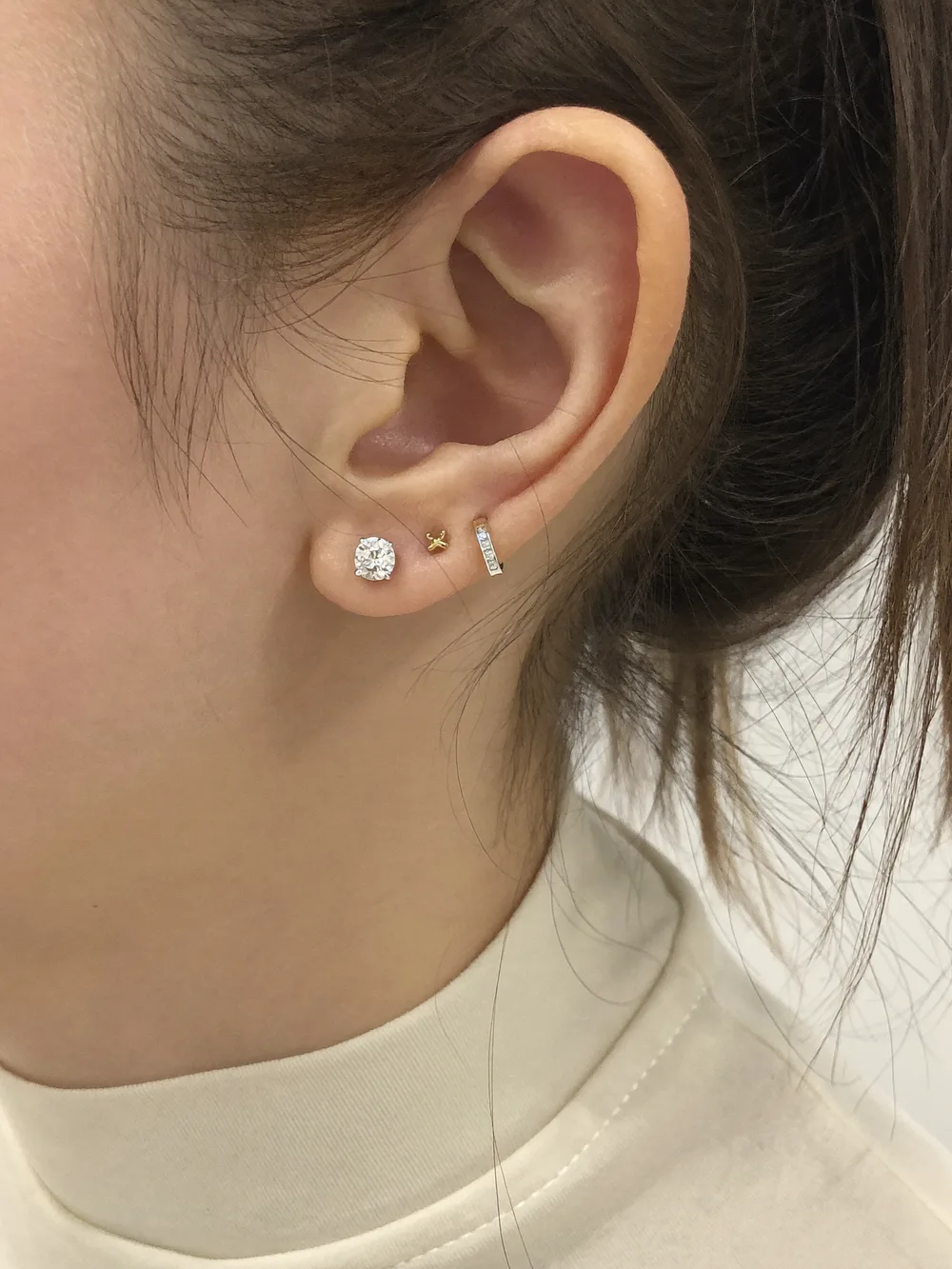
Which diamond shape is best for studs?
- Round brilliant: the most sparkle, the most classic, and the most popular choice.
- Princess (square): a crisp modern look that often costs less per carat than round.
- Cushion: square with soft rounded corners; romantic and slightly vintage.
- Oval or pear: looks larger for its weight, and elongates the face slightly.
- Emerald or asscher: step-cut and elegant, with flashes of light rather than sparkle; color and clarity show more.
Natural or lab-grown diamond studs?
Both are real diamonds. Lab-grown studs cost much less for the same size, which makes larger studs affordable, while natural diamonds keep more resale value. Because studs are small and seen from a distance, most people cannot tell the difference at all; see our guide to lab-grown vs natural diamonds for the details.
Which of the 4Cs matters most for studs?
Cut matters most, because it creates the sparkle that shows from across a room. Color and clarity matter less for small stones worn on the ears: a near-colorless grade and an "eye-clean" clarity, meaning no flaws visible without magnification, look as good as top grades at a fraction of the price. Make sure the two stones match in size, color and brightness. Our guide to which of the 4Cs matters most explains where to save.
Four-prong, three-prong, martini or bezel?
| Setting | Look | Worth knowing |
|---|---|---|
| Four-prong | Classic; stone looks slightly square | Very secure; shows plenty of the diamond |
| Three-prong | Stone looks rounder and larger | Slightly less secure than four |
| Martini | Cone-shaped basket; sits close to the ear | Comfortable and easy to wear daily |
| Bezel | Metal rim around the stone; sleek and modern | Most secure and snag-free; slightly smaller look |
White gold or platinum makes diamonds look whiter; yellow gold looks warm and vintage.
Which earring backs are best?
- Push backs (butterfly): the most common and easy to use; they can loosen over time.
- Screw backs: the post is threaded, so the back screws on; the most secure choice for valuable studs.
- Locking backs: push on, then click to lock; secure and quicker than screw backs.
- Large disc backs: support heavier studs so they do not droop forward.
Metal and sensitive ears
If your ears react to cheap earrings, the cause is often nickel. Choose 14k or 18k gold or platinum posts, and check that white gold is nickel-free. Our guides to hypoallergenic earrings and nickel allergy and jewelry explain which metals to trust.
How to wear diamond studs
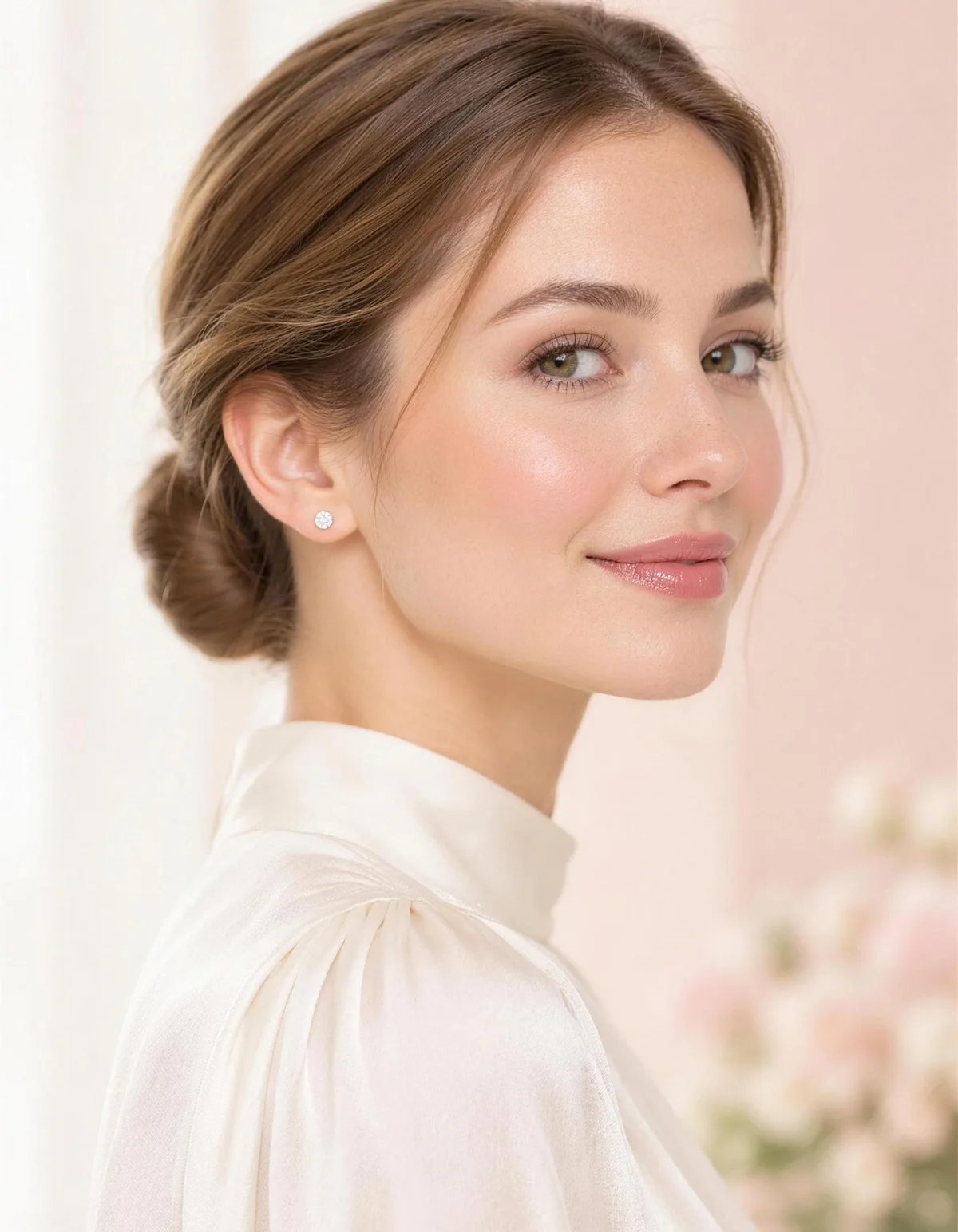
- Every day with a sleek bun or a low ponytail, where they catch the light.
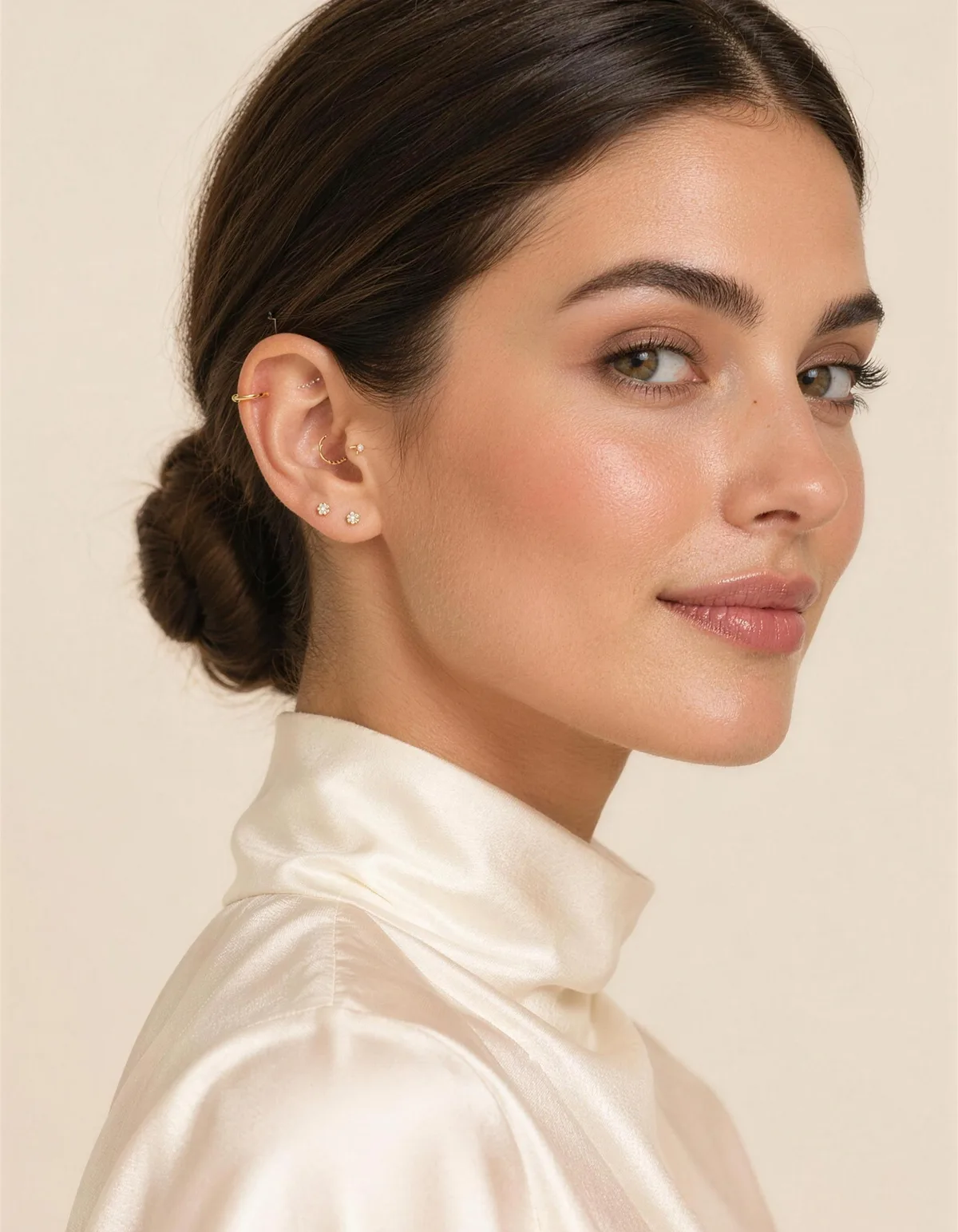
- In an ear stack: a stud in the first hole, a smaller stud or huggie above; see gold hoop earrings.
- With pearls or a tennis bracelet for evening; see pearl earrings and tennis bracelets.
How to care for diamond studs
- Clean them with warm water, a drop of dish soap and a soft toothbrush, especially behind the stone where lotion builds up.
- Check that the backs are tight and the prongs are secure every few months.
- Take them off to sleep if the posts press into your neck, and store them in a lined box.
Read next: Stacking Rings: How to Build a Ring Stack That Works · Anklets: Chain Styles, Sizing and How to Wear Them · Ear Piercing Types: Placements, Pain and Healing
Questions people ask about this
What size diamond stud earrings are most popular?
About 0.75 to 1 carat total weight, meaning roughly 3/8 to 1/2 carat per ear, is the classic everyday size.
What does carat total weight mean for earrings?
It is the combined weight of both diamonds. A 1 ctw pair is two diamonds of about 1/2 carat each.
Which setting is best for diamond studs?
Four-prong is the classic and secure choice. A martini setting sits close and comfortably; a bezel is the most secure and snag-free.
Are screw back earrings better?
For valuable studs, yes. Screw backs and locking backs are much less likely to fall off than standard push backs.
Are lab-grown diamond stud earrings worth it?
For many people, yes. They are real diamonds, look identical from a normal distance, and cost much less, though they hold less resale value.
What color and clarity should diamond studs be?
A near-colorless grade and eye-clean clarity look excellent on the ears. Spend more on cut, and make sure both stones match.