Do blue light glasses work? The trials say no, and that is not the end of it
A review of seventeen randomised trials found blue-light lenses make no difference to eye strain or sleep. What is actually causing the ache, and the one lens filter that is genuinely worth paying for.
This is an unusual one to write, because the honest answer costs the people writing about it money. Blue light glasses are a large, profitable category, and almost every page that ranks for this question is published by somebody who sells them. So here is the finding they tend to bury.
What the trials actually found
A 2023 Cochrane systematic review pulled together seventeen randomised controlled trials of blue-light filtering spectacle lenses. Its conclusion was that they probably make no meaningful difference to eye strain, and no clear difference to sleep quality either. Cochrane reviews are the high end of evidence synthesis — they pool trials rather than run one — and seventeen is not a thin base.
The American Academy of Ophthalmology reaches the same place from a different direction: it does not recommend blue-light blocking lenses, on the grounds that there is no good evidence screen light damages the eye in the first place.
Why the premise was shaky to begin with
The dose is wrong. The overwhelming source of blue light in anyone's life is the sun, and a screen emits a tiny fraction of what you take in walking to the shops. An argument that screen blue light is harmful has to explain why daylight, which delivers vastly more of it, is not. It generally does not try.
So what is actually making your eyes ache?
Two things, neither of which a lens tint addresses.
You stop blinking. Blink rate drops substantially during concentrated screen work. Blinking is what resurfaces the tear film, so the cornea dries out, and a dry cornea is what that gritty, tired, slightly burning feeling actually is. This is the big one.
You hold focus at one near distance for hours. The focusing muscle is doing sustained static work, which is as uncomfortable as holding any other muscle in one position all afternoon.
Both are caused by how the screen is used, not by what comes out of it. Which is why filtering the light does nothing for either.
What does help
Breaks, deliberately. The usual formulation is to look at something roughly twenty feet away for twenty seconds every twenty minutes — the specific numbers matter less than the habit of letting the focusing muscle relax and blinking properly while you do it. Push the screen a little further away and slightly below eye level, because a downward gaze angle exposes less of the eye surface and slows the drying. If it is persistent, artificial tears do more than any lens will, and an actual eye test does more than either — a mild uncorrected prescription is a very common cause of exactly this ache and gets blamed on screens for years.
The filter that is genuinely worth paying for
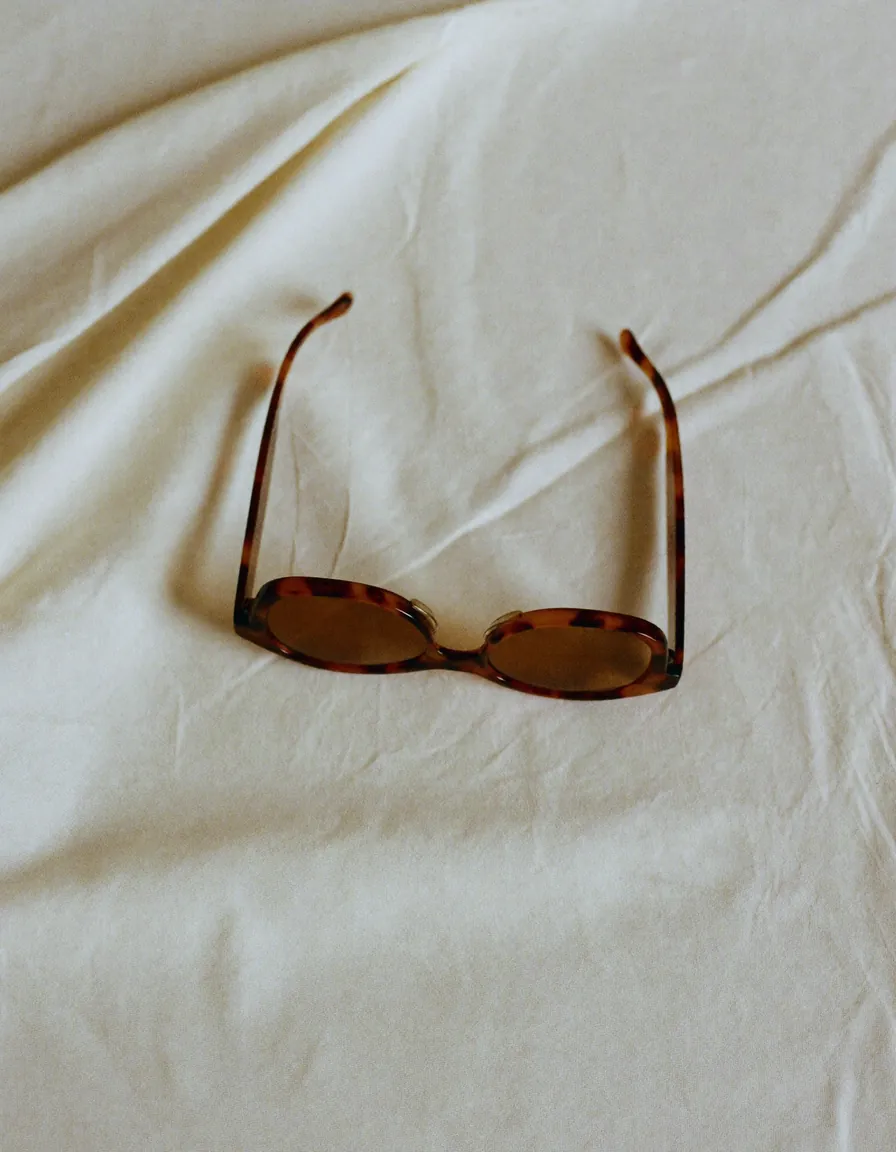
Ultraviolet. This one is not in dispute: cumulative UV exposure is associated with cataract and with pterygium, and a sunglass lens that blocks it is doing real, measurable work. If you are going to spend money on what a lens filters out, spend it there rather than on a blue tint.
Worth knowing: dark lenses without UV protection are worse than no sunglasses at all, because the tint opens your pupil and then lets the ultraviolet through it. The darkness is not the protection. Check the marking, not the shade.
Should you throw yours out?
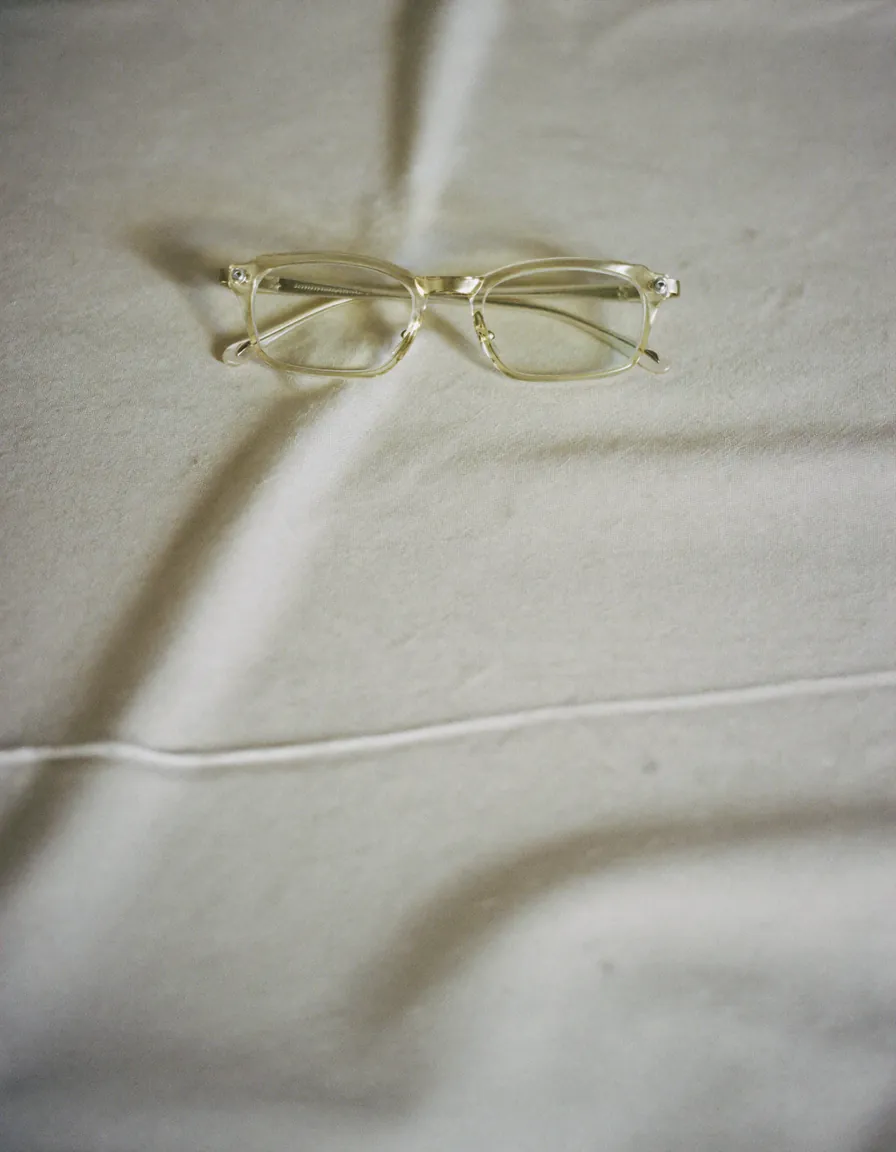
No, and this is where the debunk stops. If you have a pair you like, they are still glasses. They do not harm anything, the tint is cosmetically warm and some people genuinely prefer looking through it, and if a mild placebo makes your afternoon better then you have got something for your money even if the mechanism is not the advertised one.
What to stop doing is paying extra for the coating, or buying a pair specifically to fix a symptom that has a different cause. Buy frames because they suit you and lenses because the prescription is right. That is the whole basis on which eyewear is worth money.
Questions people ask about this
Do blue light glasses work for eye strain?
The evidence says no. A 2023 Cochrane review of seventeen randomised controlled trials found blue-light filtering lenses probably make no meaningful difference to eye strain, and no clear difference to sleep. The American Academy of Ophthalmology does not recommend them.
If it isn't blue light, why do my eyes hurt after screen work?
Mostly because you stop blinking. Blink rate falls sharply during concentrated screen use, the tear film stops being resurfaced and the cornea dries — that is the gritty, burning feeling. The second cause is holding focus at one near distance for hours, which is static muscular work. Neither is affected by a lens tint.
Is blue light from screens damaging my eyes?
There is no good evidence that it is. The sun is by far the largest source of blue light in anyone's life and a screen emits a small fraction of it, so an argument that screen exposure is harmful has to explain why daylight is not.
Which lens filter is actually worth paying for?
Ultraviolet. Cumulative UV exposure is associated with cataract and pterygium, and a sunglass lens that blocks it does measurable work. Note that dark lenses without UV protection are worse than no sunglasses, because the tint widens your pupil and then lets UV through it — check the marking rather than the shade.
Should I stop wearing the blue light glasses I already own?
No. They are still glasses, they do no harm, and some people prefer the warmer tint. The thing to stop is paying extra for the coating, or buying a pair to fix a symptom that has a different cause.