Full-grain, top-grain or “genuine” leather: what the label is really telling you
“Genuine leather” sounds like a promise and usually signals the lower grade. The four grades, the edge test that settles it, and which one earns its price.
The short answer
Full-grain keeps the whole outer surface — strongest, breathable, and it develops a patina.
- Full-grain keeps the whole outer surface — strongest, breathable, and it develops a patina.
- Top-grain is the same layer sanded and coated: more uniform, less character, no patina.
- “Genuine leather” usually labels lower-grade split leather; bonded leather is ground scrap glued to a backing, and it peels.
- Check the first line of the listing, the cut edge, and whether the grain pattern repeats.
“Genuine leather” is one of the most successful phrases in retail, because it sounds like a guarantee. It is one, in the narrowest sense: the material is real leather rather than plastic. In everyday selling, though, it has come to label the lower grades — the ones a brand would have called by a better name if it could.
Knowing the four grades takes about two minutes, and it changes how you read every bag, belt and shoe listing afterwards.
How one hide becomes four grades
A hide is thick enough to be split into layers. The outer layer, the side that faced the world, is the strongest: its fibers are tightly packed and it carries the grain, the natural pattern of pores and lines. Everything below it is looser and weaker. The grade names describe which layer you are buying and what was done to its surface.
| Grade | What it is | How it ages | Tell-tale sign |
|---|---|---|---|
| Full-grain | Outer layer, surface left intact | Develops a patina; gets better | Visible pores and small natural marks |
| Top-grain | Outer layer, sanded and usually coated | Stays uniform; the coating can crack | Very even, slightly smooth-plastic surface |
| Split, often sold as “genuine” | A lower layer, often embossed with a grain | Scuffs and wears faster | A repeating pattern, a layered edge |
| Bonded | Leather scraps shredded and glued to a backing | Peels and flakes, often within a couple of years | Paper-like edge, peeling surface |
Suede is usually split leather with the surface napped, which is a legitimate use of it rather than a trick.
Full-grain: why the flaws are the point
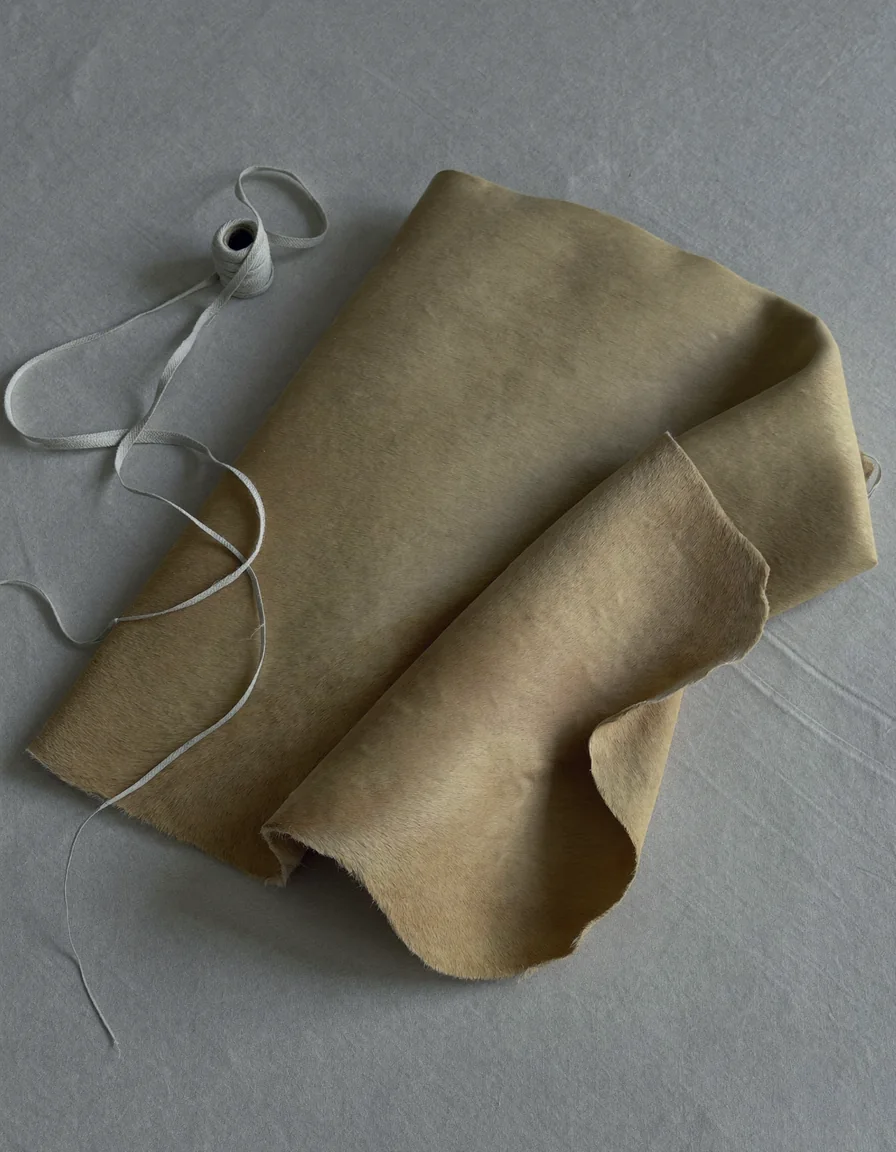
Full-grain keeps the whole outer surface, including its small scars and variations. That is exactly what makes it durable: nothing has been sanded away, so the strongest fibers are intact. It also breathes and takes up oil from your hands, which is how it darkens and softens into a patina over the years. A good full-grain bag usually looks better at five years old than it did new.
Some full-grain leathers are finished with oils and waxes that lighten where scuffed and darken again when rubbed — often sold as crazy horse or pull-up leather. If you like a bag to show its life, that is the finish to look for. If you want it to stay pristine, it is not.
Top-grain: good, just different
Top-grain is the same outer layer with the surface sanded to remove marks, then usually sealed with a finish and sometimes printed with an even grain. It resists stains better and looks more uniform, which is why it is common in handbags. What it gives up is the patina: the coating stops it ageing the way full-grain does, and on a heavily used strap the coating can eventually crack. It is a reasonable choice rather than a lesser one — just know which one you are paying for.
What “genuine” and “bonded” usually mean
Below the top layer sits split leather. It is real leather, and it is weaker and less even; to make it look like the top grade, it is often coated and embossed with an artificial grain. A great deal of what is sold simply as “genuine leather” is this.
Bonded leather is the one to avoid in anything you want to keep. It is leather scrap ground up and glued onto a backing, usually with a polyurethane surface, and the peeling that starts on sofa arms and cheap belts is that surface separating. In the US, the FTC's guides for leather products say imitation and bonded materials should be disclosed rather than passed off as leather — which is why the word “bonded” appears on the label, usually in small type.
Four checks for any listing or shop
Read the first line. A seller using full-grain says so, because it is the selling point. A listing that says only “genuine leather” or just “leather” is usually telling you it is not full-grain.
Look at a cut edge. Full-grain shows a dense, fibrous cross-section. Bonded looks closer to layered paper or foam; heavily coated split leather often shows a distinct plastic-like skin over looser fibers.
Look for a pattern that repeats. Natural grain never repeats. An embossed one does, and you can sometimes spot the same mark twice on one panel.
Check the price against the size. A large full-grain bag at a fast-fashion price is almost never what it says.
Where canvas comes into it
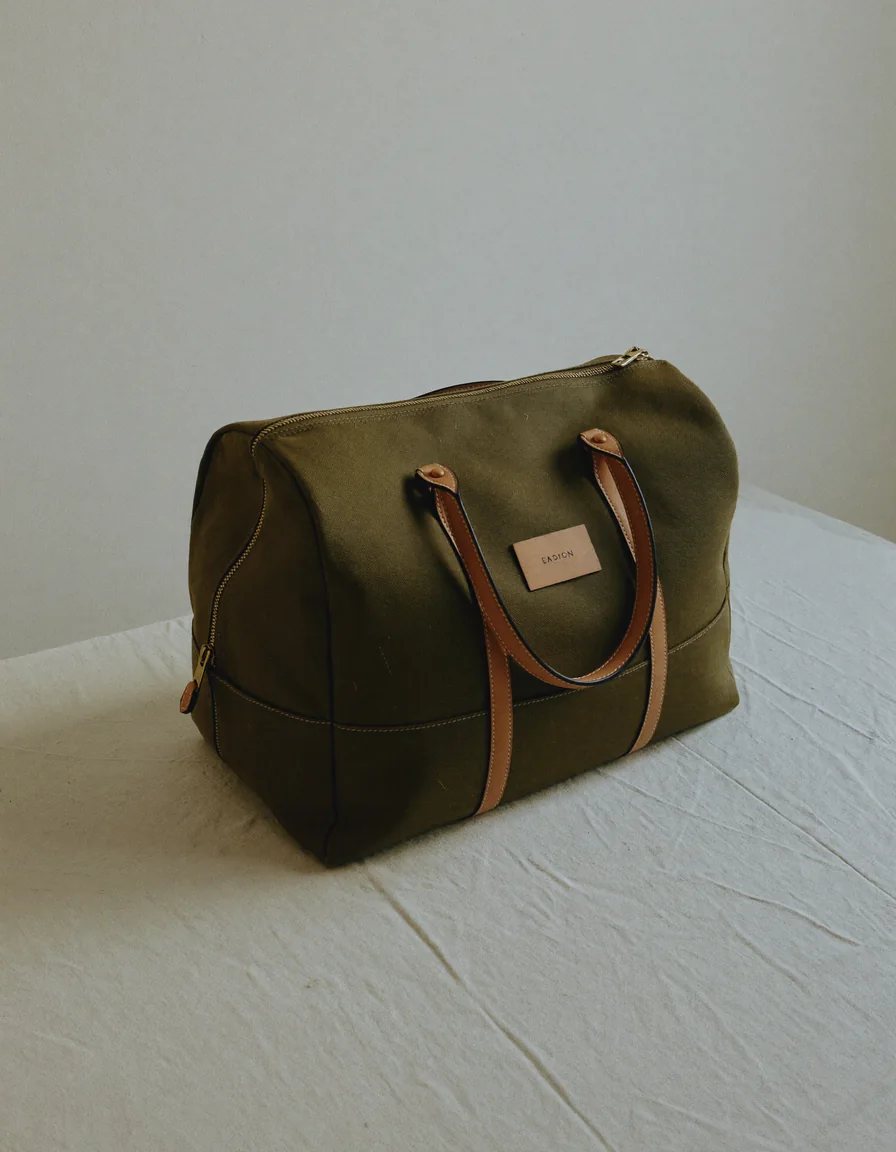
For anything that will meet a wet train floor, waxed canvas is worth knowing: cotton canvas impregnated with wax, water-resistant, lighter than leather and renewed by re-waxing. It pairs well with full-grain trim and is often the more practical choice for a travel bag — the trade-offs are in what to check in a weekender. The principle is the same one behind which labels actually mean something: the adjective tells you little, and the specific term tells you a great deal.
Questions people ask about this
Is full-grain or top-grain leather better?
Full-grain is stronger, breathes and develops a patina because its surface is intact. Top-grain has been sanded and usually coated, so it is more uniform and stain-resistant but will not age the same way. For a bag you want to keep for years, full-grain.
What does genuine leather mean?
Technically, real leather rather than a synthetic. In practice it usually labels lower grades — often split leather that has been coated and embossed with an artificial grain. Sellers of full-grain usually say full-grain.
Why is my leather peeling?
Peeling almost always means bonded leather or a heavily coated split: a thin surface layer separating from its backing. Full-grain leather scuffs and wears, but it does not peel.
How can I tell if leather is full-grain?
Look for irregular pores and small natural marks, a grain pattern that never repeats, and a dense, fibrous cut edge. A perfectly even surface with a repeating pattern is usually embossed.
Is waxed canvas as durable as leather?
It is different: lighter, water-resistant and easy to renew by re-waxing, though it softens and marks over time. Many travel bags pair a waxed canvas body with leather trim to get the best of both.