How to wash silk without ruining it
Most silk labelled dry clean only can be hand-washed. The water temperature that matters, why detergent is the real risk, and the drying mistake that costs people the sheen.
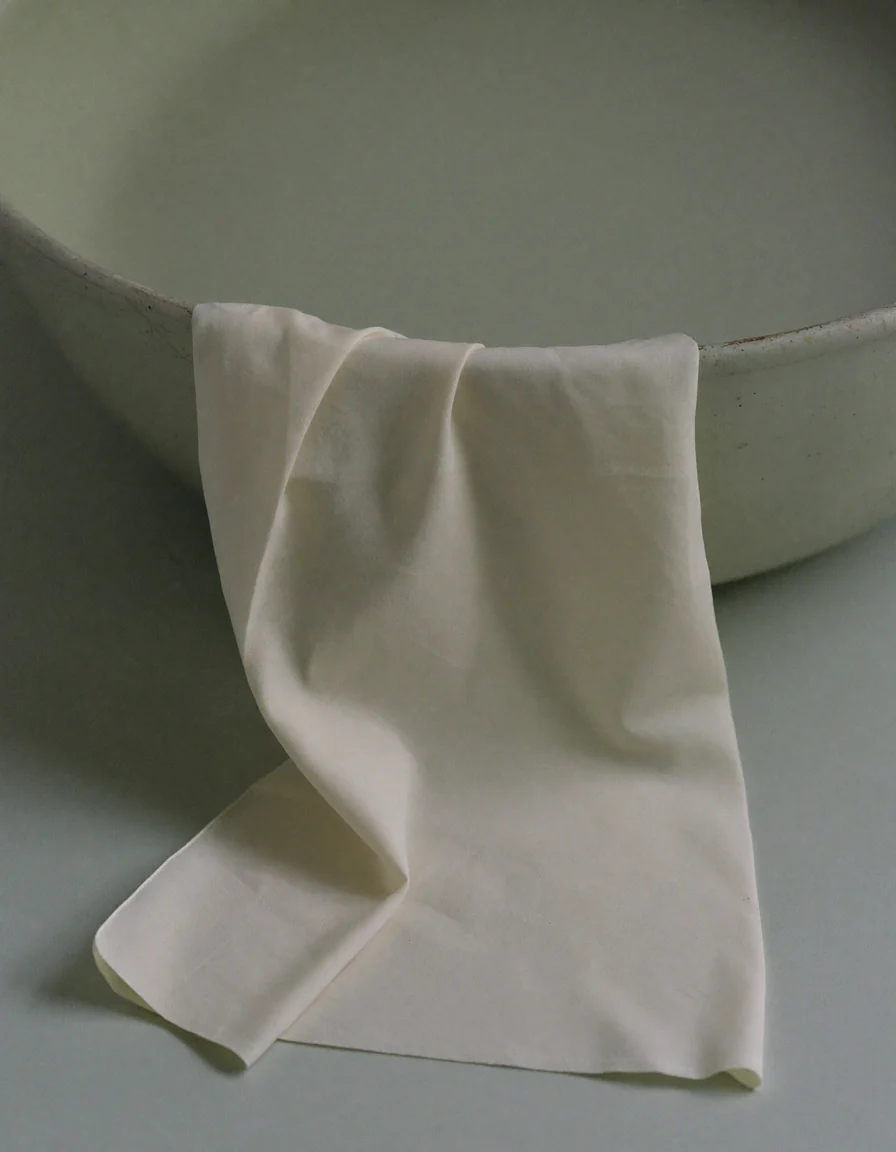
Most silk labelled “dry clean only” can be hand-washed, and a great deal of silk is labelled that way because it is the instruction that removes the manufacturer's liability rather than because water is the enemy. Silk is a protein fibre — chemically much closer to your own hair than to cotton — and it behaves accordingly. It dislikes heat, alkalinity and agitation. Water on its own is fine.
Two genuine exceptions, where the label means it: structured or lined pieces where the interfacing and the shell will shrink at different rates, and anything in a deep or saturated dye that has not been properly fixed.
Test first, in thirty seconds
Dampen a white cloth and press it against an inside seam. If colour transfers, the dye is not fixed and the piece goes to a cleaner. If nothing transfers, it will wash.
Do this once per garment, not once per wash.
The method
- Cool water. Not warm, not lukewarm. Heat is what relaxes the protein structure and takes the sheen off permanently — the same mechanism as heat damage in hair.
- A pH-neutral detergent, or a dedicated silk or wool wash. This matters more than the water. Ordinary laundry detergent is alkaline and frequently contains enzymes, and those enzymes exist to break down protein — which is what silk is. A biological detergent will visibly dull silk over a few washes.
- Move it gently, for three to five minutes. Submerge, squeeze the water through it, and leave it. No wringing, no rubbing, no twisting. Wet silk loses a significant share of its strength, so this is when damage happens.
- Rinse in cool water until it runs clear.
- A splash of white vinegar in the final rinse is the one traditional trick worth keeping — it neutralises any remaining detergent alkalinity and restores shine. Rinse once more after it.
Drying is where it is usually ruined
Press the water out between two towels. Do not wring, and do not hang a soaking silk garment — the weight of the water stretches the fibre and it does not return.
Dry flat, or hang once it is only damp, away from direct sun. Sunlight fades silk and weakens it. Never a tumble dryer, and never a radiator.
If you need to iron it, do it while slightly damp, on the lowest setting, on the reverse side. A direct hot iron on dry silk glazes the surface and that is not reversible. The dot system on the label is explained in the care symbol chart, and for silk it is the iron symbol that matters most.
| Why | Instead | |
|---|---|---|
| Hot water | Relaxes the protein and dulls the sheen | Cool water only |
| Biological detergent | Enzymes digest protein — silk is protein | pH-neutral or silk wash |
| Wringing and rubbing | Wet silk loses much of its strength | Squeeze between towels |
| Hanging wet | Water weight stretches the fibre permanently | Dry flat |
| Direct sun | Fades and weakens the fibre | Shade, out of direct light |
| Chlorine bleach | Destroys the fibre outright | Never, on any silk |
| Deodorant and perfume | Alcohol and aluminium salts stain and weaken | Dress after they dry |
Heat and alkalinity do the lasting damage. Water by itself does almost nothing, which is why most dry-clean-only silk hand-washes fine.
Machine washing, if you must
A delicates or silk cycle, cold, in a mesh bag, spin at the lowest setting or none at all. It works more often than people expect, and it is still harder on the fibre than hands are. For anything you care about, the sink takes four minutes.
Stains, briefly
Blot, never rub. Water marks on silk are common and usually fixable by dampening the wider area evenly so there is no hard edge as it dries. Oil-based stains want a cleaner. Sweat and deodorant are the ones that permanently damage silk, because aluminium salts weaken the fibre — which is why silk under the arms wears out first, and why putting a garment on after deodorant has dried matters.
How often
Silk is naturally antibacterial and does not need washing as often as cotton. Airing between wears does most of the work for scarves and blouses.
Silk bedding is the exception, because it is against your skin and hair all night — that wants washing weekly, like any other bedding. Whether it earns its place at all is a separate question, and the honest answer splits by claim: the hair argument holds and the wrinkle argument is oversold.
Questions people ask about this
Can you hand wash silk that says dry clean only?
Usually yes. A great deal of silk carries that label because it limits the manufacturer's liability rather than because water damages it. Test first by pressing a damp white cloth against an inside seam — if no colour transfers, it will wash. Structured, lined pieces are the genuine exception.
What detergent should I use on silk?
A pH-neutral detergent or a dedicated silk or wool wash. Avoid biological detergents specifically: their enzymes exist to break down protein, and silk is a protein fibre, so they visibly dull it over a few washes.
What temperature should silk be washed at?
Cool, not warm. Heat relaxes the protein structure and takes the sheen off permanently. This is the same mechanism as heat damage in hair, which silk closely resembles chemically.
How do you dry silk without ruining it?
Press the water out between two towels, then dry flat away from direct sunlight. Never wring it, never hang it while soaking — the weight of the water stretches the fibre permanently — and never use a tumble dryer or radiator.
Why does silk wear out under the arms first?
Deodorant and sweat. Aluminium salts in antiperspirant weaken the fibre and stain it, and alcohol in sprays adds to it. Letting deodorant dry fully before dressing makes a noticeable difference to how long the garment lasts.