Gua sha vs face roller: they are not doing the same job
A roller moves fluid and cools; gua sha addresses muscle tension and fascia. Which suits puffiness, which suits a tight jaw, and the pressure most people get wrong.
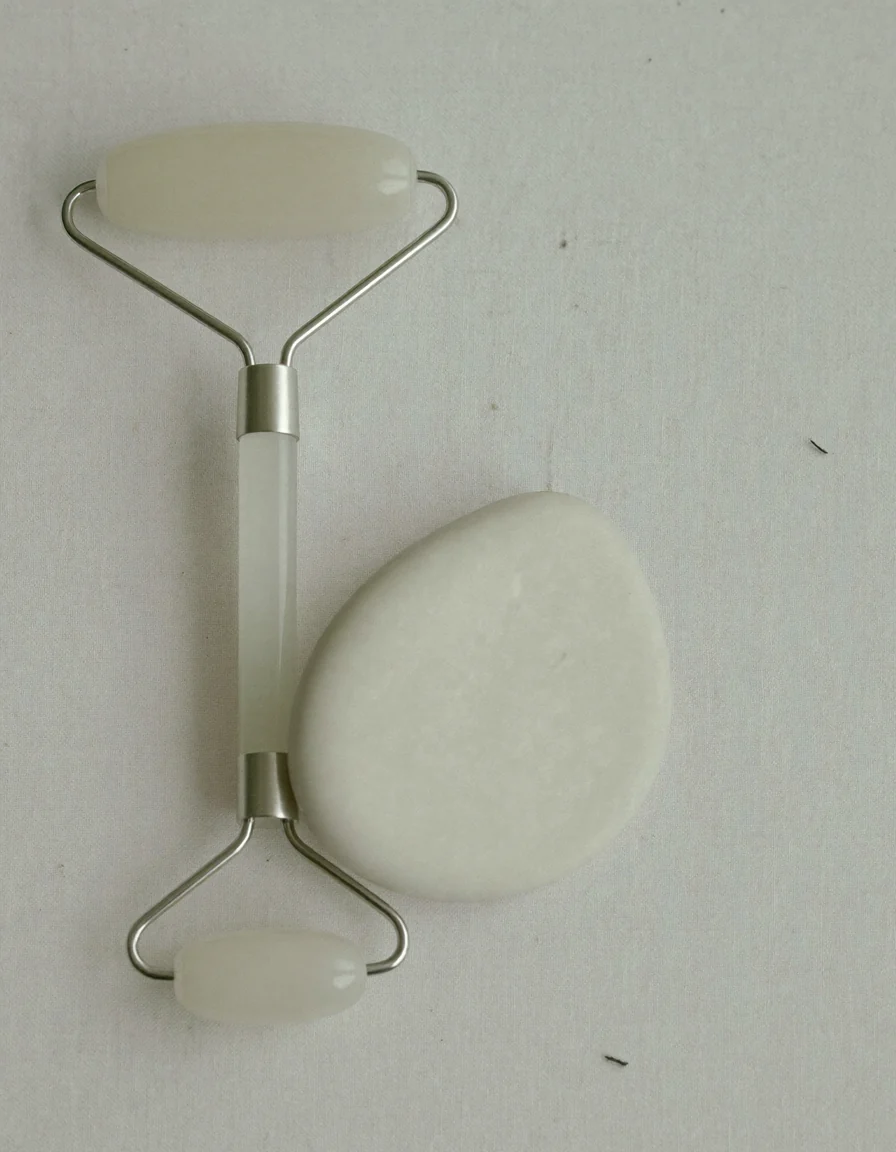
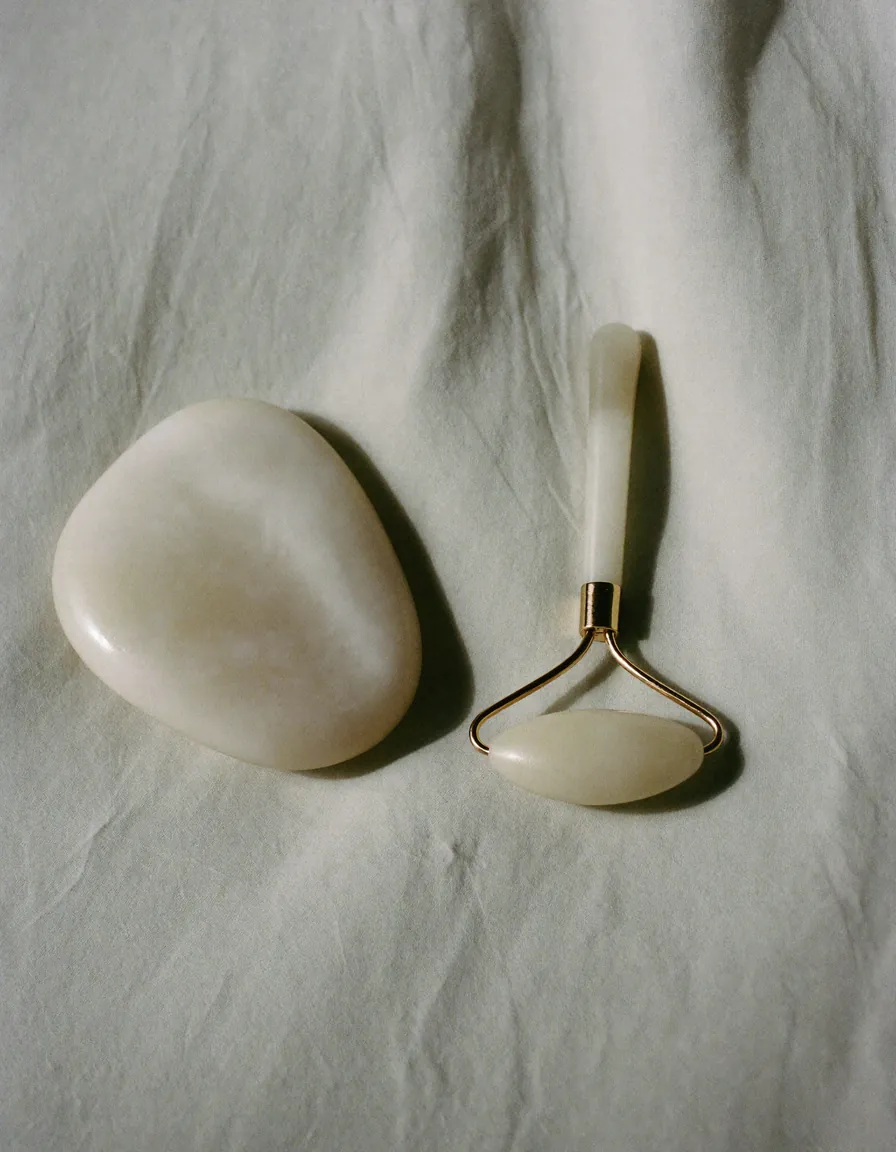
These get sold as interchangeable, stocked side by side and described with the same vocabulary. They are not doing the same thing. A roller is a fluid and temperature tool; gua sha is a muscle and fascia tool. Which one is right depends entirely on what is actually bothering you.
What a roller does
A roller passes over the surface with light, even pressure and no ability to grip. That makes it good at exactly one mechanical thing: encouraging pooled fluid to move along, which is why the effect people notice is reduced morning puffiness.
The second effect is temperature. A cold stone constricts surface blood vessels briefly, which reduces the appearance of swelling and feels good on tired eyes. Keep it in the fridge and that effect is real, immediate and entirely temporary.
It is also the easier of the two to do badly without consequence, which is a genuine advantage. Hard to hurt yourself with a roller.
What gua sha does
A gua sha stone has a flat edge that grips skin rather than gliding over it, so it can move the layer underneath — fascia and muscle rather than just fluid. That makes it the better tool for tension: a clenched jaw, tight temples, the band of muscle along the brow.
It also moves fluid, and along a flat edge it does so more effectively than a roller does. The trade is that it requires more technique and can be done badly enough to cause harm — too much pressure on facial skin causes broken capillaries and bruising.
The traditional practice it borrows from is applied to the body with enough pressure to raise deliberate bruising. Facial gua sha is not that. If you are marking the skin, you are pressing far too hard.
| Roller | Gua sha | |
|---|---|---|
| Morning puffiness | Good | Better |
| Jaw or temple tension | Little effect | The reason to own one |
| Cooling tired eyes | Best — keep it cold | Possible, less comfortable |
| Helping product absorb | Marginal, both | Marginal, both |
| Ease of doing it right | Very easy | Needs technique |
| Risk of doing harm | Very low | Real, if pressed too hard |
| Time per session | 2–3 minutes | 5–10 minutes |
Neither changes bone structure, drains toxins or lifts anything permanently. The effects are real, temporary and measured in hours.
The pressure almost everyone gets wrong
Too heavy, in both cases. Lymphatic vessels sit immediately beneath the skin — the pressure that moves them is closer to stroking than to massaging. If the skin is dragging rather than gliding, or reddening beyond a light flush, ease off substantially.
Direction matters more than force: work outward from the centre of the face and downward along the neck, following where fluid drains. And always use slip — oil or a serum. Dragging either tool across dry skin is how people cause irritation and, over time, laxity.
Which to buy, honestly
Puffiness is your complaint: either, and a roller is easier. Keep it cold and use it for three minutes in the morning.
Jaw tension, clenching, headaches around the temples: gua sha, and it is not a close call. A roller cannot reach that layer.
You want one tool and are not sure: gua sha, because it does most of what a roller does plus something a roller cannot — provided you are willing to learn the angle and keep the pressure light.
Material, briefly
Jade and rose quartz are the traditional stones and the difference between them is aesthetic rather than functional. Stainless steel holds cold considerably longer, which is a real advantage if cooling is the effect you are after, and it does not chip.
What matters more than material: a smooth edge with no chips — a chipped stone scratches — and a shape that fits the contours you actually want to work on.
Expectations, set honestly
Consistent use gives you a less puffy face in the mornings and a looser jaw. It does not change your face shape, does not lift anything permanently and does not drain toxins, which is not a thing the lymphatic system does. The fuller version of that argument, including what the before-and-after photographs are actually showing, is in gua sha and facial massage tools.
If what you actually want is a device with published clinical evidence behind it, that is a different category with a different honest answer — microcurrent devices work, briefly, and the catch is whether you will still be doing it in a year.
Questions people ask about this
Is gua sha or a face roller better?
They do different jobs. A roller moves fluid and cools, which suits morning puffiness and tired eyes. Gua sha grips the skin and reaches the layer underneath, which makes it the better tool for jaw and temple tension. For puffiness alone a roller is easier; for tension only gua sha works.
How hard should you press with gua sha?
Much more lightly than most people do. Lymphatic vessels sit immediately under the skin, so the useful pressure is closer to stroking than massaging. If the skin drags or reddens beyond a light flush, ease off. Facial gua sha should never bruise, unlike the body practice it borrows from.
Does gua sha change your face shape?
No. It reduces fluid retention and releases muscle tension, both of which are real and both temporary, measured in hours. Bone structure does not move and fat pads do not relocate. Before-and-after photographs showing a different face shape are showing lighting, angle and a differently held jaw.
Do you need oil for gua sha or a face roller?
For gua sha, yes — it needs slip to glide without dragging, and dragging either tool across dry skin causes irritation. A roller is more forgiving but still works better with a serum or oil.
Is jade or rose quartz better for gua sha?
The difference is aesthetic rather than functional. Stainless steel is the one material with a practical advantage — it holds cold much longer, which matters if cooling is the effect you want, and it cannot chip. A smooth, unchipped edge matters more than the material.