KN95, KF94 or N95: the mask that works is the one that seals your face
Filter percentage matters less than fit, and most respirators were sized on men. What each standard means, what smoke needs, and the seal check.
The short answer
Fit beats filter rating: air takes the gap, so a mask that does not seal loses most of its percentage.
- Fit beats filter rating: air takes the gap, so a mask that does not seal loses most of its percentage.
- N95 is NIOSH-approved; KN95 is not, and many failed US testing; KF94 often seals well on smaller faces.
- Women fail respirator fit tests more often because sizes were built around men — try smaller sizes and other shapes.
- For wildfire smoke, US agencies recommend a NIOSH-approved N95 or P100; do the exhale seal check every time.
A mask's filter number — 95, 94 — is the figure everyone compares, and it is not the one that decides how much you actually breathe in. Air takes the easiest route. If a mask leaves a gap at the cheek or the bridge of the nose, air goes around the filter rather than through it, and the percentage on the box stops meaning very much. The mask that protects you is the one that seals to your face.
That matters especially for women, because most respirators were not designed around women's faces.
What the letters actually mean
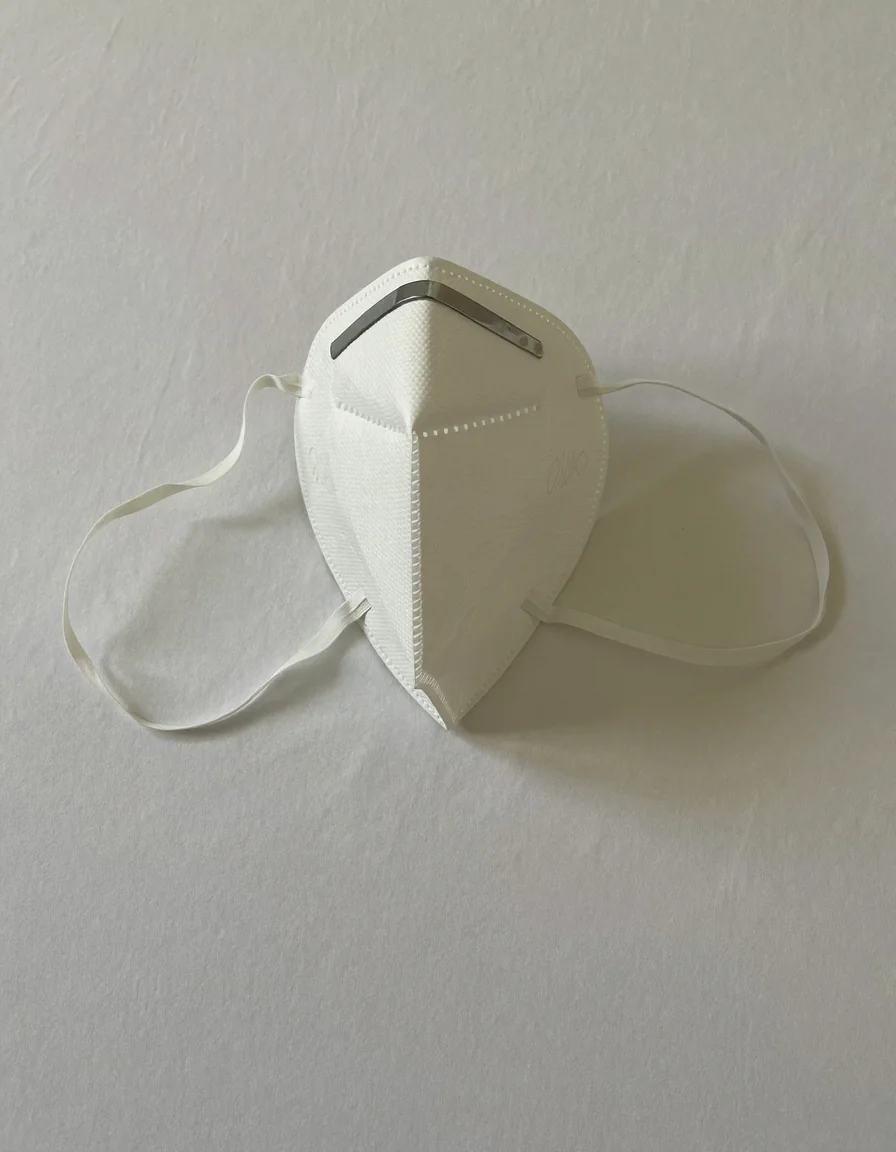
N95 is a US standard: the respirator is tested and approved by NIOSH, the federal occupational safety institute, to filter at least 95% of fine particles. KN95 is the Chinese standard with a similar filtration target, but it is not NIOSH-approved, and during the pandemic US testing found that many KN95s on the market did not meet the filtration they claimed. KF94 is the South Korean standard, at 94%. Its three-panel boat shape often seals well on smaller faces, which is why many women find it more comfortable and more effective than it looks on paper.
Ear loops are the common weak point of KN95s and KF94s: they pull the mask back less firmly than an N95's headbands, so edges lift when you talk. A small clip that joins the loops behind your head tightens them noticeably.
| N95 | KN95 | KF94 | Surgical | |
|---|---|---|---|---|
| Standard | US, NIOSH-approved | China | South Korea | Fluid resistance, not a respirator |
| Filtration rating | At least 95% | At least 95% | At least 94% | Not rated for fit |
| Holds on with | Headbands | Ear loops | Ear loops | Ear loops |
| Seal | Best when fitted | Often weaker at the edges | Often good on smaller faces | Loose; leaks at the sides |
| Watch out for | Counterfeits exist | Many failed independent testing | Fakes exist too | Not for smoke |
An N95 or KN95 that gaps at the cheek can let through more than a well-sealed KF94. Fit first, rating second.
Masks were sized on men
Studies of health workers have repeatedly found that women fail respirator fit tests more often than men, largely because the standard sizes were developed around predominantly male face measurements. A smaller face, a narrower nose bridge or higher cheekbones leave gaps a larger face would fill. It is not you; it is the sizing.
The practical answer is to try sizes and shapes. Some brands make small respirators; KF94s often suit smaller faces; and a mask that feels slightly snug is usually closer to right than one that feels roomy.
The seal check that takes two seconds
Pinch the nose clip with both hands, shaping it along the bridge rather than squeezing it to a point. Then cup your hands over the mask and breathe out sharply. If you feel air escaping at the edges — or your glasses fog — adjust and try again. When it seals, the mask pulls in slightly as you breathe in. If you cannot get a seal at all, that mask is the wrong size or shape for you.
Smoke, flu season and the everyday version
For wildfire smoke, US health agencies recommend a NIOSH-approved particulate respirator such as an N95 or P100; cloth and surgical masks do little against fine smoke particles. A well-sealed KN95 or KF94 is far better than nothing if it is what you have. For crowded flights and flu season, any well-fitting respirator is a meaningful step up from a surgical mask.
Replace disposable respirators when they are damp, dirty, damaged or harder to breathe through. And if long wear leaves your skin irritated, keep skincare light underneath and cleanse gently afterward — friction and trapped moisture are the usual cause, and heavy foundation mostly transfers to the mask rather than protecting your skin.
Questions people ask about this
What is the difference between KN95 and KF94?
KN95 is a Chinese standard rated to filter at least 95% of fine particles; KF94 is a South Korean standard rated at 94%. The KF94's three-panel shape often seals better on smaller faces, and a good seal matters more than the one-point difference.
Is a KN95 as good as an N95?
Not necessarily. N95s are tested and approved by NIOSH in the US; KN95s are not, and US testing found many KN95s sold during the pandemic did not meet their claimed filtration. Ear loops also tend to seal less firmly than N95 headbands.
What mask is best for wildfire smoke?
US health agencies recommend a NIOSH-approved particulate respirator such as an N95 or P100. Cloth and surgical masks offer little protection against fine smoke particles.
How do I know if my mask fits?
Shape the nose clip with both hands, cup your hands over the mask and breathe out sharply. If air escapes at the edges or your glasses fog, adjust it or try another size.
Why don't masks fit women's faces well?
Standard respirator sizes were largely based on male face measurements, and studies of health workers find women fail fit tests more often. Try smaller sizes, or a KF94 shape.