Pilates socks: do you need grip socks, and which kind?
Why reformer studios ask for grip socks, the styles from toeless to full-toe, and what to look for in grips, fabric and fit, without paying for hype.
The short answer
Pilates socks are grip socks: ordinary socks with silicone or rubber grips on the sole. Most reformer studios require them for safety and hygiene; for mat Pilates at home they are optional. Look for grips under the ball of the foot and heel, a snug sized fit, quick-drying fabric and little cushioning.
- Wash inside out without fabric softener and air dry to make the grips last.
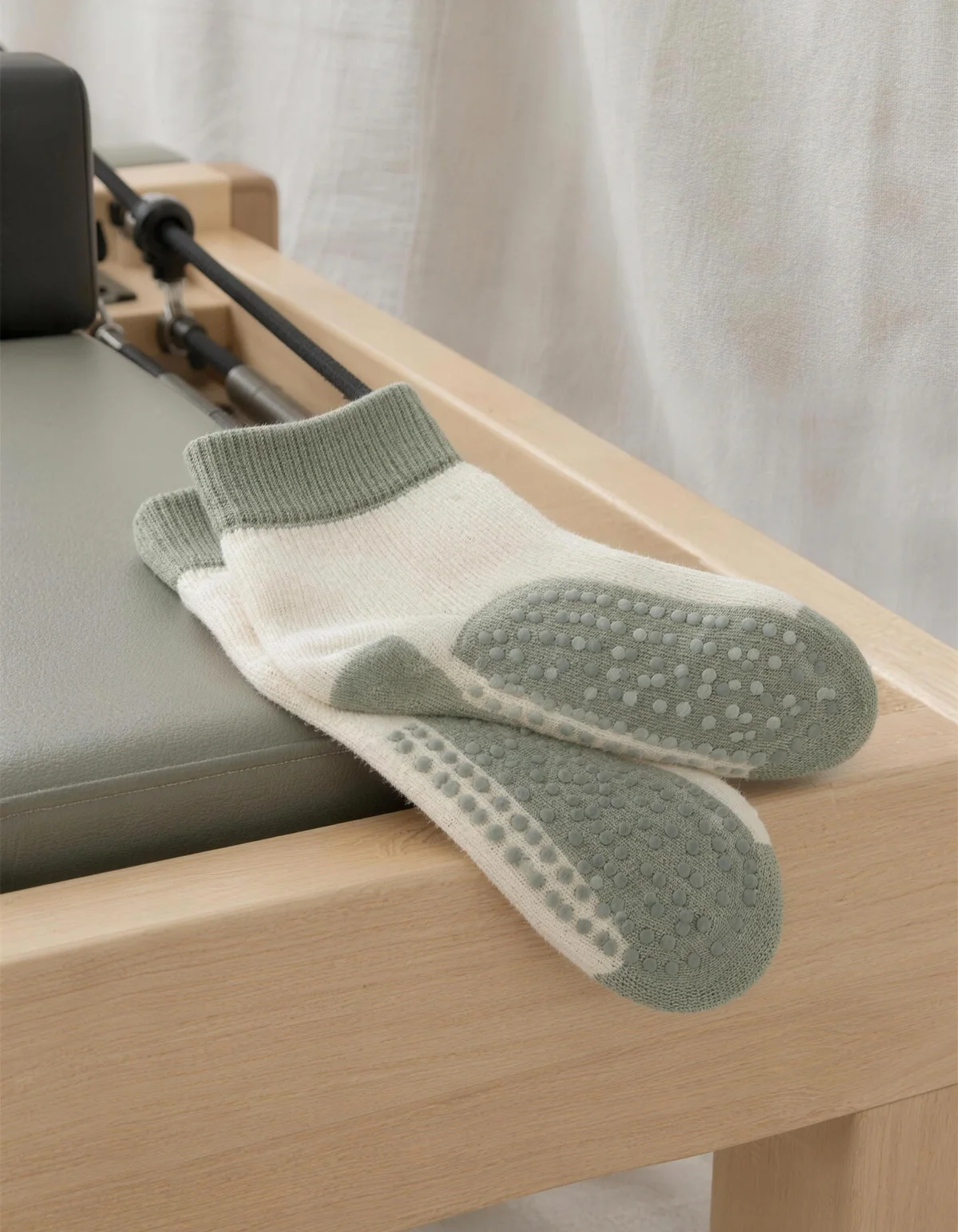
Pilates socks are ordinary socks with rubber or silicone grips on the sole, and for reformer classes they are usually required, not optional. The grips stop your feet sliding on the footbar and carriage, and they keep shared equipment more hygienic than bare feet. The good news is that you do not need an expensive pair. What matters is where the grip sits, how the sock fits, and whether your studio has its own rule.
Do you need grip socks for Pilates?
For reformer Pilates at a studio, almost always. Club Pilates, for example, says grip socks are required in all classes to prevent injury and keep you stable on the reformer, and sells them at the front desk if you arrive without. Many smaller studios have the same rule, partly for safety and partly for hygiene, since the same equipment is used by many people a day. For mat Pilates at home, they are optional. Bare feet grip a mat well. Socks help if your floor is cold, your mat is slippery, or you simply prefer covered feet. If you are choosing between the two kinds of class, our guide to deep core exercises covers the mat-friendly basics most Pilates classes build on.
Why ordinary socks are a bad idea
A normal sock slides on a wooden or padded surface. On a reformer, your feet push against a footbar while the carriage moves on springs, so a foot that slips can jolt a knee or hip, or bump into the frame. Grips fix that by adding friction exactly where you push.
The styles, and who each suits
| Style | What it is | Best for |
|---|---|---|
| Full-toe, full grip | A normal-looking sock with grips across the sole | Most people; the safe default for any studio |
| Toeless | Open at the toes, grips on the sole | Feeling the footbar with your toes; warm studios |
| Five-toe | Each toe in its own pocket | Toe spreading and balance; some find them fiddly |
| No-show or ankle | Low cut, often with a back tab | A barely-there look; check they stay on in footwork |
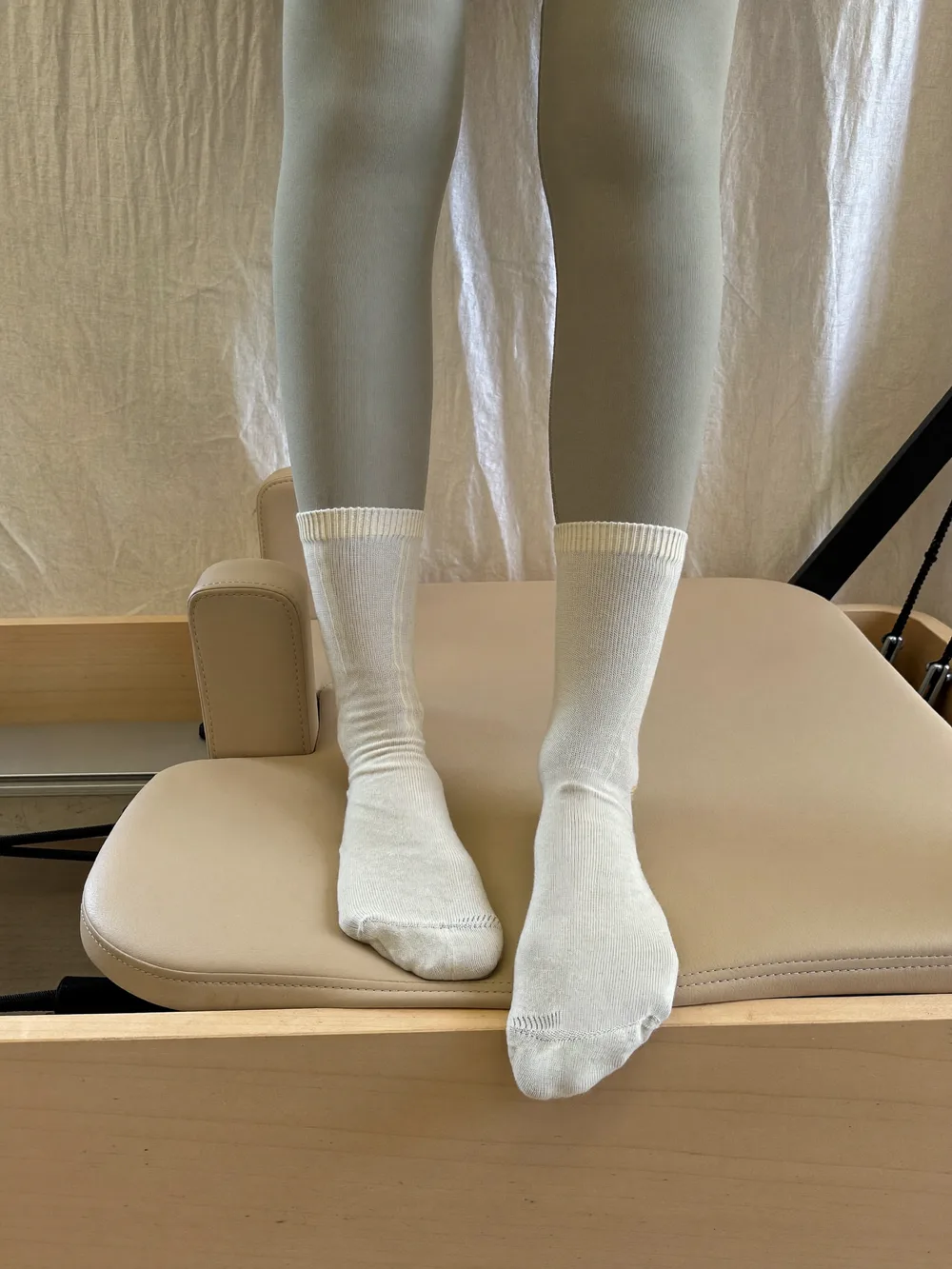
| Crew or knee-high | Taller leg with grips below | Cold studios, or covering the shins on the reformer |
| Strap or ballet style | Open top with a strap across the instep | Barre and Pilates where looks matter; less coverage |
Some studios ask for closed-toe socks for hygiene. Check before you buy toeless or strap styles.
What to look for
- Grip coverage. The grips should cover at least the ball of your foot and your heel, since those press on the footbar. Full-sole grip patterns are the most secure.
- Grip material. Silicone or rubber dots and patterns both work. Check that the grips are bonded flat and do not feel like hard lumps underfoot.
- Snug fit. A sock that twists on your foot moves the grips out of place. Look for proper sizes rather than one-size-fits-all, and some stretch or arch support.
- Fabric. Cotton is soft but holds sweat; blends with polyester, nylon or elastane dry faster and keep their shape. Merino blends are warm and resist odour; our guide to wool, cashmere and merino explains why.
- Thin, not thick. Heavy cushioning lets your foot shift inside the sock and dulls the feel of the footbar.
- A back tab or heel grip on low-cut styles, so they do not slip off during footwork.
Pilates socks for barre, yoga and the rest of your week
The same pair works across most studio classes. Barre studios usually ask for grip socks for the same reason reformer studios do: you balance on one leg, turn on the spot and work at a wooden barre where a bare or sock-clad foot can slide. In yoga, most people go barefoot on a mat, and grip socks are mainly for cold studios or anyone who prefers covered feet; toeless and five-toe styles are the most common there because they let the toes spread.
Outside class, grip socks are useful anywhere a floor is slippery and shoes are not welcome: wooden stairs at home, a hospital stay, or a long flight when you walk to the back of the cabin. They are not a substitute for supportive shoes during walking or training; for that, see our guide to choosing trainers.
Getting the size right
Size matters more for grip socks than for ordinary socks, because the grips only work if they stay where you push. If you are between sizes, go smaller for a snug sock that will not rotate, unless the fabric has little stretch. Look for a defined heel: a tube-style sock lets the grip pattern drift to the side as you move. If your toes push through the end of five-toe styles or the strap of a ballet style digs in, try a full-toe crew sock instead; it is the most forgiving shape.
How many pairs, and how much to spend
If you go to class twice a week, two or three pairs saves washing in a rush. Price tracks branding and colour more than function: a basic pair with good grip coverage and a snug fit does the job that matters. Spend more for fabric you like, a style you will happily wear, or a fit that suits narrow or wide feet, not for a grip claim, since the grips themselves are simple. Work out what a pair really costs per class the way our cost per wear guide does for clothes.
How to wash grip socks so the grips last
- Turn them inside out so the grips rub less against other laundry.
- Wash cool or warm, not hot, with similar colours.
- Skip fabric softener, which can leave a slippery film on the grips.
- Air dry rather than tumble dry; heat wears silicone grips faster.
Always follow the care label too; our guide to laundry symbols decodes it. Replace a pair when the grips peel, go shiny or stop holding on the footbar.
Read next: Vibration Plate Benefits: What the Research Shows · Standing Core Exercises: 12 Moves, No Floor Needed
Questions people ask about this
Do you need grip socks for Pilates?
For reformer classes, usually yes: many studios require them for safety and hygiene. For mat Pilates at home they are optional, since bare feet grip a mat well.
Can I wear regular socks to Pilates?
Not on a reformer. Ordinary socks slide on the footbar and carriage, which is why studios ask for grip socks. Bare feet or grip socks are better on a mat.
Are toeless grip socks better?
Not better, different. They let you feel the footbar with your toes and stay cooler, but some studios ask for closed-toe socks for hygiene.
What is the difference between Pilates socks and yoga socks?
Very little. Both are grip socks. Pilates styles more often have full-sole grips for the reformer footbar; yoga styles are often toeless or five-toe.
How do you wash grip socks?
Inside out, cool or warm, without fabric softener, then air dry. Heat and softener wear out the grips fastest.