Vibration plate benefits: what the research actually shows
Vibration plates help balance and leg strength, with mixed bone results and little for weight loss. What studies show, how to use one, who should skip.
The short answer
Vibration plates have real but modest benefits: the best evidence is for balance and mobility in older or frailer adults. Leg strength improves in many trials, but not clearly more than with ordinary strength exercise. Bone density results are mixed, and weight loss needs a calorie deficit; cellulite and detox claims have no good evidence.
- Keep knees soft, start on the lowest setting, and skip it if you are pregnant or have an implant, recent fracture or epilepsy.
Vibration plate benefits are real but smaller and narrower than the adverts suggest. The best evidence is for balance and mobility in older or frailer adults, with some support for leg strength. Results for bone density are mixed, the case for weight loss is weak unless you also eat less, and the claims about cellulite and "detox" have no good trials behind them. Here is what the research says, how to use a plate sensibly, and who should not use one.
What does a vibration plate actually do?
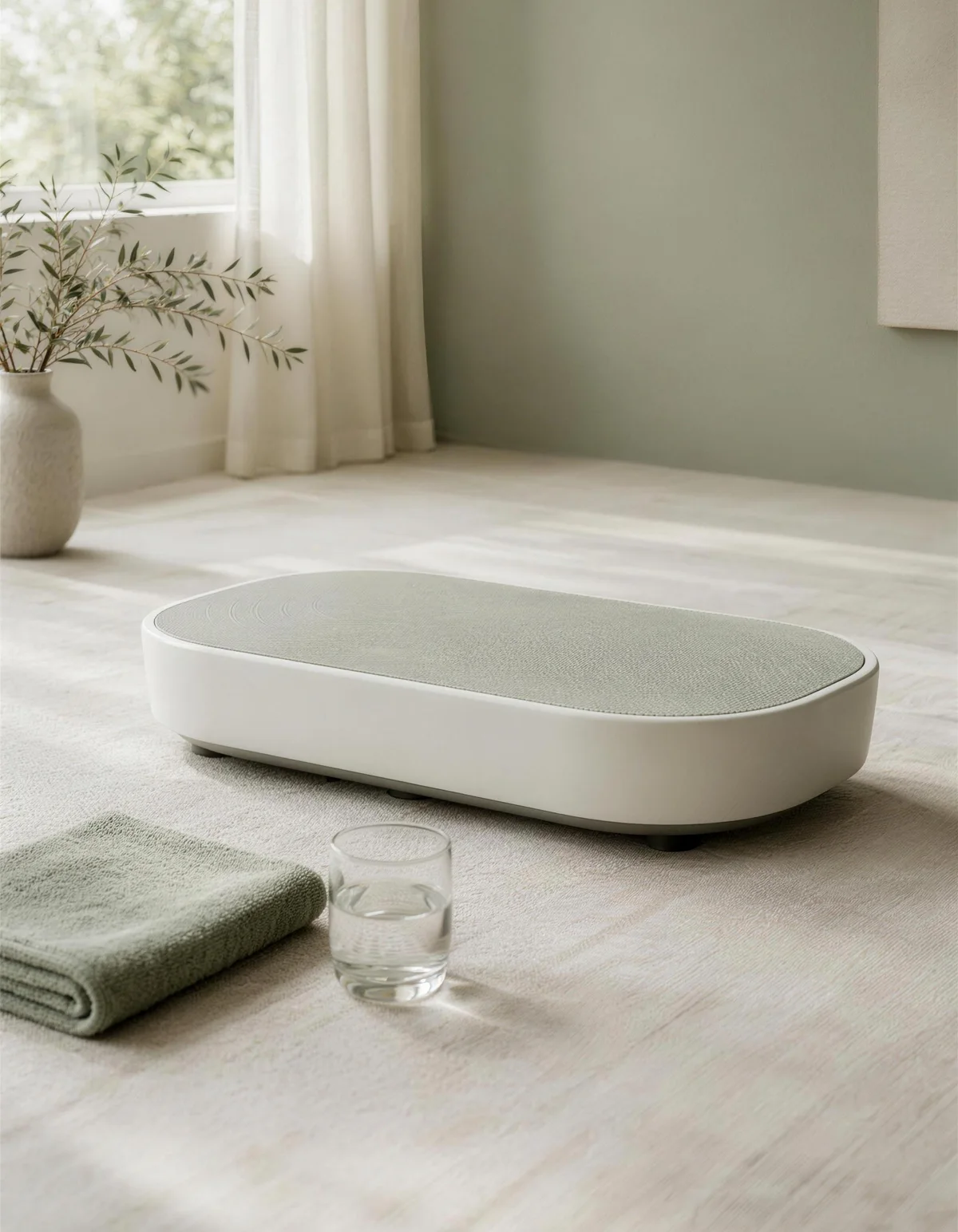
A vibration plate is a platform that shakes many times a second while you stand, squat or hold a position on it. The research calls this whole-body vibration. Each vibration makes your muscles contract briefly and reflexively, so holding a squat on a moving plate is harder than holding it on the floor. Consumer plates come in two main kinds. Pivotal plates rock from side to side like a seesaw, so the further your feet are from the centre, the bigger the movement. Vertical (lineal) plates move straight up and down. Most studies used one of these two designs, at settings that vary a lot from trial to trial, which is one reason the results disagree.
What does the research show?
The short version, benefit by benefit:
| Claimed benefit | What the studies found | How confident |
|---|---|---|
| Balance and mobility | Better balance scores and a faster walking test in older adults, most in frailer people | Moderate |
| Leg strength | Gains in many trials, especially the thigh muscles; not clearly better than ordinary exercise | Moderate |
| Bone density after menopause | No overall difference in a 2016 analysis of 15 trials; some effect at the lower spine and with certain settings | Low, mixed |
| Weight loss | May help only alongside eating less; not a replacement for exercise | Low |
| Fewer falls | Lower fall risk scores, but actual fall rates unproven | Low |
| Cellulite, lymph, "detox" | No good-quality trials found | None |
Sources: Mayo Clinic; meta-analyses of balance and falls (2012) and of bone density after menopause (2016).
Balance and mobility
This is the strongest result. A 2012 meta-analysis of 13 trials in older adults found that whole-body vibration improved two common balance scores and the Timed Up and Go test, a measure of how quickly someone stands from a chair, walks a short distance and sits back down. The authors judged the benefit greatest in frailer people and said the effect on actual falls was inconclusive.
Leg strength
Many trials report stronger legs, especially the front of the thigh, after several weeks of vibration training. The catch is the comparison. Against doing nothing, vibration helps; against ordinary strength exercise, it usually does not come out ahead. The Mayo Clinic puts it plainly: it is not yet clear that vibration gives the same range of benefits as exercise you actively do.
Bone density
This is where the marketing runs furthest ahead. A 2016 meta-analysis of 15 randomised trials in women after menopause found no difference in its main analysis, with benefits only in some subgroups, mainly at the lower spine. A 2023 update reported effects for high-frequency, low-magnitude programmes used often over time. Read together, the evidence suggests vibration may help bone in some settings, but it is not a treatment for osteoporosis.
Weight loss
The Mayo Clinic notes that some studies suggest vibration may help with weight loss, but only when you also cut calories, and that comprehensive research is lacking. Standing on a plate burns very little on its own. If a plate makes you more likely to do squats and lunges, that is the benefit; the shaking is not burning fat by itself.
Cellulite, lymph and "detox"
We found no good-quality trial showing that a vibration plate removes cellulite, drains lymph or detoxifies anything. Claims about the lymphatic system tend to borrow language from a real clinical technique; our guide to lymphatic drainage massage explains what that technique can and cannot do.
Vibration plate vs ordinary exercise
For most healthy women, a plate is an add-on, not a shortcut. The US guidelines ask adults for muscle-strengthening activity on at least two days a week plus regular aerobic activity, and nothing in the vibration research suggests a plate replaces that. Where a plate genuinely earns its place is for someone who finds ordinary exercise hard to start: an older or less steady person, or someone who will happily do ten minutes of squats on a plate but not on the floor.
If you want a stronger middle without any equipment, our standing core exercises and deep core exercises cover the moves that do most of the work.
Vibration plate exercises to start with
Keep your knees soft (slightly bent) whenever you stand on the plate, so the vibration is absorbed by your muscles rather than travelling up locked joints. Start on the lowest setting and work in sets of 30 to 60 seconds with a rest between.
- Squat hold. Feet hip-width apart, sit back to a comfortable depth and hold.
- Slow squats. Lower for three counts, rise for one.
- Calf raises. Rise onto the balls of your feet and lower slowly.
- Split squat. Front foot on the plate, back foot on the floor; switch sides.
- Glute bridge. Lie on the floor with your heels on the plate and lift your hips.
- Plank. Forearms or hands on the plate, body in a straight line from head to heels.
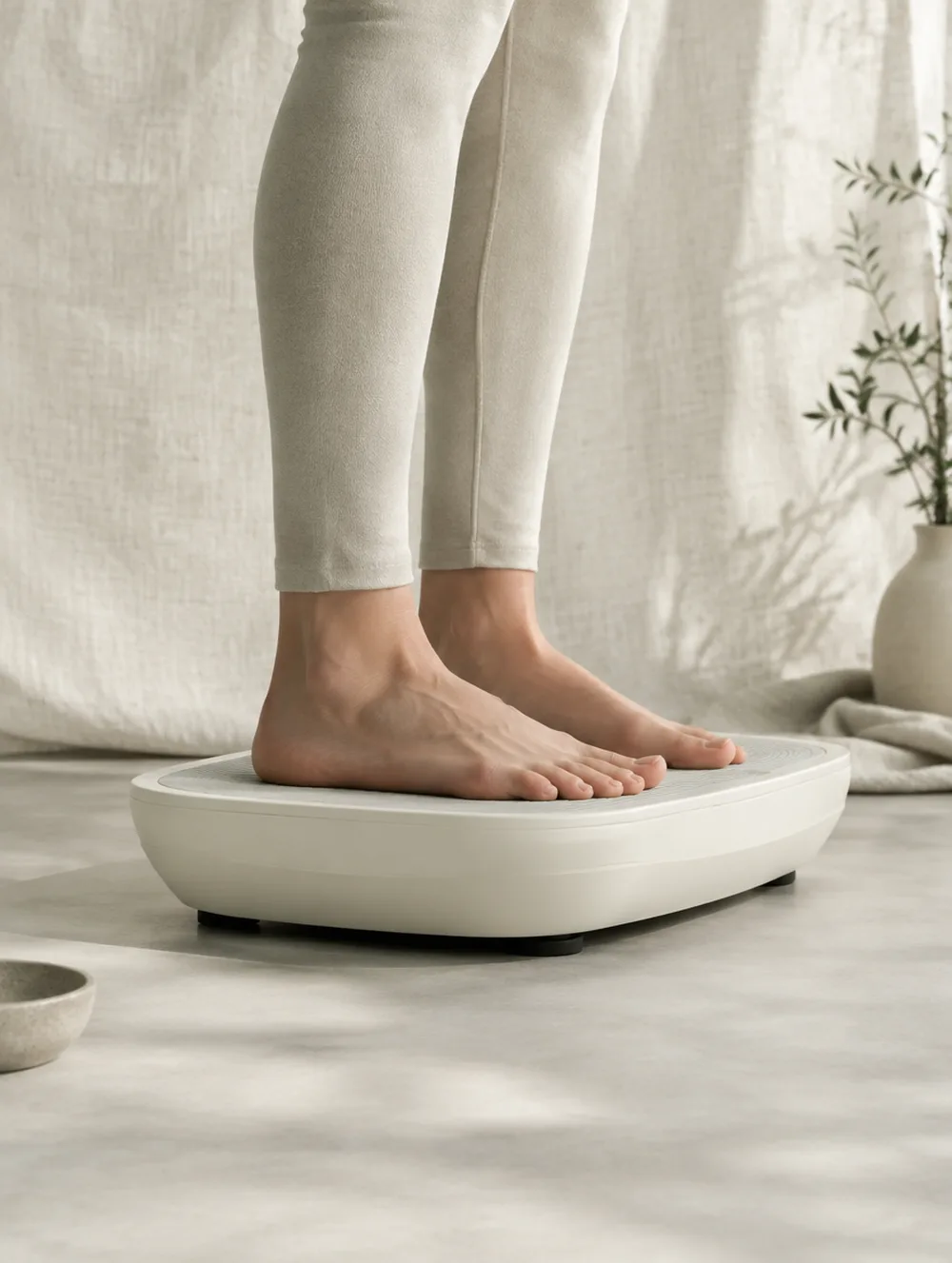
Advocates often recommend about 15 minutes three times a week. Treat that as a ceiling to build towards, not a prescription: the trials used many different schedules, and none shows that longer is better.
Who should not use a vibration plate?
There is no single official list, but the same conditions come up again and again in trial exclusions and in ACE Fitness guidance. Ask your doctor first, or avoid plates altogether, if any of these apply:
- pregnancy;
- a pacemaker or other implanted electronic device;
- a recent fracture, or hip or knee replacement;
- epilepsy;
- recent surgery, or a history of blood clots;
- eye conditions such as recent retinal problems.
Stop if you feel dizzy, get a headache, or notice pain in a joint. Long hours of vibration at work are a known cause of back problems, which is one more reason to keep home sessions short.
What to look for if you buy one
- Type. Pivotal plates give more movement and a steeper learning curve; vertical plates feel gentler and more even.
- A wide, grippy platform. You need room to place your feet hip-width apart and to do split squats safely.
- A low starting setting. More speed settings matter less than a genuinely gentle lowest one.
- Weight limit and returns. Check the maximum user weight, and buy where you can return it if it sits unused.
A plate is a modest purchase that works best with a habit attached. Like cold plunges and infrared saunas, it is easy to overestimate what it does on its own.
General information, not medical advice. If you are pregnant, recovering from surgery or an injury, or have a heart, bone, eye or neurological condition, ask your doctor before starting a new kind of exercise.
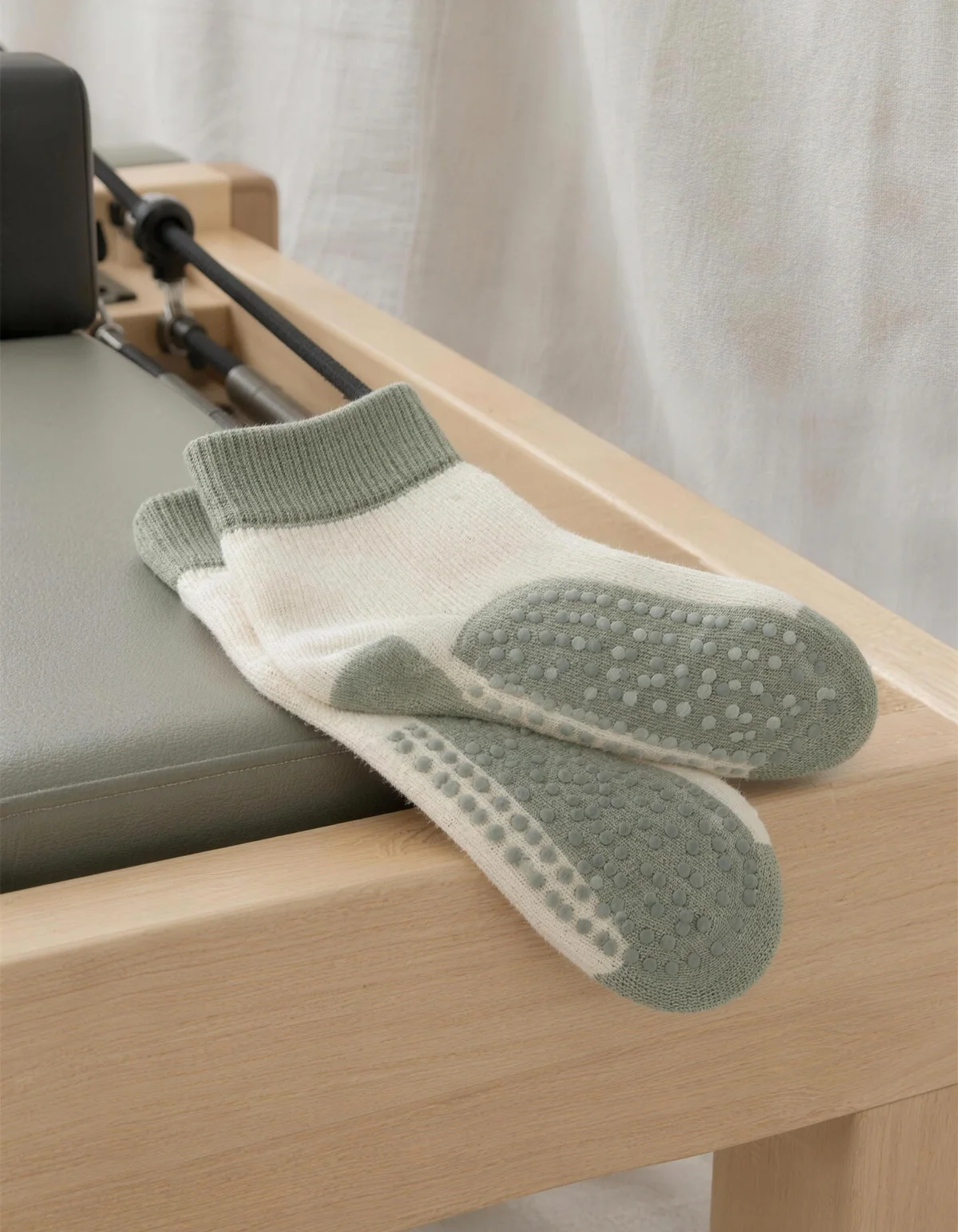
Read next: Pilates Socks: Do You Need Grip Socks?
Questions people ask about this
Do vibration plates really work?
For some things. The best evidence is for better balance and mobility in older or frailer adults, with some support for leg strength. Results for bone density are mixed, and there is no good evidence for cellulite or detox claims.
Can a vibration plate help you lose weight?
Only a little, and only with diet. The Mayo Clinic says vibration may help with weight loss when you also cut calories, and that it is not a replacement for regular exercise.
How long should you stand on a vibration plate?
Start with sets of 30 to 60 seconds on the lowest setting. Advocates often suggest about 15 minutes three times a week; treat that as an upper limit to build towards, not a target on day one.
Is a vibration plate good for bone density?
The evidence is mixed. A 2016 analysis of 15 trials in women after menopause found no overall difference, with some effects at the lower spine. It is not a treatment for osteoporosis.
Who should not use a vibration plate?
People who are pregnant or have a pacemaker, a recent fracture or joint replacement, epilepsy, recent surgery, a history of blood clots or certain eye conditions should avoid it or ask a doctor first.