Standing core exercises: 12 moves that work your abs without the floor
Twelve standing core exercises that work your abs, obliques and deep core without lying down, plus a 10-minute routine and the mistakes to avoid.
The short answer
Standing core exercises strengthen your abs, obliques and deep core without lying on the floor. They train the core's main everyday job: keeping you upright and stopping you bending, twisting or tipping. Twelve moves, from knee drives to suitcase holds and the Pallof press, make a 10-minute routine you can do three times a week.
- No exercise burns fat from your stomach; breathe out on effort and never hold your breath.
Standing core exercises work your abs without lying on the floor, and for most everyday goals they are not a lesser option. Your core is not just the six-pack muscle: it is the band of muscles around your middle that keeps you upright, stops you twisting or tipping, and passes force between your legs and arms. Standing moves train exactly that job. Here are twelve, with a ten-minute routine and the common mistakes.
Do standing ab exercises actually work?
Yes, for the job most people want a core to do. Floor crunches mainly train one muscle, the rectus abdominis, to curl the trunk forward. Standing moves train your core to resist movement: to hold you straight while one hand carries a bag, to stop you twisting when you push a door, to keep you balanced on one leg on a stair. That resisting is what the deepest layer of your core, including the transversus abdominis, does all day.
Standing moves also suit people who find floor work uncomfortable: anyone with stiff hips, wrist pain, a pelvic floor that does not like crunches, or simply no room to lie down. If you want flatter-looking abs, no exercise removes fat from one spot; that comes down to overall body fat. A strong core changes how you stand and move, which is often what people notice first.
The muscles you are working
- Rectus abdominis: the long front muscle that bends you forward.
- Obliques: the side muscles that twist you and bend you sideways, and stop you doing either.
- Transversus abdominis: the deepest layer, wrapping round like a corset to steady the spine.
- Back and hip muscles: including the multifidus along the spine and the glutes.
- Pelvic floor and diaphragm: the base and roof of the "cylinder"; our deep core guide covers these.
12 standing core exercises
Do each slowly. Breathe out on the hardest part, and keep a light brace, as if you were about to be nudged, rather than sucking your stomach in hard.
| Exercise | How to do it | Main focus |
|---|---|---|
| Standing knee drive | Stand tall, brace lightly, and drive one knee up to hip height while the opposite arm swings forward. Lower with control and alternate. | Front of the core, hip flexors |
| Standing cross-body crunch | Hands behind your head, bring one elbow down towards the opposite knee as it lifts. Turn from the ribs, not the neck. | Obliques |
| Standing side crunch | Lift one knee out to the side and bring the same-side elbow down to meet it. Stand back up tall between reps. | Obliques, side of the trunk |
| Suitcase hold | Hold one heavy weight or full bag at your side and stand completely straight, without leaning towards it. | Side core, deep stabilisers |
| Suitcase march | The same hold, but march slowly on the spot or walk across the room. | Side core, balance |
| Pallof press | Anchor a resistance band at chest height, stand side-on, and press the handle straight out from your chest without letting it pull you round. | Anti-rotation, deep core |
| High-to-low woodchop | With a light weight or band, move diagonally from above one shoulder to beside the opposite hip, turning through the trunk. | Obliques, rotation |
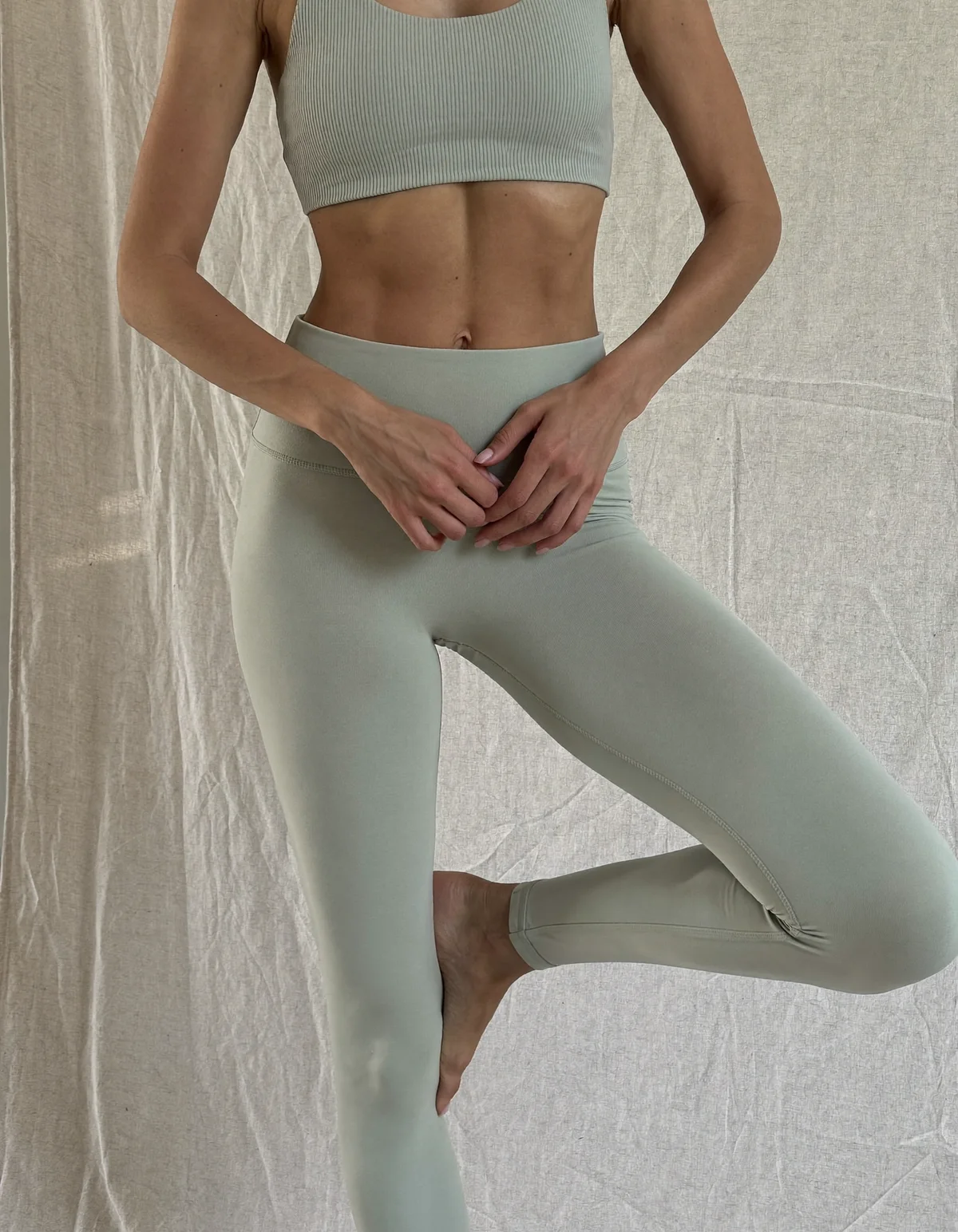
| Single-leg balance with reach | Stand on one leg, soft knee, and reach the other foot slowly forward, to the side and back without touching down. | Balance, deep core |
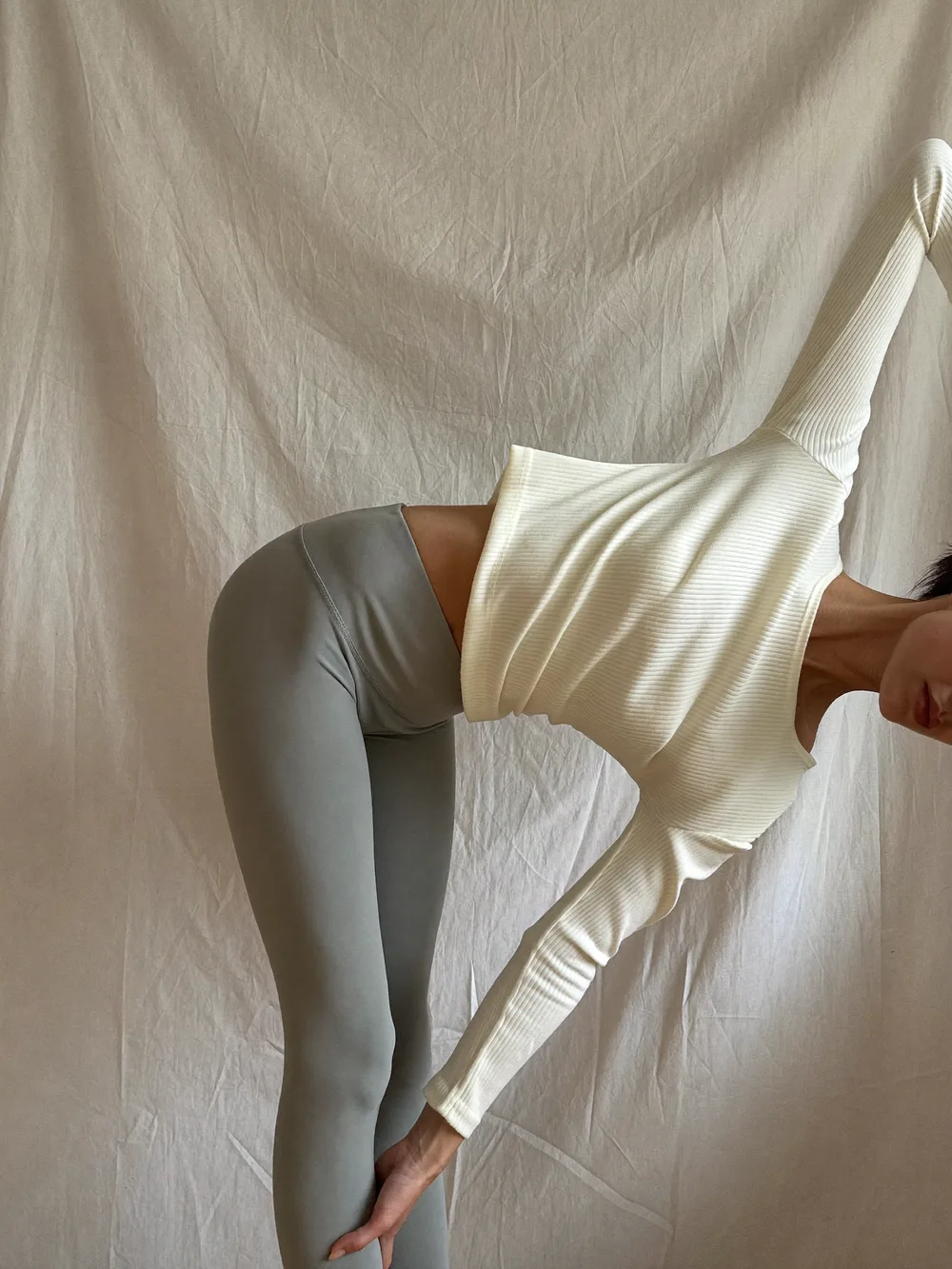
| Standing side bend | Feet hip-width apart, reach one arm overhead and bend gently sideways, then return. Add a light weight in the low hand later. | Obliques, side of the trunk |
| Overhead hold | Hold a light weight above your head with straight arms and keep your ribs down, so your lower back does not arch. | Front core, shoulders |
| Standing wall press | Stand facing a wall, hands on it at shoulder height, and press as if pushing it away while you march slowly. | Front core, deep core |
| Slow standing twist | Arms crossed on your chest, turn slowly from the ribs to each side while your hips stay facing forward. | Rotation, obliques |
Start with bodyweight. Add a light dumbbell, kettlebell or band only when you can do 10 slow, controlled reps.
A 10-minute standing core routine
Do this three times a week, or on the two or more days the US guidelines suggest for muscle-strengthening activity. Work for 40 seconds and rest for 20.
- Standing knee drive
- Standing cross-body crunch
- Suitcase march (20 seconds each side)
- Pallof press (20 seconds each side)
- Single-leg balance with reach (20 seconds each side)
- High-to-low woodchop (20 seconds each side)
- Standing side bend
- Overhead hold
- Standing wall press
- Slow standing twist
Go round once in week one and twice from week two. When it feels easy, add a light weight before you add more time.
How to make it easier or harder
| To make it easier | To make it harder |
|---|---|
| Hold a wall or chair back for balance moves | Close your eyes on the balance moves (with a wall nearby) |
| Use no weight, or a light bag | Add a dumbbell or kettlebell to suitcase holds and woodchops |
| Shorten the work to 20 seconds | Slow every rep to a three-second lower |
| Smaller range: knee to waist, not hip | Add a resistance band to the Pallof press and woodchop |
Common mistakes
- Holding your breath. Breathe out through the effort. Holding your breath and bearing down pushes pressure onto the pelvic floor.
- Pulling on your neck in cross-body crunches. Let the turn come from your ribs; your hands only rest behind your head.
- Going fast. Speed lets momentum do the work. Slow reps are harder and better.
- Arching your lower back during overhead holds. Keep your ribs down and your bottom lightly squeezed.
If you are postpartum, have a gap between your abdominal muscles, leak when you cough or jump, or have back pain, start with the breathing and pelvic floor work in our deep core guide, and see a physiotherapist if symptoms continue.
Standing core work and the rest of your week
A core routine is one part of strength training, not all of it. Squats, lunges and carries use the core heavily too. If you are building strength, our guide to creatine for women covers one of the few supplements with solid evidence, and supportive trainers make balance work steadier. Standing on a vibration plate is optional extra challenge, not a replacement for any of it.
General information, not medical advice. If you are pregnant, recovering from surgery or an injury, or have a heart, bone, eye or neurological condition, ask your doctor before starting a new kind of exercise.
Read next: Pilates Socks: Do You Need Grip Socks?
Questions people ask about this
Do standing ab exercises work?
Yes. They train your core to keep you upright, stable and balanced, which is its main everyday job. They will not remove belly fat on their own; that depends on overall body fat.
What is the best standing core exercise?
There is no single best. Suitcase holds and the Pallof press are among the most effective because they train your core to resist bending and twisting, which floor crunches do not.
Can you get abs from standing exercises?
You can strengthen your abs standing up. Whether they show depends on body fat, which comes down to diet and overall activity, not to the type of ab exercise.
How often should I do standing core exercises?
Two to three times a week is plenty, in line with the US advice to do muscle-strengthening activity on at least two days a week. Ten minutes a session is enough to start.
Are standing core exercises good for beginners?
Yes. They need no floor space or equipment, are easy on the wrists and neck, and are simple to make easier by holding a wall or chair.