Sunglasses lens colours: what each tint actually does
Grey, brown, green and rose each change contrast and colour differently. Which suits driving, which suits overcast days, and why tint has nothing to do with protection.
First, the thing every lens-colour article should say at the top and usually does not: tint has nothing to do with UV protection. A pale lens can block 100% of UV and a very dark one can block none. Protection comes from a coating, and the only marker that tells you it is there is UV400 — covered properly in how to buy sunglasses.
What tint does change is contrast, depth perception and how colours read. That is a comfort and performance question, and it genuinely differs by colour.
Grey: the neutral one
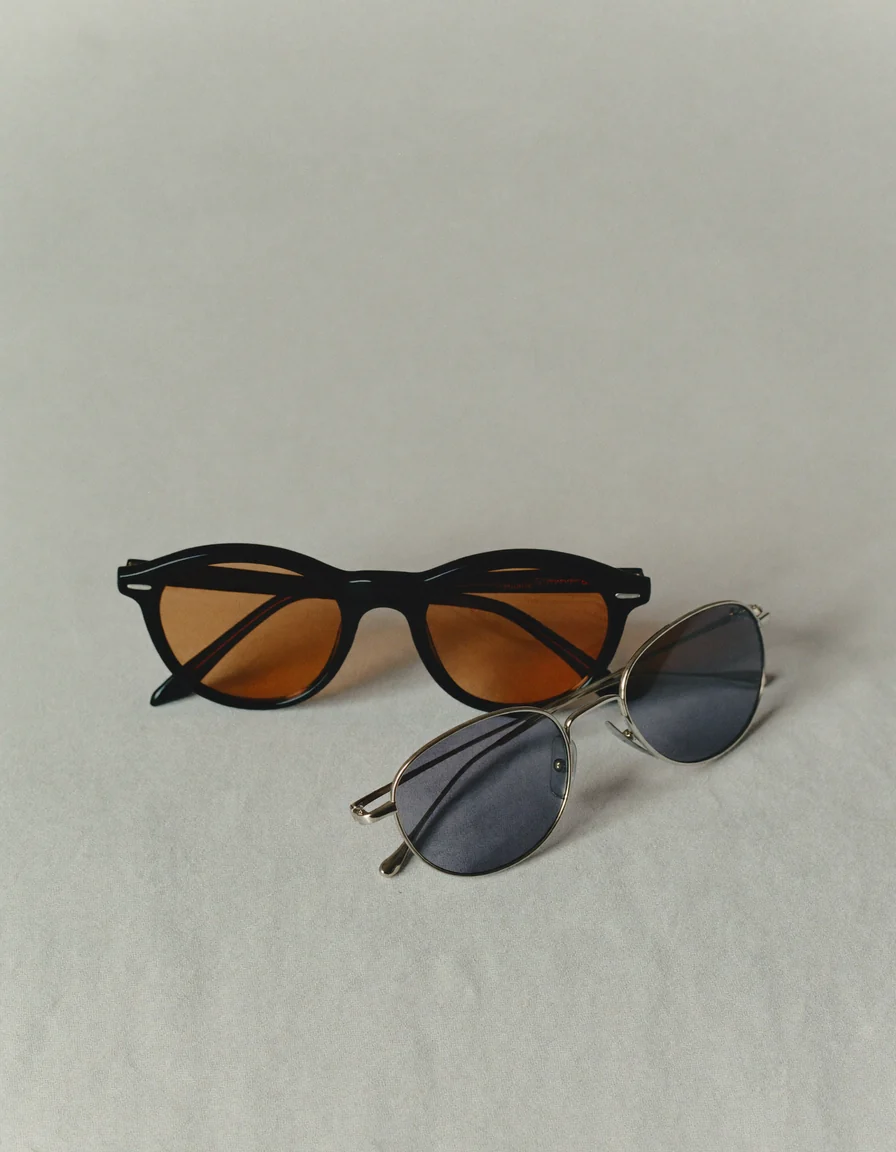
Grey reduces brightness without shifting colour. Everything looks like itself, only darker. It is the default for a reason: it is the safest choice for general wear and for driving, because traffic lights and brake lights keep their true colour.
What it does not do is add contrast. On a flat overcast day, grey can make an already low-contrast scene feel duller.
Brown and amber: contrast, at the cost of colour accuracy
Brown filters more blue light, which increases contrast and makes edges and depth easier to read. That is why it suits variable light, overcast days, and anything where you are judging distance — and why it is popular for driving in poor weather.
The trade is a warm colour shift. Everything reads slightly golden, and colours are not true. Most people stop noticing within minutes; some never stop noticing.
Green: the middle ground
Green reduces glare while keeping colour reasonably true, with a modest contrast gain. It is the classic all-rounder tint and the least likely to feel like a compromise in any particular condition, which is also why it rarely excels in one.
Rose, red and yellow: specialist, and mostly not for the sun
Rose and red increase contrast strongly and are easiest on the eyes for long periods, which is why they show up in sport. Colour accuracy is poor.
Yellow is a special case: it is a low-light tint, not a bright-light one. It sharpens contrast in fog and dusk and should not be worn in strong sun, because it lets through too much light to be comfortable and can encourage you to stare at brightness you would otherwise squint away from.
| Tint | Best for | Colour accuracy | Avoid for |
|---|---|---|---|
| Grey | General wear, bright sun, driving | True | Flat overcast days |
| Brown / amber | Variable light, depth, poor weather | Warm shift | Tasks needing true colour |
| Green | All-round use, glare | Near true | Nothing in particular |
| Rose / red | Long wear, sport, contrast | Poor | Driving |
| Yellow | Fog, dusk, low light | Poor | Bright sunshine |
None of these rows is about protection. Every one of them assumes the lens already meets UV400; tint and UV blocking are unrelated.
Mirrored, gradient and photochromic
Mirror coatings reflect additional light away before it reaches the lens and are genuinely useful at altitude, on water and on snow, where glare comes from above and below at once. They scratch more visibly than plain lenses.
Gradient lenses are dark at the top and clear toward the bottom, which shades the sky while leaving a dashboard or a book readable. Good for driving, poor for anywhere the ground is the bright thing — beach and snow specifically.
Photochromic lenses darken in UV, which is why most of them barely react inside a car: modern windscreens block UV. If you want one pair for everything, that is the limitation to know about before you buy rather than after.
Polarisation is a separate axis
Polarisation is not a tint. It is a filter that cuts glare reflected off flat surfaces — water, wet roads, car bonnets — and it can be added to any colour. It is the single biggest comfort upgrade for driving and anything near water.
The exceptions worth knowing: polarised lenses can make LCD screens hard or impossible to read at certain angles, including some dashboards and phone displays, and skiers sometimes avoid them because they hide the sheen that marks ice.
Choosing without overthinking it
One pair for general use: grey or green, polarised, UV400. Driving in mixed weather: brown or amber. Sport where contrast matters more than colour: rose. Anything at altitude or on water: add a mirror coating.
And if the frame itself is the part you are unsure about, the contrast rule that governs which shapes suit you is the same for sunglasses as for glasses — it is in glasses and your face shape.
Questions people ask about this
Does a darker lens mean more UV protection?
No, and this is the most important misunderstanding in the category. Tint and UV protection are unrelated — a pale lens can block 100% of UV and a very dark one can block none. Protection comes from a coating, marked as UV400. A dark lens without it is worse than no sunglasses, because your pupils open behind it.
What lens colour is best for driving?
Grey for bright, clear conditions, because it keeps traffic and brake lights true. Brown or amber for poor weather and variable light, since filtering blue light increases contrast and depth perception. Avoid rose and yellow for driving.
What do brown sunglasses lenses do?
They filter more blue light, which increases contrast and makes edges and distance easier to judge — useful in overcast or variable conditions. The trade-off is a warm colour shift, so colours are not rendered accurately.
Are polarised lenses the same as tinted lenses?
No. Polarisation is a filter that cuts glare reflected off flat surfaces like water and wet roads, and it can be added to any tint. It is a large comfort improvement for driving and water, but it can make some LCD screens and dashboards hard to read.
Why don't my photochromic lenses darken in the car?
Because they darken in response to UV, and modern windscreens block most UV. It is a known limitation rather than a fault, and worth knowing before buying photochromic lenses as an all-purpose single pair.