What to wear under white clothes, and why nude is the wrong answer
White shows underwear more than any other colour, and matching your skin tone beats matching the garment. The seam and fabric choices that decide whether anything shows.
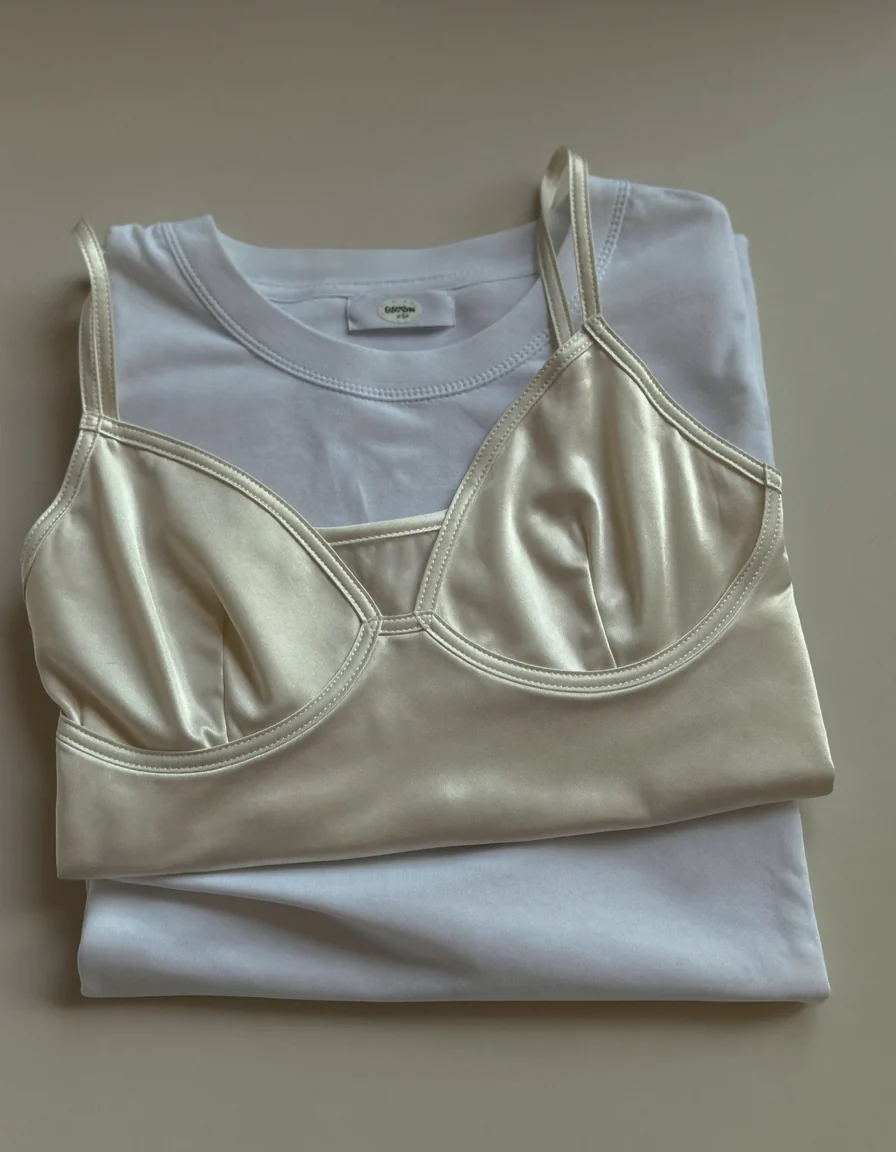
White is the hardest colour to dress under, and the instinct almost everyone follows — wear white underneath — is exactly wrong. White under white shows. It reflects light back through the fabric and reads as a bright panel with visible edges.
The rule: match your skin, not the garment
Underwear closest to your own skin tone disappears under white. This is the single most useful thing in this article, and it works because the eye is looking for contrast. A garment that reads as a continuation of your skin creates none; a white one creates plenty.
“Nude” is not a skin tone, it is a beige, and it only works for the narrow band of people it happens to match. The right shade is the one that vanishes against your arm, which for many people is a deeper tone than anything a shop labels nude. Brands with a proper range have made this easier than it used to be, and it is worth holding out for an actual match rather than the nearest approximation.
What gives it away, in order
Colour contrast first, as above. Then seams and edges — a raised hem, a lace edge or a thick seam creates a shadow line that is visible even through opaque fabric, and it is the reason a well-matched bra can still show. Laser-cut or bonded edges solve this; so does anything described as seamless, provided it is genuinely edgeless rather than just smooth.
Then texture. Lace and embroidery read through thin fabric as pattern even when the colour matches, because they change how light passes rather than what colour it is. Under white, smooth beats pretty.
Then fit. Anything that compresses creates an edge where the compression stops. That is what a visible line across the thigh or the back actually is — not the garment showing, but the boundary between compressed and uncompressed showing.
| Choice | Visibility | Why |
|---|---|---|
| Skin-tone, seamless, smooth | Lowest | No contrast, no edge, no texture |
| Skin-tone with lace or seams | Moderate | Shadow lines read through regardless of colour |
| Black or dark | High | Maximum contrast; worse under thin fabric |
| White | High | Reflects light back through the fabric |
| Bright or patterned | Highest | Both contrast and pattern |
Colour is the first problem and edges are the second. Solving only one is why a well-matched bra can still show a line.
The fabric of the white garment matters as much
Not all white is equally revealing. Thin jersey, cotton lawn, linen and anything with a loose weave transmit the most light. Twill, poplin, double-layered fabric and anything with a lining transmit the least.
The way to check before you buy: hold it up to a window rather than judging it on a hanger in shop lighting. If you can see your hand clearly through a single layer, it will need thought underneath. If a white shirt is going to be a regular piece, buying one that is lined or double-layered at the front solves the problem permanently and is the reason more expensive white shirts often look better on — it is construction, not magic. The same inside-out inspection that catches it is in how to spot well-made clothes.
Smoothing layers under white
If you are wearing a shaping layer under white, the same rules apply and the edge problem is worse, because these garments compress by definition. Look for bonded or laser-cut edges rather than elasticated bands, and choose a length that ends somewhere the eye is not looking — below the hem of the garment, or high enough to sit under a waistband.
And resist sizing down. It is the most common mistake in the category, and it makes lines more visible rather than less, because more compression means a harder boundary at the edge. The full case is in shapewear that actually works.
Quick answers
White trousers: seamless skin-tone briefs, laser-cut, or a thong if edges are the issue. Check in daylight, from behind, sitting down — not standing in front of a mirror.
A white shirt: smooth skin-tone bra, no lace, no contrast stitching. T-shirt bras exist precisely for this.
A white dress: a slip. The old solution is still the best one, and it solves opacity and lines simultaneously.
And for anything white, check it in daylight before leaving. Indoor lighting is far more forgiving than a street is, which is how people end up finding out later.
Questions people ask about this
What colour underwear should I wear under white clothes?
Underwear closest to your own skin tone, not white. White under white reflects light back through the fabric and shows clearly. Skin-tone underwear creates no contrast, which is what the eye is actually looking for.
Why does my bra show through my white shirt even though it matches?
Because colour is only the first problem. Raised seams, lace edges and thick hems create shadow lines that read through fabric regardless of colour, and texture like lace shows as pattern. Under white you want smooth and edgeless as well as matched.
Does black underwear show under white clothes?
Yes, more than almost anything else, because it creates maximum contrast. It is particularly visible under thin jersey, cotton lawn and linen, which transmit the most light.
How do I know if a white garment will be see-through?
Hold it up to a window rather than judging it under shop lighting. If you can see your hand clearly through a single layer, it will need thought underneath. Lined or double-layered white shirts solve the problem permanently.
Does shapewear show under white clothes?
It can, because compression creates an edge where the compression stops. Choose bonded or laser-cut edges over elasticated bands, and do not size down — more compression makes the boundary harder and more visible, not less.