Closet organization ideas that make getting dressed faster
Closet organization ideas that make getting dressed easier: declutter in one afternoon, what to hang and what to fold, small-closet tips, and habits that last.
The short answer
Organize your closet around how you get dressed, not how it looks: declutter before buying any storage. Work one section at a time and sort into four piles: wear now, clean or repair, not sure, and leave. Hang what wrinkles and fold what is sturdy; always fold knits so the shoulders keep their shape.
- Put your most-worn pieces at eye level, group by type then color, and add one hook for tomorrow's outfit.
- Keep it organized with a five-minute weekly reset and the backward-hanger test.
Most closet organization ideas are storage ideas: matching hangers, labeled bins, a shelf for every bag. They make a closet look tidy in a photograph and do very little for the decision you make at 7:40 in the morning. Closet organization that lasts is arranged around how you get dressed, not how the closet looks, and it starts with taking things out, not buying things to put in.
How do you organize your closet in one afternoon?
Work one section at a time, not the whole closet at once. Emptying everything onto the bed feels decisive and usually ends with a mountain at 10 p.m.
- Take out one section: the hanging rail, then shelves, then shoes.
- Sort into four piles. Wear now; needs cleaning or repair; not sure; leave.
- Try on the not-sure pile. Most of it decides itself within a minute of wearing.
- Put back only the wear-now pile, arranged as described below.
- Deal with the rest the same day. Repairs into a bag by the door, leave pile into the car or a donation box.
| Pile | What goes in it | What happens next |
|---|---|---|
| Wear now | Fits, suits this season, you reach for it | Back in the closet, at eye level |
| Clean or repair | Missing button, loose hem, a stain | A bag by the door; fix it this week or let it go |
| Not sure | You like it but rarely wear it | Try it on today, or box it with a date (below) |
| Leave | Does not fit, does not suit, you avoid it | Donate, sell or recycle the same day |
If a pile is larger than the wear-now pile, that is normal. It is the point of doing this.
How do you declutter your closet without regret?
Decluttering goes wrong when it becomes a test of willpower. A few questions keep it practical:
- Have I worn it this past year, in its season? If not, why not? A reason you can fix, like a hem, is different from a reason you cannot.
- Would I buy it again today? A fast, honest test of whether it still suits your life.
- Does it need something I do not own to work? Pieces waiting for a perfect partner rarely get worn.
For true maybes, use a dated box. Put them in, write a date about three months away on the lid, and store it out of sight. Anything you have not gone looking for by then can go without a second thought.
And before you leave: our guide to cost per wear is a useful lens on what to keep, because the piece that cost the most is not always the one earning its place.
What to hang and what to fold
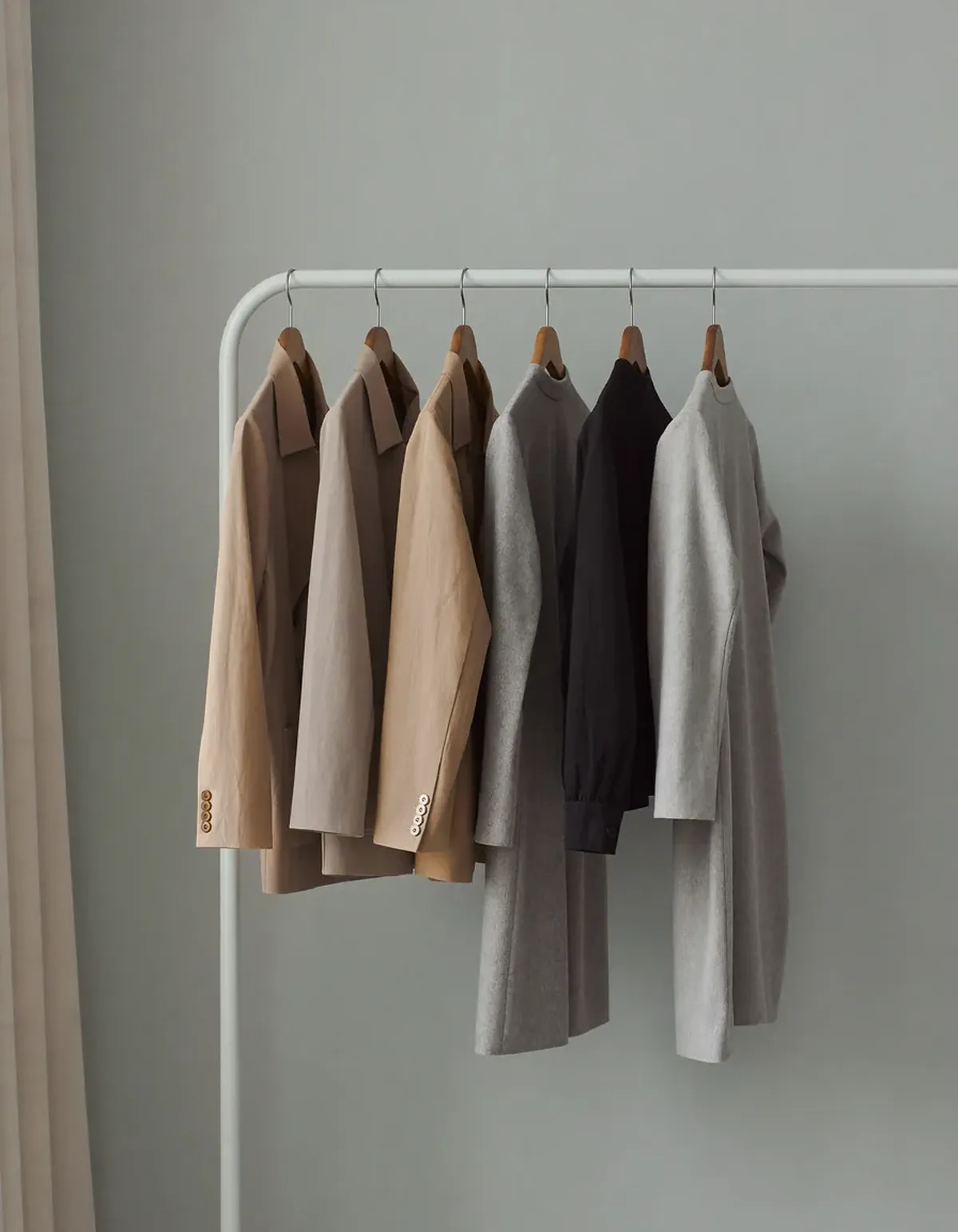
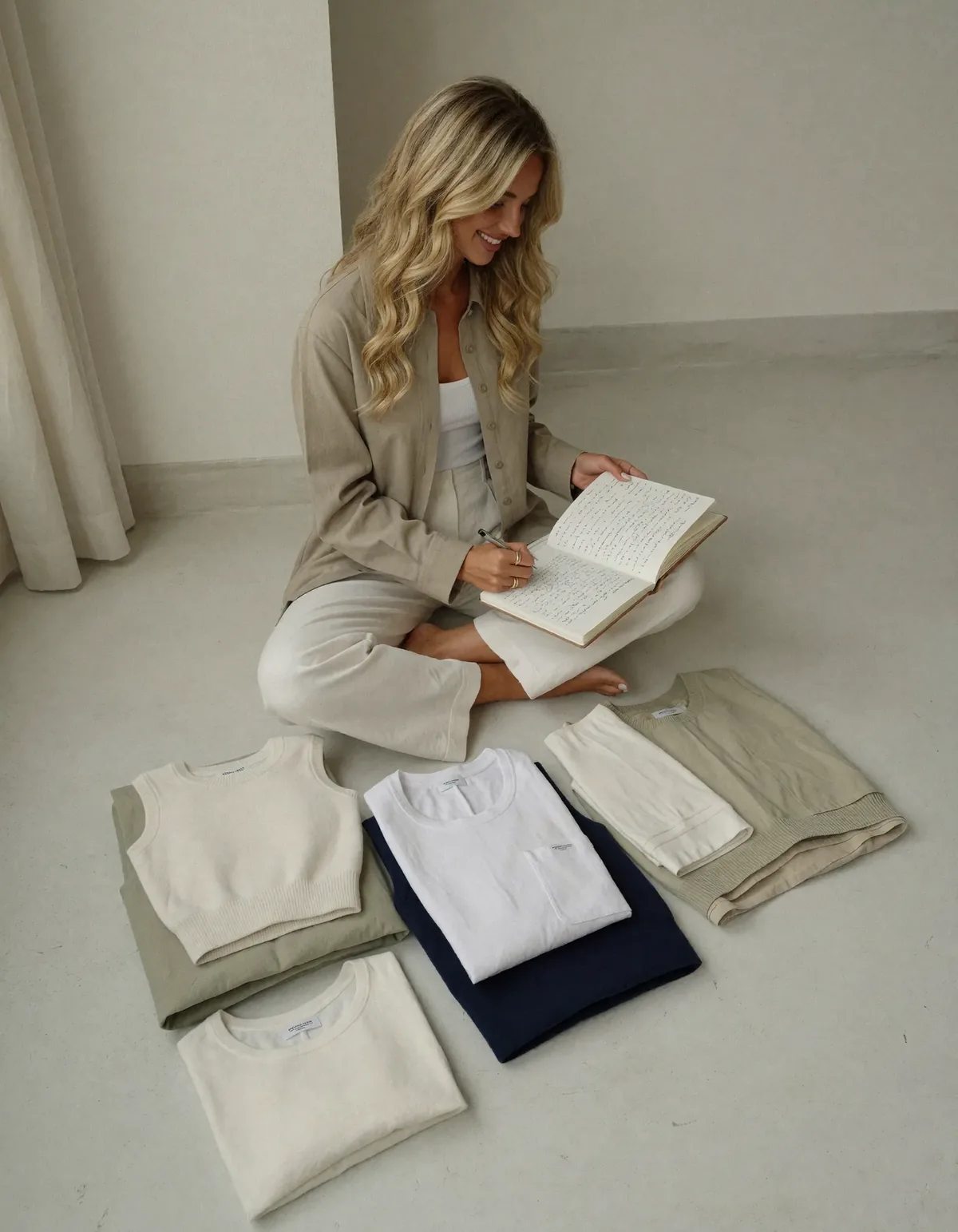
The rule most professional organizers use, as Wirecutter puts it, is to hang what wrinkles and fold what is sturdy. Knits are the exception that matters: hanging stretches the shoulders out of shape over time.
| Hang | Fold |
|---|---|
| Dresses, blouses and shirts | Sweaters and knitwear of any weight |
| Skirts and tailored trousers | T-shirts, tanks and sweatshirts |
| Blazers, jackets and coats | Jeans (or hang them, either works) |
| Silk, satin and linen | Leggings, loungewear and activewear |
Cashmere and fine wool last far longer folded. Our guide to wool, cashmere and merino covers their care.
Arrange your closet by how you get dressed
This is where a closet starts saving you time.
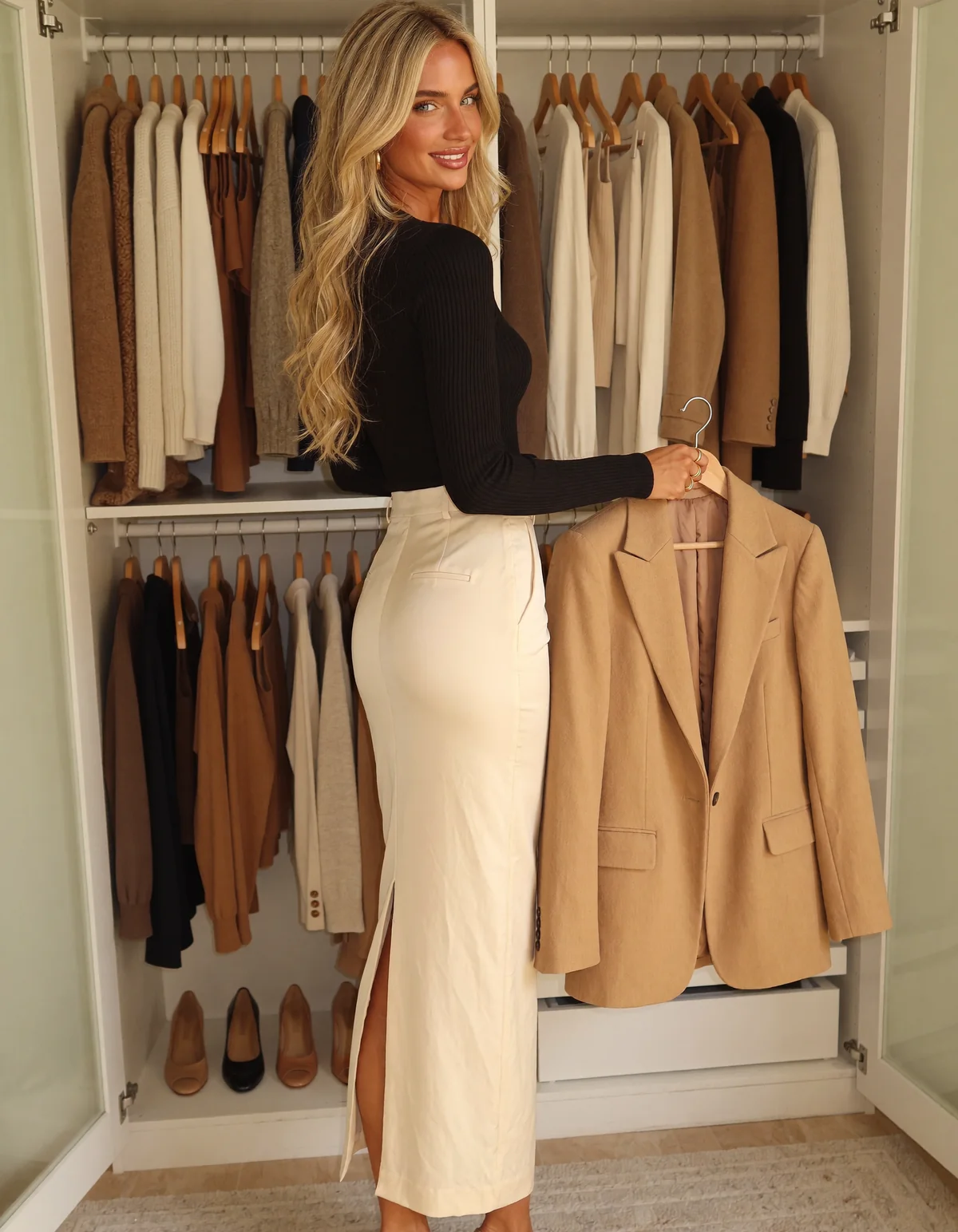
- Make a working zone. The pieces you wear most, in this season, go at eye level and arm’s reach. Everything else moves up, down or out.
- Group by type, then by color. All trousers together, then light to dark within them. You find a piece by what it is first, and color second.
- Keep shoes near the clothes they go with, or at least in one visible line, not in a heap.
- Add one outfit hook. A single hook on the door for tomorrow’s outfit, chosen the night before, removes the morning decision completely.
- Store off-season clothes away. Under the bed or on a high shelf, in breathable bags, so the rail only shows what you can wear this month.
Small closet organization ideas
A small closet is mostly a problem of what it is asked to hold. These help the most for the least money:
- Slim, non-slip hangers. Swapping bulky hangers frees a surprising amount of rail, and clothes stop sliding off.
- Over-the-door hooks or a rack for bags, belts and scarves.
- Shelf dividers so folded stacks stay upright instead of collapsing into each other.
- A second rail below the first for shirts and folded trousers, if your hanging space is tall enough.
- One in, one out. Every new piece replaces one. It is the only rule that keeps a small closet small.
How do you keep your closet organized?
A closet stays organized by a small habit, not a big system.
- Five minutes on Sunday. Put back what drifted onto the chair, move clean laundry in, check the outfit hook.
- The hanger test. Turn every hanger the wrong way round. When you wear something, hang it back the right way. At the end of the season, the backward hangers tell you exactly what you never wore.
- Read the care label before it goes back in. The laundry care symbols say whether it needs washing, airing or a fold instead of a hanger.
From an organized closet to easier mornings
An organized closet makes it easy to see what you have. The next step is deciding what to wear from it. Our guide to a capsule wardrobe that actually works builds from your real calendar, and our outfit ideas give you thirty combinations to try with what you kept.
Our Wear-Again Edit, hosted by Camille, SOUL’s style host, takes the same approach for two weeks: printable closet status tags for the pieces waiting on a repair or a decision, door cards for your outfits, and a planner that starts with what you already own.
Read next: Outfits for Women: Simple Formulas That Always Work · Outfit Planner: Plan a Week of Outfits You Own
Questions people ask about this
How do I organize my closet?
Work one section at a time. Sort everything into four piles: wear now, clean or repair, not sure, and leave. Put back only the wear-now pile, with the pieces you wear most at eye level, grouped by type and then by color.
Should I organize my closet by color?
Group by type first, then by color within each type. You look for trousers or a shirt before you look for a color, so a rail sorted only by color makes you search through everything.
What clothes should be hung and what should be folded?
Hang what wrinkles: dresses, blouses, shirts, skirts, tailored trousers, jackets and delicate fabrics. Fold what is sturdy, and always fold knits, because hanging stretches their shoulders out of shape.
How do I declutter my closet?
Ask whether you wore it in its season this past year, whether you would buy it again today, and whether it needs something you do not own to work. Put true maybes in a box dated three months ahead, and let go of anything you did not miss.
How do I organize a small closet?
Store off-season clothes elsewhere, switch to slim non-slip hangers, add door hooks and shelf dividers, and use a second low rail if there is room. A one-in, one-out rule keeps it from filling up again.