Curtain bangs: who they suit, how to ask for them, and how to style them
Curtain bangs explained: which face shapes and hair types they suit, what to tell your stylist, how to blow-dry them, and how to grow them out gracefully.
The short answer
Curtain bangs are center-parted bangs that sweep to the sides and blend into the hair. They suit most face shapes; adjust the length to your face and texture. Start longer, style them damp with a round brush or velcro roller.
- Trim every four to six weeks; they grow out into face-framing layers.
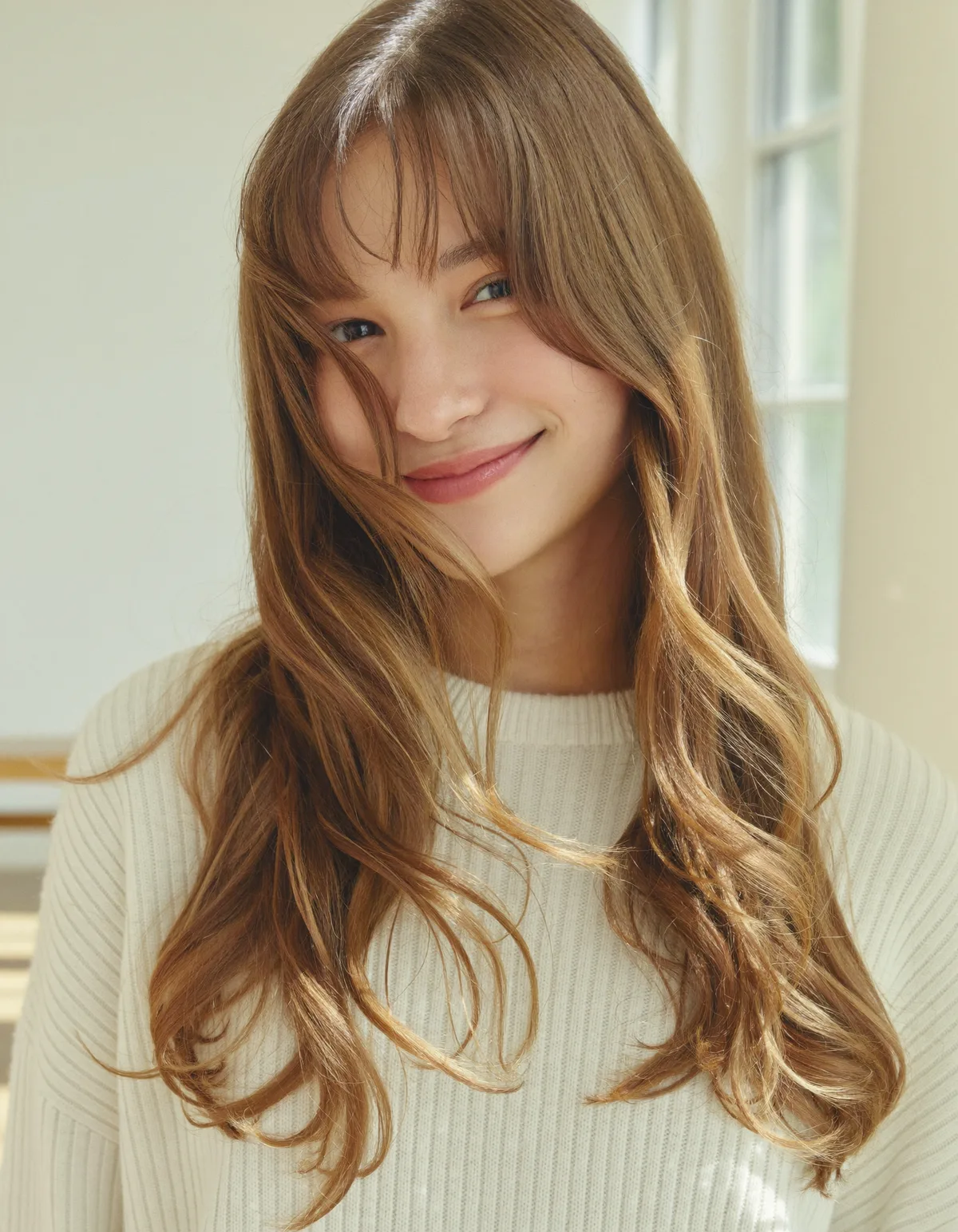
Curtain bangs are soft, center-parted bangs that sweep away from the face like a pair of open curtains, shorter in the middle and longer at the sides, where they blend into the rest of your hair. They are the easiest bangs to try because they frame the face without covering it, they suit most face shapes and textures, and they grow out into face-framing layers instead of an awkward phase. Here is who they suit, what to ask for, and how to style them in five minutes.
What are curtain bangs?
Unlike blunt bangs, which sit straight across the forehead, curtain bangs part in the center and fall to each side. The shortest pieces usually land somewhere between the brows and the cheekbones, and the longest sit around the cheekbones or jaw. Because they are cut with soft, angled ends, they move, and they can be pushed back or tucked behind the ears on days you want them out of the way.
Do curtain bangs suit my face shape?
| Face shape | What to ask for | Why it works |
|---|---|---|
| Oval | Almost any length; cheekbone length is classic | Balanced proportions take most bang styles |
| Round | Longer bangs that end below the cheekbones, with a center part | The vertical opening adds length to the face |
| Square | Soft, wispy ends that sweep toward the jaw | Curved lines soften a strong jaw |
| Heart | Bangs that fall just at the cheekbones | Balances a wider forehead with a narrower chin |
| Long or oblong | Slightly shorter, fuller bangs | Breaks up the length of the face |
These are starting points. A good stylist will also look at your hairline, cowlicks and texture.
Curtain bangs by hair type
- Straight hair: the easiest to style, but bangs can fall flat; a round brush or a few minutes in a velcro roller gives the classic swoop.
- Wavy hair: ask for a slightly longer cut, since waves shrink as they dry. Let them air-dry with a little cream, then twist each side away from the face.
- Curly hair: ask for curly curtain bangs cut dry, curl by curl, by someone experienced with curls. They should be longer than you think.
- Fine hair: keep the section light so the rest of your hair does not look thin.
- Thick hair: ask for texturizing so the bangs fall softly instead of sticking out.
What to tell your stylist
- Bring two or three photos of bangs on hair like yours, not just a face you like.
- Say where the shortest piece should land: brows, eyes, cheekbones or lip.
- Ask to start longer. You can always go shorter at the next trim; you cannot go back.
- Mention cowlicks at the front hairline, which change how bangs sit.
- Ask for a quick styling lesson before you leave, and for a free or cheap bang trim in a few weeks, which many salons offer.
How to style curtain bangs
- Wet them first. Bangs dry fastest, so they set in whatever shape they dry in. Dampen them even on second-day hair.
- Blow-dry them forward and side to side with your fingers or a flat brush to remove any cowlick.
- Use a small round brush: roll each side up and away from the face, aiming the dryer down the brush.
- Or use a velcro roller: roll the whole bang section back while you do your makeup, then remove it and split the bangs down the middle.
- Finish lightly: a touch of flexible spray; skip heavy creams, which make bangs greasy fast.
A flat iron works too: clamp near the root, then turn the iron away from the face as you glide down. Keep the heat moderate, since the front hairline is fragile; our guide to heat damage and styling tools covers safe temperatures, and curling wand vs curling iron covers bending the rest of your hair to match.
How to keep bangs fresh between washes
- Dry shampoo at the roots of the bangs only, applied the night before so it has time to absorb oil.
- Rewash just the bangs in the sink and re-dry them; it takes five minutes.
- Keep hands off: touching bangs all day moves oil from your fingers into them.
- Check your skin care: heavy moisturizer and sunscreen on the forehead can make bangs separate.
How often to trim curtain bangs
Most curtain bangs need a trim every four to six weeks to keep their shape. Because they are meant to look soft, they forgive a missed appointment far better than blunt bangs; when they grow long they simply read as face-framing layers. If you trim at home, cut vertically into the ends with sharp hair scissors rather than straight across, and take off less than you think.
Growing out curtain bangs
This is where curtain bangs shine. As they lengthen, ask your stylist to blend them into longer face-framing layers. In between, part them deep to one side, tuck them behind your ears, pin them with a small clip, or sweep them into a low bun or a claw clip. Most people find the grow-out takes a few months and never looks like a mistake.
Curtain bangs and hair color
Bangs put the hair right next to your face center stage, so color around them matters. Soft face-framing highlights, sometimes called a money piece, brighten curtain bangs and show off their shape. Our guide to hair color ideas covers which shades suit which skin tones, and the Color Studio can help you find your season.
Read next: Dry Shampoo: How to Use It and Which Type to Choose · Rosemary Oil for Hair Growth: Evidence and How to Use · Silk Pillowcase for Hair: Is It Worth It?
Questions people ask about this
What are curtain bangs?
Soft, center-parted bangs that sweep to each side like open curtains, shorter in the middle and longer at the sides, where they blend into the rest of the hair.
Do curtain bangs suit round faces?
Yes. Ask for longer curtain bangs that end below the cheekbones, with a center part; the vertical opening adds length to the face.
Can you get curtain bangs with curly hair?
Yes. Ask for them cut dry, curl by curl, by a stylist experienced with curls, and keep them longer than you think, since curls shrink.
How do you style curtain bangs?
Dampen them, blow-dry them side to side to remove cowlicks, then roll each side away from the face with a small round brush or a velcro roller.
How often should you trim curtain bangs?
Every four to six weeks keeps the shape. They forgive missed trims, because longer curtain bangs simply read as face-framing layers.
Are curtain bangs hard to grow out?
No, they are among the easiest bangs to grow out. They blend into face-framing layers, and you can tuck, pin or side-part them in between.