Ear piercing types: a map of every placement, pain levels and healing times
Ear piercing types explained: lobe, helix, tragus, conch, daith, rook and more, with typical pain and healing times, jewelry metals, and aftercare basics.
The short answer
Lobe piercings heal in about 6 to 8 weeks; cartilage often takes 6 to 12 months. Popular cartilage placements: helix, tragus, conch, daith, rook and flat. Use implant-grade titanium or nickel-free solid gold in new piercings.
- Add one cartilage piercing at a time and follow your piercer's aftercare.
There are more than a dozen ear piercing types, from the classic lobe to cartilage placements like the helix, tragus, conch and daith. Each sits in a different part of the ear, takes a different amount of time to heal, and suits different jewelry. Lobe piercings heal fastest; cartilage takes much longer and needs more care. Here is a map of the main placements, typical healing times, and how to plan a curated ear.
Pain and healing times vary from person to person. Choose a reputable professional piercer who uses a sterile needle, and see a doctor if a piercing becomes hot, swollen or painful.
Ear piercing types at a glance
| Piercing | Where | Typical healing | Pain (relative) |
|---|---|---|---|
| Lobe | Soft lower earlobe | About 6 to 8 weeks | Low |
| Upper lobe | Higher on the lobe | About 8 to 12 weeks | Low |
| Helix | Upper outer cartilage rim | About 6 to 12 months | Moderate |
| Forward helix | Front of the upper rim, near the face | About 6 to 12 months | Moderate |
| Flat | Flat area of the upper ear | About 6 to 12 months | Moderate |
| Tragus | Small flap in front of the ear canal | About 6 to 12 months | Moderate |
| Conch | Inner bowl of the ear | About 6 to 12 months | Moderate to high |
| Daith | Innermost cartilage fold | About 6 to 12 months | Moderate to high |
| Rook | Upper inner ridge | About 6 to 12 months | Moderate to high |
| Industrial | Two helix holes joined by a bar | Up to a year or more | High |
Cartilage generally heals far more slowly than lobe tissue. Your piercer can advise on your anatomy.
Lobe piercings
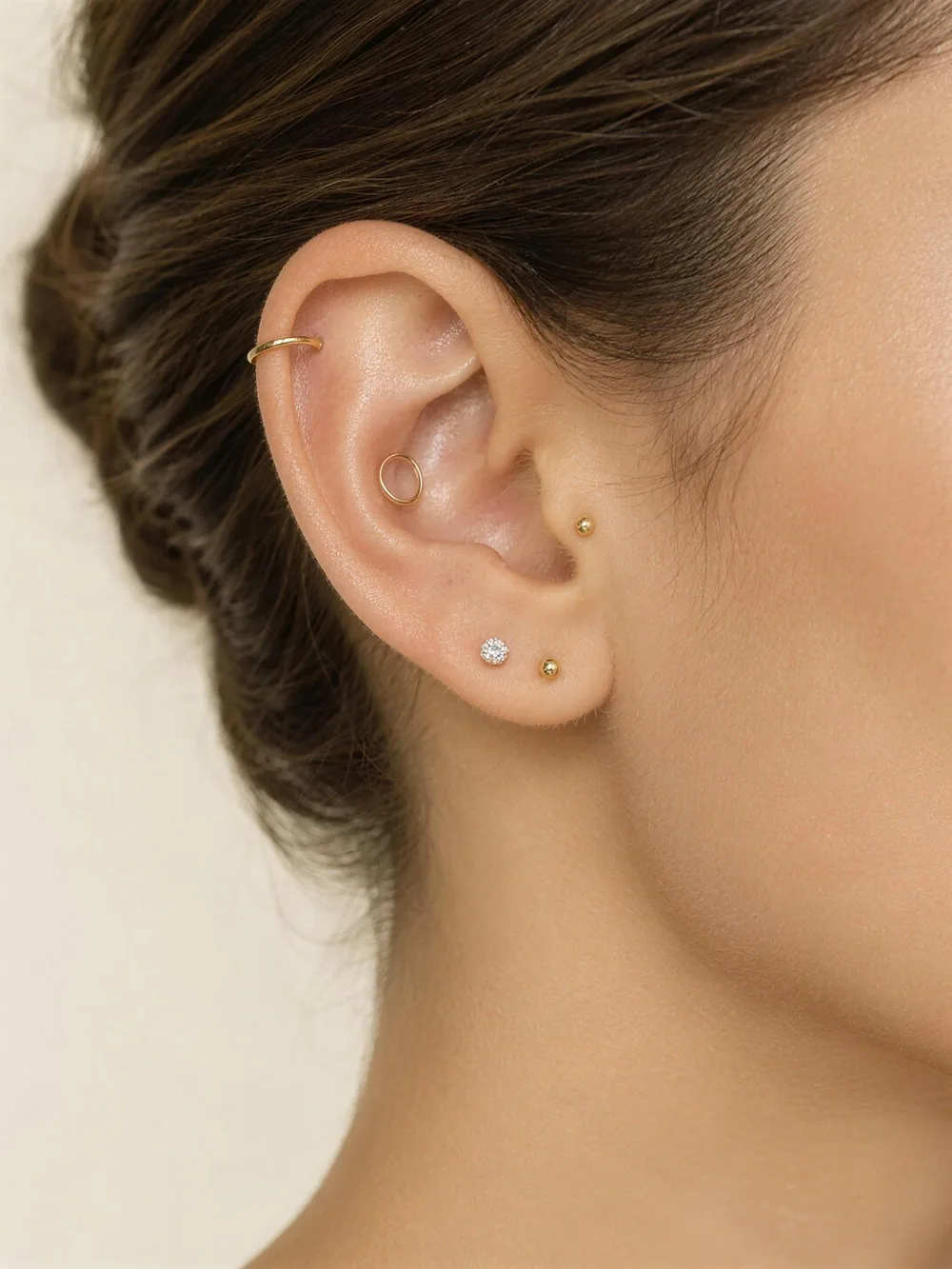
The lobe is the easiest place to start: it heals quickly, hurts least, and suits studs, huggies, hoops and drops. A second or third lobe hole, staggered upward, is the simplest way to build an ear stack.
Cartilage piercings
- Helix: the most popular cartilage piercing; suits a tiny stud or a slim hoop once healed.
- Tragus: a small stud looks delicate; earbuds can irritate it while healing.
- Conch: a flat stud in the inner bowl, or a larger hoop around the outer edge once healed.
- Daith and rook: tucked into the inner folds; usually curved barbells or small rings.
- Industrial: a straight bar through two holes; needs good anatomy and patience.
How to plan a curated ear
- Start with what you have: most people build around one or two lobe piercings.
- Add one cartilage piercing at a time, so you can sleep on the other side while it heals.
- Balance the ear: mix a few small studs with one hoop or huggie.
- Keep one metal for a calm look, or repeat each metal twice if you mix.
- Think about daily life: phone calls, earbuds, helmets and sleeping position all matter.
Best jewelry for new piercings
For a fresh piercing, professional piercers usually recommend implant-grade titanium or solid 14k or 18k gold that is nickel-free, with a flat back on cartilage. Starter jewelry is often slightly longer to allow for swelling and is downsized later. Avoid plated jewelry and mystery metals in a new piercing. Our guides to piercing jewelry metals, hypoallergenic earrings and nickel allergy explain why.
Aftercare basics
- Clean as your piercer advises, usually with sterile saline spray once or twice a day.
- Do not twist or turn the jewelry.
- Avoid sleeping on it; a travel pillow helps with cartilage piercings.
- Keep hair products, makeup and phones away from the area.
- Do not change jewelry too early; wait until your piercer confirms it has healed.
- See a doctor if you notice spreading redness, heat, swelling, pus or fever.
Piercing gun or needle?
Many professional piercers use a single-use hollow needle for all piercings and never use a gun on cartilage, because a gun pushes blunt jewelry through tissue and can be hard to sterilize fully. If you are piercing cartilage, choose a studio that uses needles.
Styling a healed ear
Once healed, you can mix diamond studs, gold hoops and tiny pearl studs. Keep to two or three pieces of jewelry per area so the ear looks curated, not crowded.
Read next: Earrings: Types, Styles and How to Choose a Pair · 14k vs 18k Gold — Which Is Right for Daily Wear
Questions people ask about this
What are the main types of ear piercings?
Lobe and upper lobe, plus cartilage piercings such as the helix, forward helix, flat, tragus, conch, daith, rook and industrial.
Which ear piercing hurts the least?
The lobe, because it is soft tissue rather than cartilage. Cartilage piercings are usually more painful.
How long do cartilage piercings take to heal?
Often about 6 to 12 months, and sometimes longer. Lobe piercings usually heal in about 6 to 8 weeks.
What jewelry is best for a new piercing?
Implant-grade titanium or nickel-free solid 14k or 18k gold, with a flat back for cartilage.
Can you sleep on a new cartilage piercing?
It is best not to. Pressure can irritate it and slow healing; sleep on the other side or use a travel pillow.
Is a piercing gun safe for cartilage?
Many professional piercers avoid guns on cartilage and use a single-use hollow needle instead.