Weighted vests: what they do, what the research says, and how to start safely
Weighted vests explained: what a vest adds to walking, what the 2025 bone trial found, how heavy to go, fit and safety, and how to build up gradually.
The short answer
A weighted vest makes walking and daily movement harder, leaving hands free. In a 2025 trial, a daily vest did not prevent hip bone loss during weight loss. Start at about 5% of body weight for short walks and build up slowly.
- A vest complements, but does not replace, strength training.
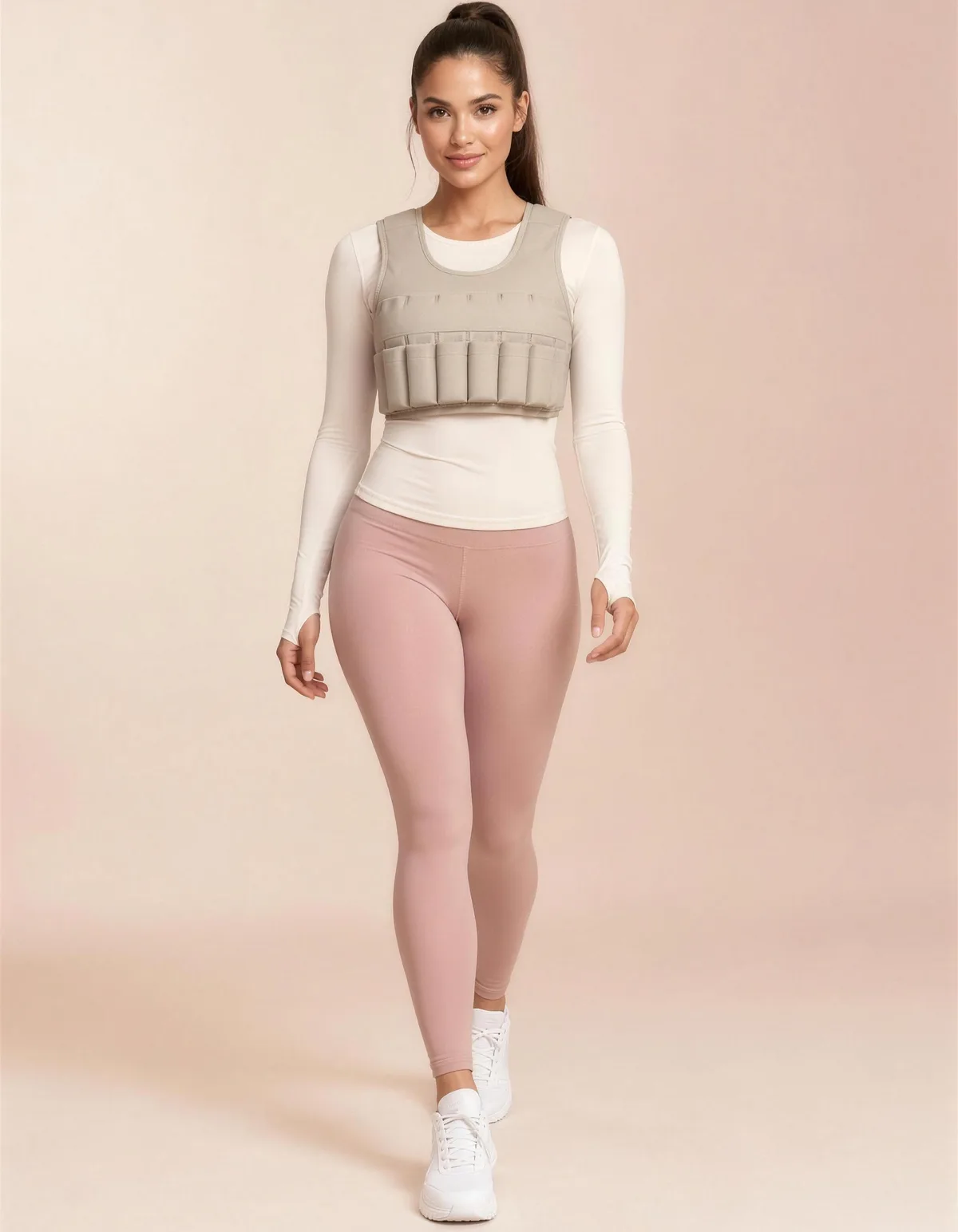
A weighted vest is a snug vest with small pockets of weight, worn while you walk, do chores or train, to make everyday movement more demanding. It is popular with women because it turns a simple walk into a harder workout and is often promoted for bone health. The research is more mixed than social media suggests, but a vest can still be a useful tool if you choose the right weight and build up slowly. Here is what a weighted vest does, what a major 2025 trial found, and how to start safely.
General information, not medical advice. Ask your doctor or a physical therapist before using a weighted vest if you have osteoporosis, back, neck, hip, knee or pelvic floor problems, heart or lung conditions, or are pregnant.
What does a weighted vest do?
A vest adds load to your body, so your muscles, heart and lungs work harder for the same walk. That extra effort burns a bit more energy and can make walking feel like more of a workout. Because the weight sits close to your center, it is more comfortable and stable than carrying hand weights or a backpack, and it leaves your hands free.
Do weighted vests help bone density?
This is the claim that made weighted vests popular, and the evidence is less clear than many posts suggest. In the 12-month INVEST in Bone Health trial, run at Wake Forest University and published in JAMA Network Open, 150 older adults with obesity, average age 66, were split into three groups: weight loss alone, weight loss plus a daily weighted vest, and weight loss plus resistance training. Everyone lost a similar amount, 9% to 11.2% of body weight, and all three groups had similar significant decreases in hip bone density. Neither the vest nor resistance training prevented that bone loss.
The study's lead researcher said the findings are not a reason to stop using weighted vests, and noted that the way people use vests today differs from the trial. The vest group wore their vests for about 7 hours a day, replacing about 78% of the weight they lost. The takeaway: a vest alone is not a proven bone-protection tool, especially during weight loss. Strength training, enough protein and calcium, and medical care for osteoporosis remain the foundation.
Other benefits of a weighted vest
- Harder walks: more challenge without having to walk faster or longer.
- Strength and endurance: other studies link vests to better strength and sit-to-stand performance, especially in older adults.
- Convenience: you can wear one while walking, doing housework or on a walking pad.
- Posture awareness: a well-fitted vest can remind you to stand tall, though it should never pull you forward.
How heavy should a weighted vest be?
| Stage | Typical starting point | Notes |
|---|---|---|
| Beginner | About 5% of body weight, or 5 to 10 lb | Start with short walks of 10 to 20 minutes |
| Building up | Add 1 to 2 lb at a time | Only once walks feel easy and pain-free |
| Upper range | About 10% of body weight | More is rarely needed for walking |
These are common starting points, not medical guidance. Choose an adjustable vest so you can start light.
How to choose a weighted vest
- Adjustable weight: removable weights let you start light and progress.
- Even weight distribution: weight spread front and back, close to the body, so it does not bounce or pull your shoulders forward.
- A snug fit: side straps that cinch, and a cut that does not press on your chest.
- Breathable, padded fabric at the shoulders, so straps do not dig in.
- A shape for your torso: some brands offer shorter or women-specific cuts that fit better.
How to start using a weighted vest
- Start light and short: a light vest for 10 to 20 minutes of walking.
- Increase one thing at a time: first duration, then weight, never both in the same week.
- Keep good posture: shoulders back, core engaged, looking ahead.
- Stay on even ground at first; hills and stairs add a lot of load.
- Take rest days, as you would for any training.
Weighted vest safety
- Do not run or jump in a vest until you have built up and have no joint pain; impact multiplies the load.
- Stop if you feel pain in your back, neck, hips, knees or feet.
- Watch your balance: extra weight changes how you move; take care if you are prone to falls.
- Pelvic floor: if you leak or feel heaviness, reduce the weight and see a pelvic floor physical therapist.
- Do not replace strength training: lifting weights builds muscle and loads bone in ways a vest cannot.
Weighted vest vs strength training
A vest is a convenient way to make walking harder, but it does not replace resistance training, which targets muscles directly and progressively. For strong bones and muscles, most health guidance suggests strength training at least twice a week plus regular weight-bearing activity. Our guides to standing core exercises and deep core exercises are good places to start, and creatine for women covers a supplement studied alongside strength training.
Read next: Vibration Plate Benefits: What the Research Shows
Questions people ask about this
What does a weighted vest do?
It adds load to your body so muscles, heart and lungs work harder for the same movement, turning a walk into a harder workout while leaving your hands free.
Do weighted vests increase bone density?
The evidence is mixed. In the 2025 INVEST trial of 150 older adults losing weight, a daily weighted vest did not prevent loss of hip bone density. Strength training, nutrition and medical care remain the foundation.
How heavy should a weighted vest be for a woman?
A common starting point is about 5% of body weight, or 5 to 10 lb, building up gradually to about 10% at most for walking.
How long should you wear a weighted vest?
Start with 10 to 20 minutes of walking and increase duration gradually before adding weight.
Can you run in a weighted vest?
It is best to avoid running or jumping in a vest until you have built up slowly and have no joint pain, since impact multiplies the load.
Is a weighted vest better than strength training?
No. A vest makes walking harder, but strength training builds muscle and loads bone more directly. Use both if you can.