Earrings: every style explained, and how to choose the right pair
Earrings explained: studs, hoops, huggies, drops, threaders and climbers, which suit your face and occasion, safe metals, and backs that stay put.
The short answer
Main styles: studs, hoops, huggies, drops, threaders, climbers and chandeliers. Choose by occasion and face shape; studs and huggies suit every day. Solid gold, platinum and titanium are safest for sensitive ears.
- Screw and locking backs keep valuable earrings secure.
Earrings are the easiest way to change how an outfit feels, from a quiet stud for work to a sculptural gold drop for an evening. There are a handful of main styles, and knowing them helps you choose the right pair for your face, your piercings and the occasion. Here is every common type of earring, how to choose, which metals are safe for sensitive ears, and which backs keep earrings secure.
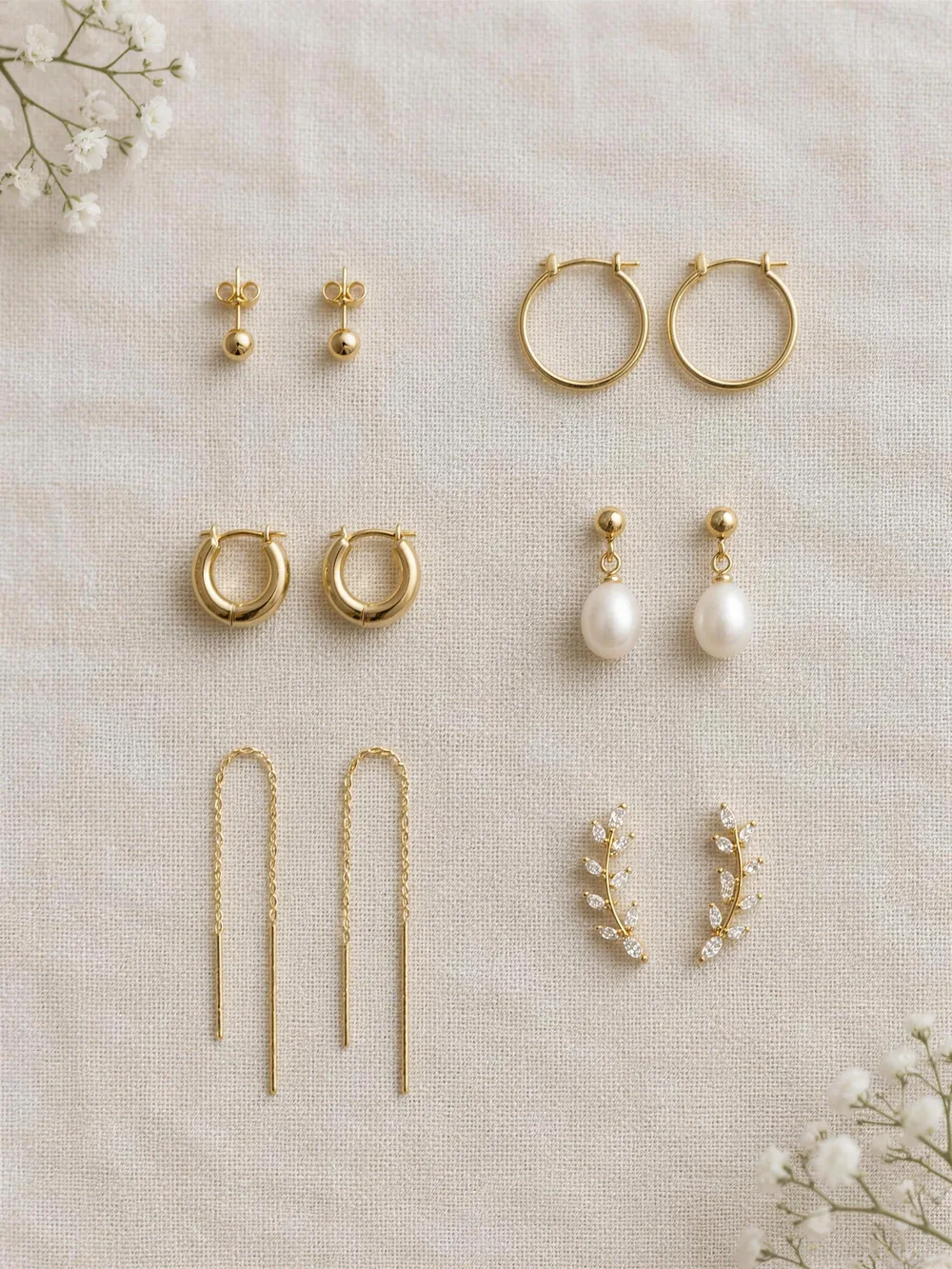
Types of earrings
| Style | What it is | Good for |
|---|---|---|
| Studs | Sit on the earlobe with a post and back | Every day, work, sensitive ears |
| Hoops | A circle or oval that passes through the lobe | Casual to evening, depending on size |
| Huggies | Small hoops that hug the lobe closely | Every day, stacking, sleeping in |
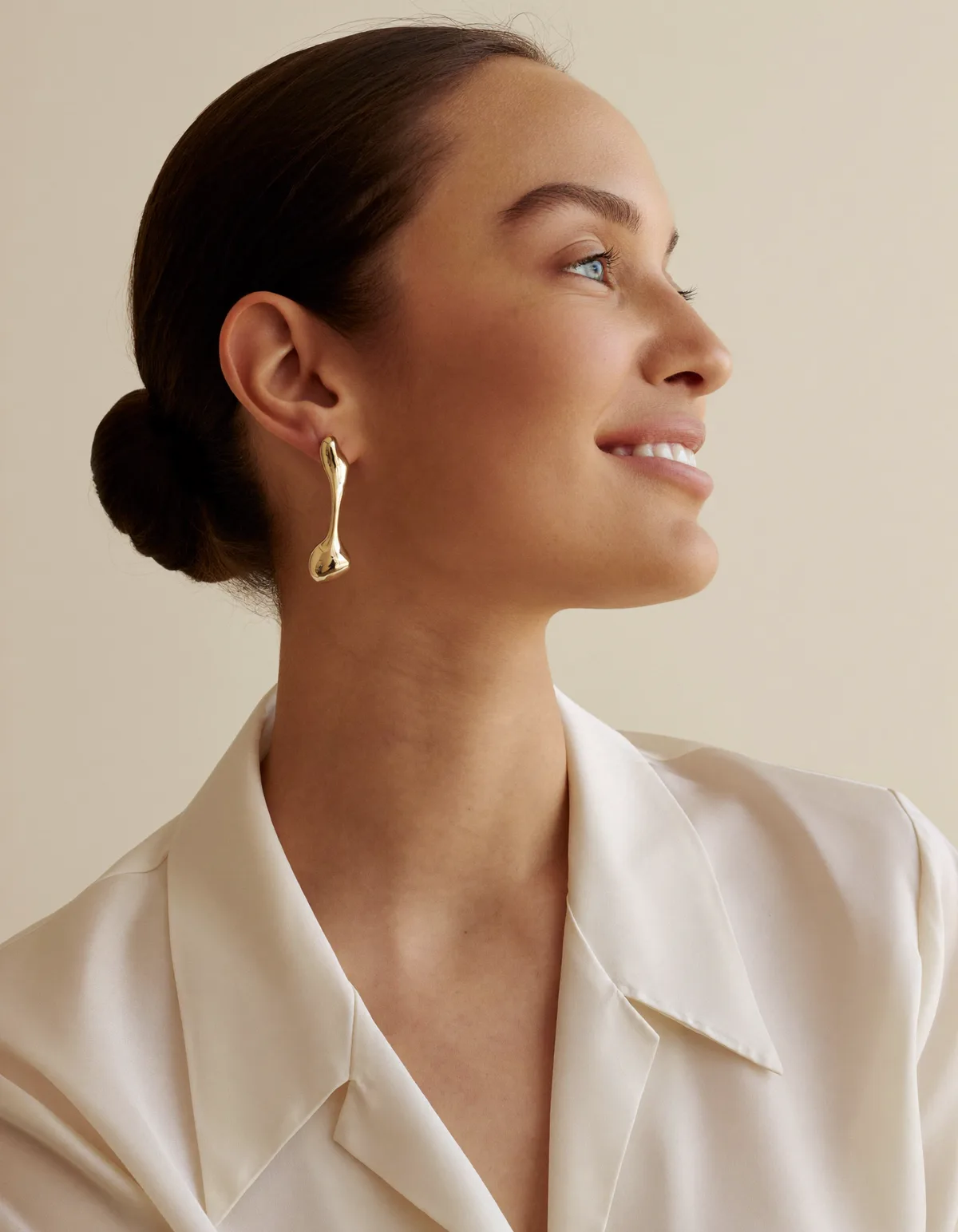
| Drops and dangles | Hang below the lobe | Evenings, weddings, long necks |
| Threaders | A fine chain pulled through the piercing | A delicate, modern look |
| Climbers and crawlers | Run up the edge of the lobe | A curated look with one piercing |
| Chandeliers | Large, tiered drops | Formal events |
Most people own a pair of studs, small hoops and one pair of drops.
How to choose earrings for your face shape
- Round face: drops, linear and angular earrings lengthen the face.
- Long or oval face: studs, huggies and round hoops add width.
- Square face: hoops and curved drops soften a strong jaw.
- Heart face: teardrops and chandeliers that widen at the bottom balance a narrow chin.
These are guidelines, not rules; wear what you love. Our guide to face shapes explains how to find yours.
Earrings for every occasion
- Work: small studs, huggies or pearl studs.
- Every day: gold hoops or a simple ear stack.
- Evenings and weddings: drops, chandeliers or diamond studs; see wedding guest dresses.
- Active days: flat studs that do not catch.
Best metals for sensitive ears
Reactions to earrings are often caused by nickel. Solid 14k or 18k gold, platinum, implant-grade titanium and niobium are the safest choices. Sterling silver suits many people. Plated jewelry can wear through to a base metal that contains nickel. See our guides to hypoallergenic earrings and nickel allergy, and gold vermeil vs gold-filled vs plated for gold finishes.
Types of earring backs
- Push backs (butterfly): the most common; easy, but can loosen.
- Screw backs: the most secure, best for valuable studs.
- Locking backs: push on, then click to lock.
- Flat backs (labret): comfortable for cartilage and sleeping.
- Hinged closures: on huggies and many hoops.
- Fish hooks and lever backs: on drops; lever backs are more secure.
How to build an ear stack
- Start with your lobe piercings: a stud and a huggie, or two sizes of studs.
- Add one statement piece and keep the rest small.
- Stick to one metal, or repeat each metal twice if you mix.
- Add cartilage pieces gradually; see our map of ear piercing types.
Heavy earrings and stretched lobes
Large, heavy earrings can stretch piercings over time. Choose lightweight hollow styles for big earrings, wear heavy pairs for shorter periods, and use larger disc backs that support the weight. If a lobe hole has stretched, a dermatologist can repair it.
Solid gold, gold-filled or plated earrings?
For earrings you wear every day, solid gold lasts longest and is the safest for sensitive ears. Gold-filled is a durable, more affordable middle ground. Plated earrings are fine for occasional wear or trend pieces, but the thin layer can wear through, especially on posts and hooks. Check for stamps such as 14k or 585, and see how to tell if gold jewelry is real.
Earrings with glasses, hats and hairstyles
- With glasses: studs and huggies avoid competing with the frames.
- With hair up: drops and statement earrings show best.
- With hair down: hoops and longer drops stay visible.
How to care for earrings
- Clean posts and backs regularly with mild soap and water.
- Store pairs together in a lined box so they do not scratch or tangle.
- Remove earrings for swimming, the gym and sleeping unless they are flat and secure.
- Keep perfume and hairspray off pearls and plated pieces.
See how to clean gold jewelry and jewelry you can shower in.
Questions people ask about this
What are the main types of earrings?
Studs, hoops, huggies, drops and dangles, threaders, climbers and chandeliers.
What earrings are best for sensitive ears?
Solid 14k or 18k gold, platinum, implant-grade titanium and niobium. Avoid plated pieces that can wear through to a nickel base.
Which earrings suit a round face?
Drops, linear and angular earrings help lengthen a round face.
What is the most secure earring back?
Screw backs, followed by locking backs. Standard push backs can loosen over time.
What earrings should I wear every day?
Small studs, huggies or small gold hoops are comfortable and versatile for daily wear.
Can heavy earrings damage your earlobes?
Over time they can stretch piercings. Choose lightweight hollow styles, supportive backs, and wear heavy pairs for shorter periods.