How to clean gold jewelry at home without damaging it
Warm water and one drop of dish soap does almost all of it. What must never touch plating, and the household remedies that quietly cause the damage they promise to undo.
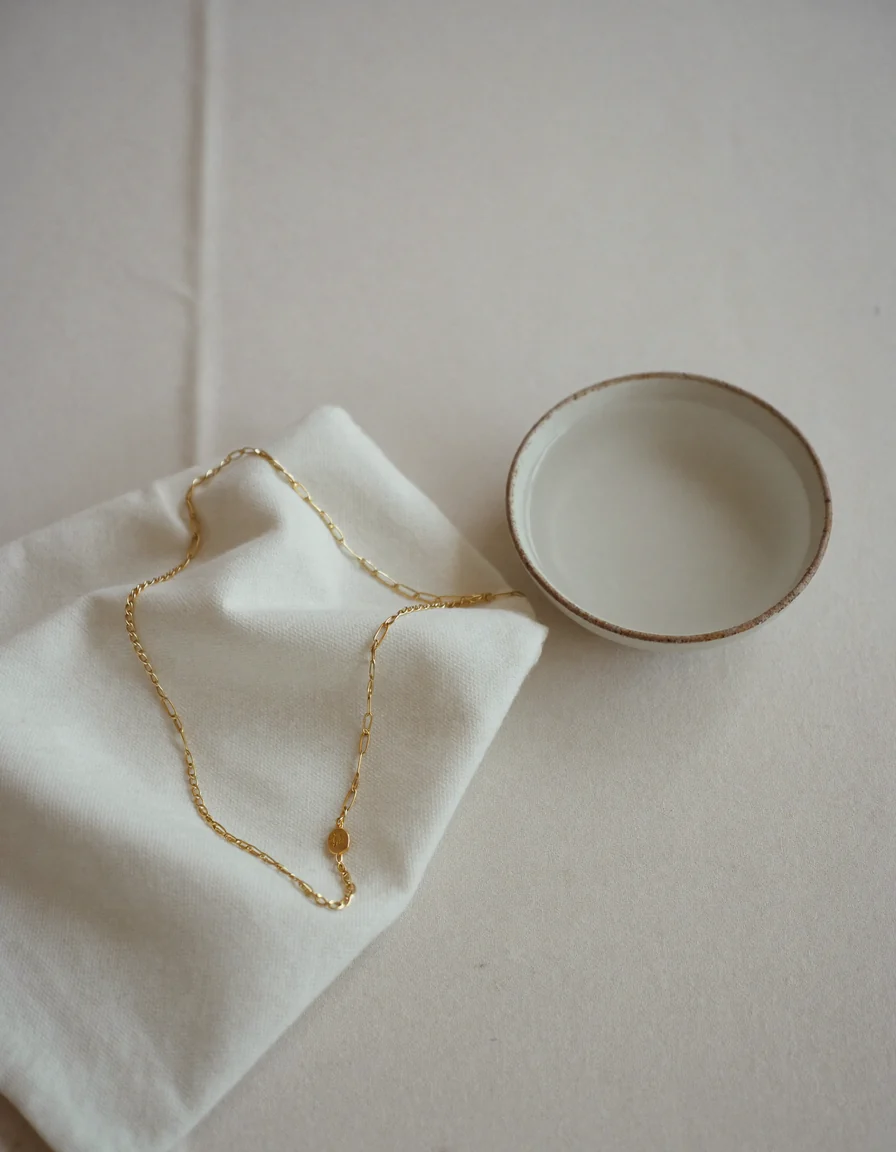
Almost every gold cleaning problem is caused by cleaning it too hard. Gold itself is chemically stable — it does not tarnish, it does not react with air, and it does not need rescuing. What dulls a piece is a film: skin oil, soap residue, hand cream, hairspray. A film comes off with warm water. Nearly everything sold to do more than that is solving a problem your jewelry does not have.
The method that covers almost everything
- Warm water — comfortable to the hand, not hot — and one drop of plain washing-up liquid.
- Soak for ten to fifteen minutes. This is doing most of the work; the brushing is finishing, not cleaning.
- Brush gently with a soft toothbrush, paying attention to the back of a setting, where a stone's brilliance is lost first because that is where dirt blocks the light coming back up through it.
- Rinse in clean water — not under an open drain, for reasons that need no explanation.
- Dry completely with a soft cloth, and leave it out to finish air-drying before putting it away. Trapped moisture in a setting is what starts problems.
That is genuinely it for solid gold, with or without hard stones.
What to keep away from it
Toothpaste. Recommended constantly online and it is an abrasive. That is the entire point of toothpaste. On solid gold it leaves a haze of fine scratches; on plated gold it removes plating.
Baking soda. Also an abrasive, also frequently recommended. The baking-soda-and-foil trick is a genuine chemical reaction, but it is for silver tarnish specifically — it does nothing useful for gold and the mechanical scrubbing people add to it does harm.
Bleach and chlorine. This is the one that actually destroys jewelry rather than just marking it. Chlorine attacks the alloy metals in gold and causes cracking that cannot be polished out. This is a permanent structural failure, not a cosmetic one, and it is also why a pool is worse for a ring than a shower.
Ultrasonic cleaners, unless you know what is in the piece. They are excellent for plain gold and diamonds and genuinely dangerous for anything with an included or treated stone, or a stone held by tension.
Plated, filled and vermeil need a different answer
Everything above assumes solid gold. If the gold is a layer over something else, the layer is the whole product and every clean spends a little of it.
Wipe with a dry or barely damp soft cloth. No soaking, no brushing, no cleaning solutions. The reason is thickness: plating can be well under a micron, and the point of highest wear is exactly where a brush goes. Our breakdown of what each gold tier actually survives explains why the tier decides this and the word “waterproof” does not.
| Soak and brush | Ultrasonic | Never | |
|---|---|---|---|
| Solid gold, plain | Yes | Yes | Chlorine |
| Solid gold with diamonds | Yes | Usually fine | Chlorine, abrasives |
| Solid gold with soft stones | Brief, gentle | No | Heat, ultrasonic |
| Gold-filled | Briefly, gently | No | Abrasives, long soaks |
| Vermeil | Damp cloth only | No | Soaking, brushing |
| Plated | Dry cloth only | No | Water, brushing, polish |
Soft stones here means opal, pearl, emerald, turquoise and anything described as treated, filled or stabilised.
Stones change the rules more than the metal does
Pearls and opals contain water and are porous. No soaking, no detergent, no ultrasonic. A damp cloth, and put them on after perfume rather than before.
Emeralds are almost always oil-treated to fill internal fractures. Hot water, detergent and ultrasonic cleaners strip that oil and the stone visibly changes. This one surprises people because emeralds feel hard — hardness is not the issue, treatment is.
Diamonds and sapphires are the easy case and can take the full method. Diamonds attract grease specifically, which is why they go dull faster than the setting around them and why a soak restores them so dramatically.
What actually keeps it clean
Jewelry on last, after lotion, perfume and hairspray, every time. That single habit does more than any cleaning routine, because it keeps the film from forming in the first place. Rings off for washing up, cleaning and the gym — the gym for friction rather than chemistry, since grip load does more damage in an hour than a month of ordinary wear.
Store pieces so they do not touch each other. Gold is soft, and the thing most likely to scratch your gold chain is your other gold chain.
If a piece stays dull after a proper clean, that is usually not dirt — it is fine surface scratching from years of wear, which is polishing rather than cleaning, and on plated or vermeil pieces polishing removes what is left of the layer. At that point the question is what the piece actually is, which is where the checks for solid versus plated earn their keep.
Questions people ask about this
How do you clean gold jewelry at home?
Soak it for ten to fifteen minutes in warm water with one drop of washing-up liquid, brush gently with a soft toothbrush paying attention to the back of any setting, rinse in clean water and dry completely. That covers almost everything for solid gold.
Can you clean gold jewelry with toothpaste?
No. Toothpaste is an abrasive — that is what it is for. On solid gold it leaves a haze of fine scratches, and on plated gold it removes the plating. The same applies to baking soda, which is also abrasive and whose foil trick is for silver tarnish, not gold.
Does gold tarnish?
Solid gold does not. What looks like tarnish is a film of skin oil, soap and cosmetics, and it washes off. Lower-karat gold can darken slightly because of the alloy metals in it, and plated pieces can appear to tarnish once the base metal beneath starts showing through.
Is chlorine bad for gold jewelry?
Yes, and this is the one that causes permanent damage rather than marks. Chlorine attacks the alloy metals in gold and causes cracking that cannot be polished out. Take rings off before a pool or a hot tub, and never clean gold with bleach.
How do you clean gold-plated jewelry?
With a dry or barely damp soft cloth, and nothing else. No soaking, brushing or cleaning solutions — the plating can be under a micron thick, so every clean spends part of the product itself.