Why your gel nails lift, peel or wrinkle, and the fix for each
Lifting at the cuticle, peeling from the tip, wrinkles and dents each have their own cause. Match what you see to the cause and change one thing next set.

The short answer
Lifting at the cuticle means gel touched skin or oil was left on the nail.
- Lifting at the cuticle means gel touched skin or oil was left on the nail.
- Peeling from the tip means the free edge was not capped on every coat.
- Wrinkles and dents are curing problems: thinner coats, the matched lamp, full cure times.
- Never pick or glue a lifted corner: file it smooth and plan a proper soak-off.
Gel that lifts on day three, peels back from the tip or wrinkles the moment it comes out of the lamp is not a sign that at-home gel is not for you. Each of those problems has a different, specific cause, and each one has a fix you can make on the very next set. The trick is reading what the nail is telling you instead of blaming the polish.
Noor, SOUL’s beauty host, pictured with a glossy red set, calls this “the mistake of the week” approach: change one thing, then look again.
Match what you see to the cause
| What you see | Usual cause | Next time |
|---|---|---|
| Lifting at the cuticle, days 2–5 | Gel touched skin, or oil was left on the nail | Keep a paper-thin gap; alcohol wipe last; clean spills before curing |
| Peeling back from the tip | The free edge was not capped | Run the brush along the front edge on every coat |
| Wrinkles or ripples after curing | A coat too thick: the top cured first | Thinner coats; wipe the brush on both sides |
| Looks perfect, dents an hour later | Under-cured underneath | Thin coats, the matched lamp, full cure times |
| Bubbles | The bottle was shaken | Roll it between your palms instead |
| Sticky after the top coat | Normal for a wipe top coat | Wipe with alcohol; if no-wipe, cure again |
| Chips around day ten | Regrowth and everyday wear | Plan removal rather than patching |
Nearly every early failure comes back to one of five things: gel on skin, an uncapped edge, a thick coat, a weak or mismatched lamp, or oil on the nail.
Lifting at the cuticle
This is the most common problem and almost always the most fixable. Skin moves and gel does not, so wherever gel has touched the cuticle or side wall, it has a hinge to lift from. The second cause is oil: natural oils, hand cream or cuticle oil left on the plate stop the base coat from gripping.
- Push back the cuticle and lift the thin dead film on the plate before you start.
- Make the alcohol wipe the very last prep step, then keep your fingers off your face and hair.
- Leave a hairline gap at the skin on every coat, and clean any gel that floods onto skin with an alcohol-damp stick before curing.
- Keep the base coat thin. A thick base is a weak base.
Peeling from the tip
If the set peels back from the free edge, the edge was not sealed. “Capping” means running the brush along the thin front rim of the nail on every coat, base included, so the gel wraps the tip instead of stopping at it. Filing the tip after the set is finished breaks that seal again, so shape the nail before you start. And nails are jewels, not tools: prising open lids and peeling stickers with the tip is where a lot of day-five peeling begins.
Wrinkles, ripples and dents
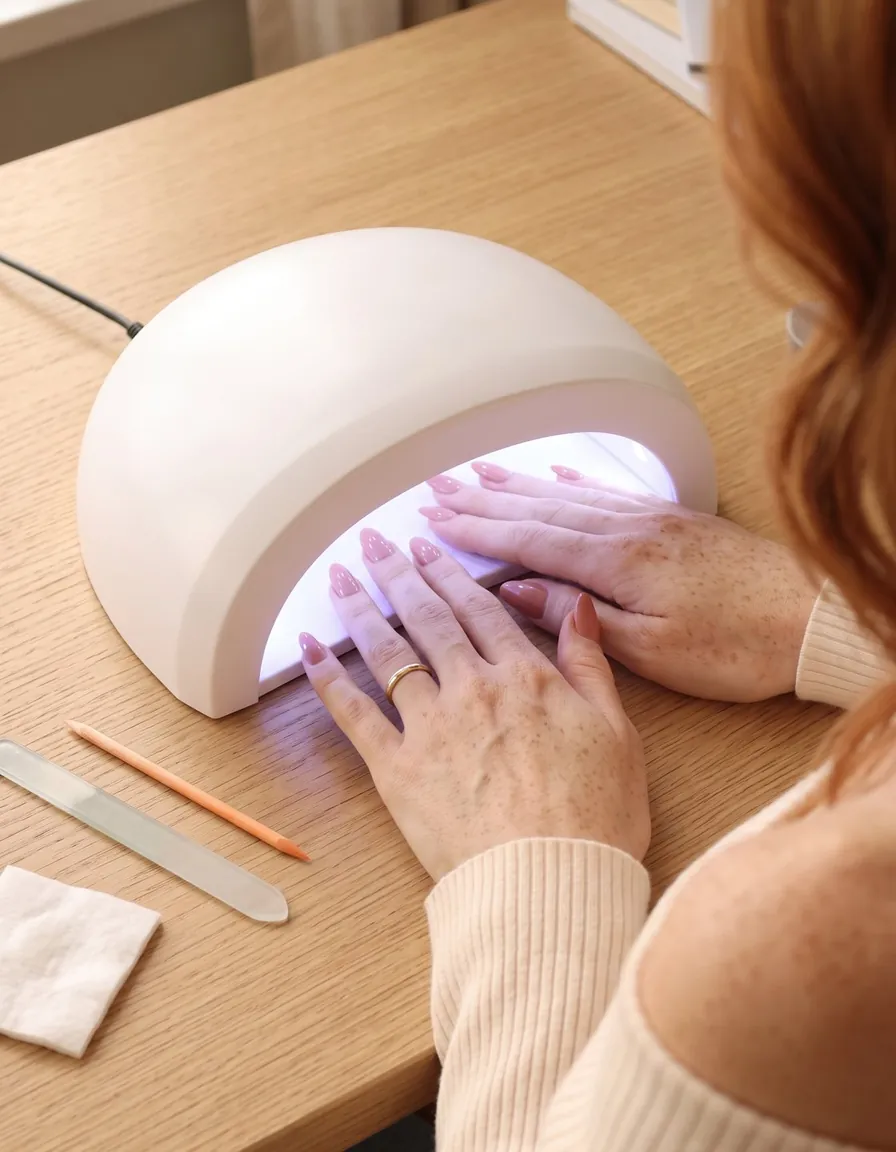
These are curing problems, not application ones. A thick coat cures on the surface first; the gel underneath then shrinks as it cures and wrinkles the skin on top. A set that looks perfect and dents an hour later is under-cured beneath the surface. The fixes are the same for both: thinner coats, the lamp your gel is designed for and its full cure time for every coat, and thumbs cured on their own. Our guide to LED and UV nail lamps covers matching the lamp to the gel.
When it is the nail, not the gel
Sometimes the technique is right and the nail is the variable. Fast-growing nails show regrowth sooner. Very thin or bendy nails flex under the gel and break the bond. Hands that spend a lot of time in water swell and shrink the nail plate every day. None of these means you cannot wear gel; they mean a shorter length, gloves for washing up, and an earlier removal date will give you a better result. If your nails are thin after previous sets, our guide to repairing nails after gel is the place to start.
What to do when a corner lifts
Do not pick it. Picking lifts the gel and takes a layer of nail with it, which is the damage people blame on gel itself. Do not glue it down either: that seals water under the gel. Instead, file the lifted edge smooth so it cannot catch, and plan your removal day. Then soak the set off properly — the American Academy of Dermatology's advice is to soak only the fingertips in acetone, wrapped in foil, rather than whole hands.
Our At-Home Gel Edit has a fix-it diary for exactly this: note what you saw, the likely cause and the one thing you will change. Three sets in, the pattern is usually obvious.
Questions people ask about this
Why are my gel nails lifting?
Usually because gel touched the cuticle or side wall, or because oil was left on the nail before the base coat. Leave a paper-thin gap at the skin, make the alcohol wipe your last prep step, and clean any spills before curing.
Why is my gel polish peeling off at the tips?
The free edge was not capped. Run the brush along the front edge of the nail on every coat, including the base, and shape the nail before you start rather than filing afterwards.
Why does gel polish wrinkle after curing?
The coat was too thick, so the surface cured before the gel underneath. Use thinner coats and the full cure time your gel recommends.
Can I glue down lifted gel nails?
It is better not to: glue can trap water under the gel. File the lifted edge smooth and plan to soak the set off.
How do I stop gel nails lifting after a few days?
Prep thoroughly, keep every coat thin, leave a gap at the skin, cap the free edge, cure for the full time under a matched lamp, and wear gloves for washing up.